Board logo

标题: 日本8.9級地震(圖.更新) [打印本页]

作者: 馬六甲    时间: 2011-3-12 05:51     标题: 日本8.9級地震(圖.更新)

Massive earthquake hits Japan

An 8.9-magnitude earthquake hit off the east coast of Japan early today. The quake -- one of the largest in recorded history -- triggered a 23-foot tsunami that battered Japan's coast, killing hundreds and sweeping away cars, homes, buildings, and boats. Editors note: we'll post more as the story develops -- Lloyd Young (43 photos total)
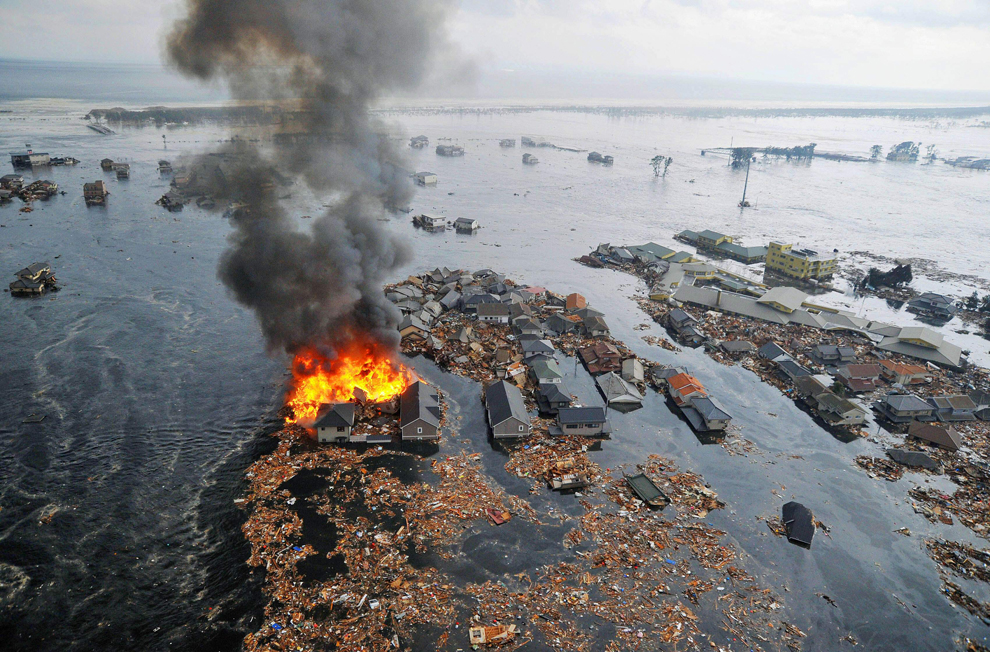
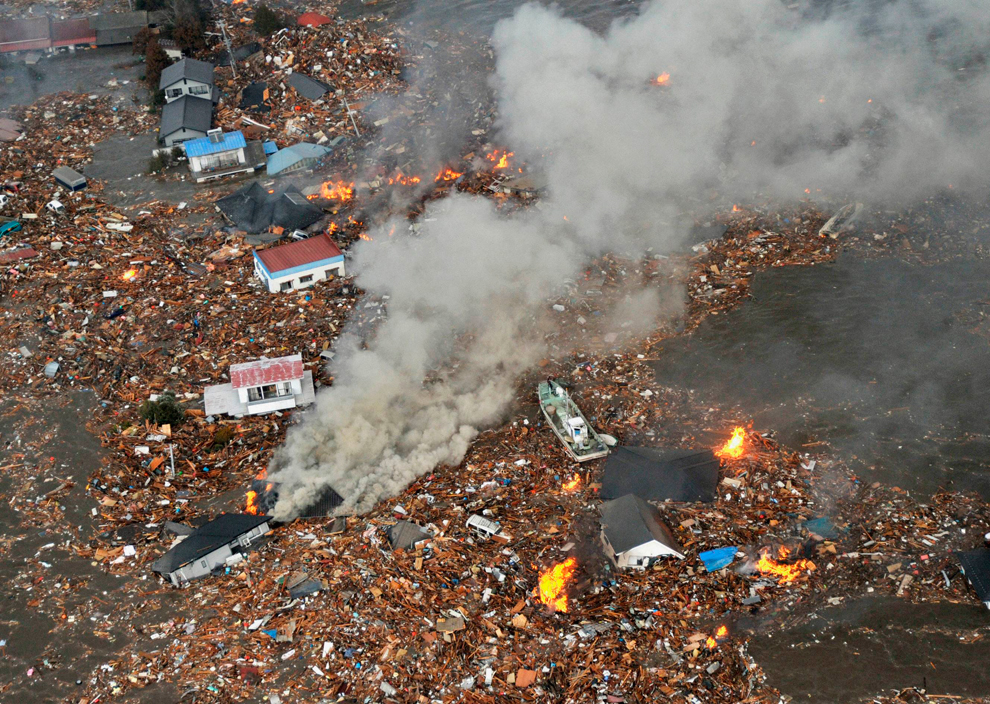
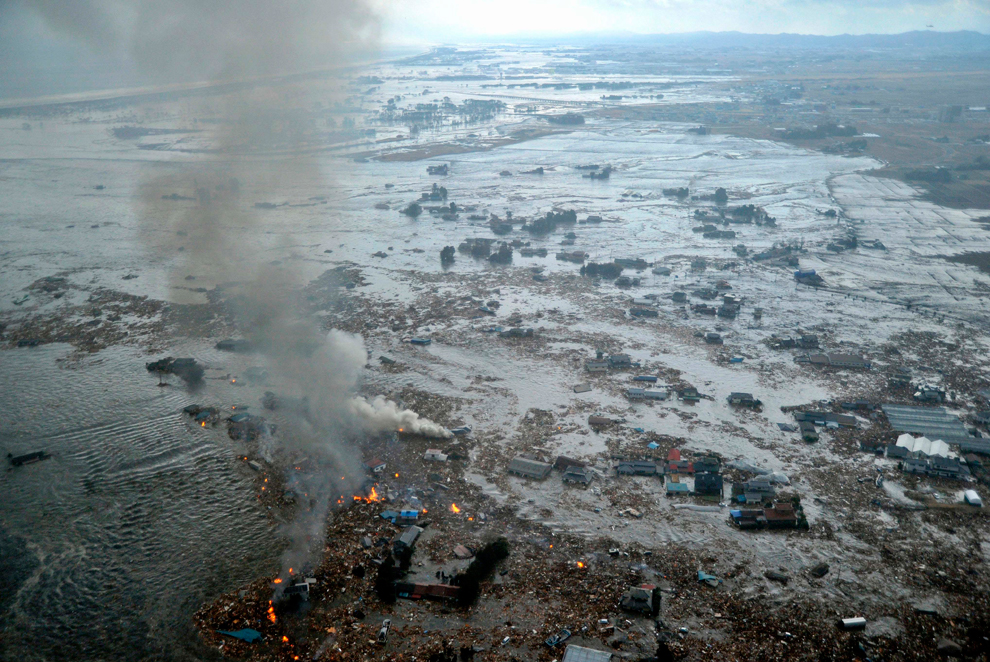
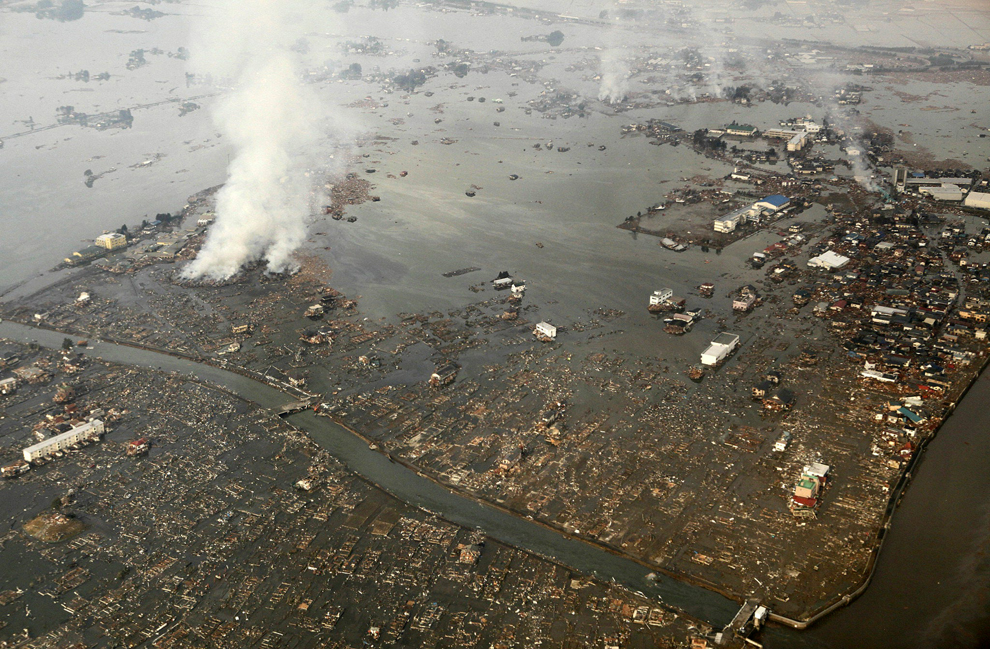
Houses swallowed by tsunami waves burn in Sendai, Miyagi Prefecture (state) after Japan was struck by a strong earthquake off its northeastern coast Friday, March 11. (Kyodo News/Associated Press)

A tsumani triggered by a powerful earthquake makes its way to sweep part of Sendai airport in northern Japan on Friday March 11, 2011. The magnitude 8.9 earthquake slammed Japan's eastern coast Friday, unleashing a 13-foot (4-meter) tsunami that swept boats, cars, buildings and tons of debris miles inland. (Kyodo News/Associated Press) #
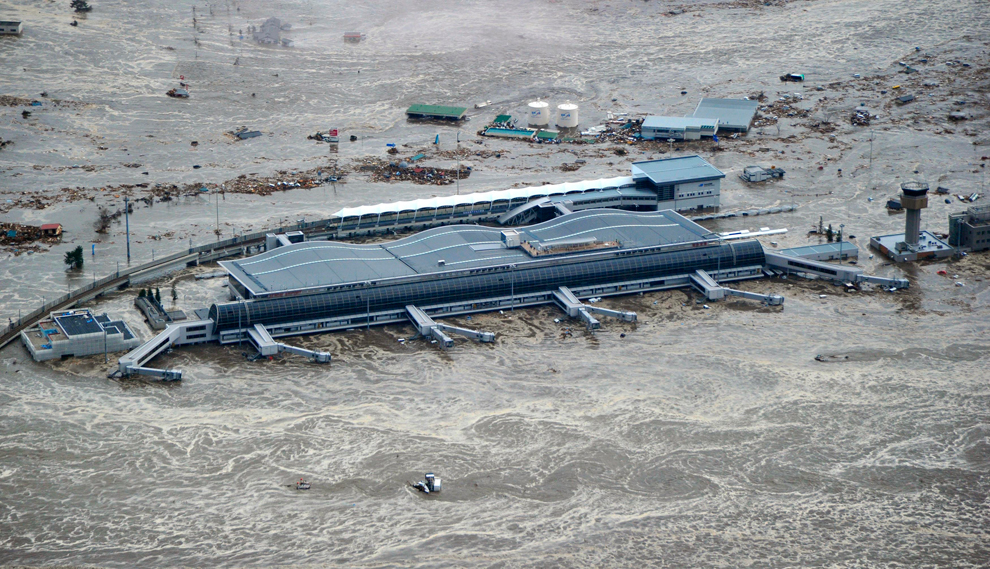
Sendai Airport is surrounded by waters in Miyagi prefecture (state), Japan, after a ferocious tsunami spawned by one of the largest earthquakes ever recorded slammed Japan's eastern coast Friday, March 11, 2011. (Kyodo News/Associated Press) #

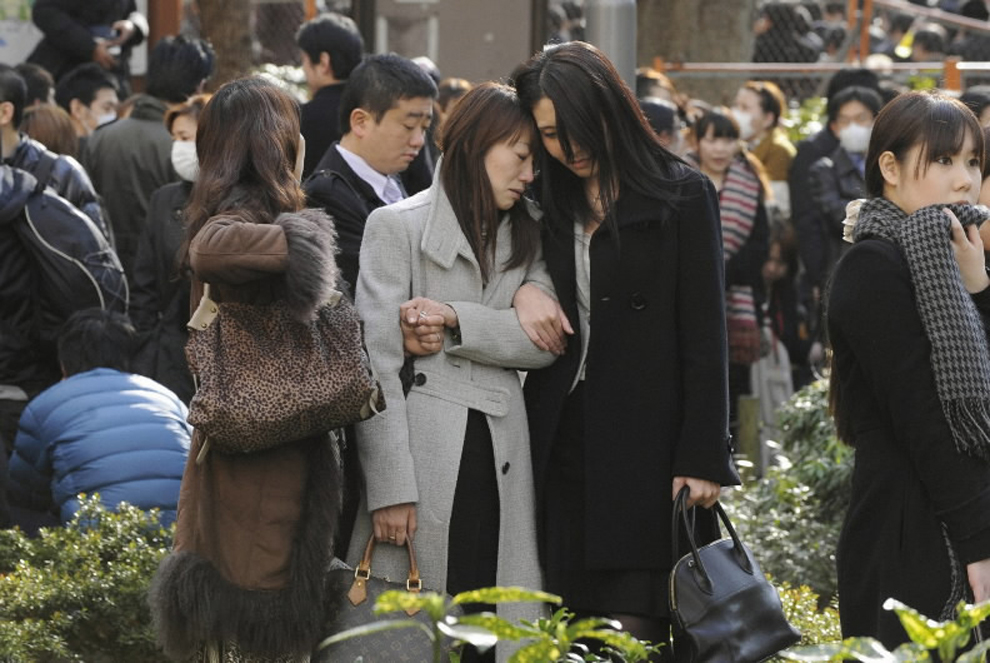
Evacuees stand around Shinjuku Central Park in Tokyo Japan March 11, 2011. A massive 8.9 magnitude quake hit northeast Japan on Friday, causing many injuries, fires and a ten-metre (33-ft) tsunami along parts of the country's coastline. A tsunami warning has been issued for the entire Pacific basin except for the mainland United States and Canada following a huge earthquake that hit Japan on Friday, the Pacific (Reuters) #
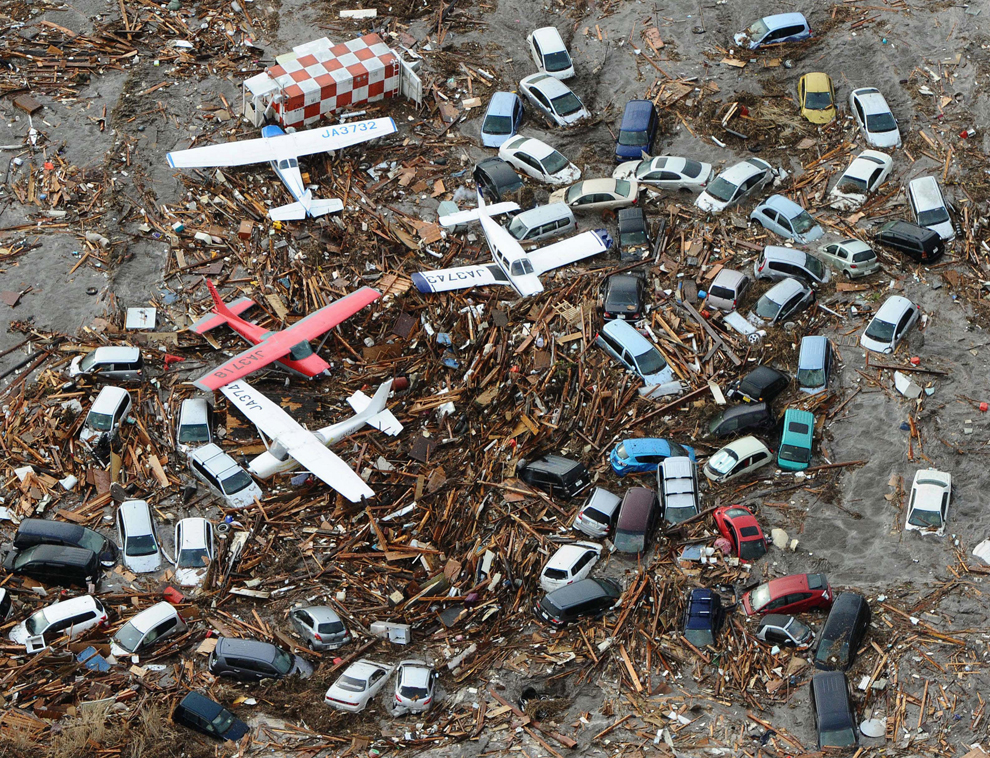
Light planes and vehicles sit among the debris after they were swept by a tsumani that struck Sendai airport in northern Japan. (Kyodo News/Associated Press) #

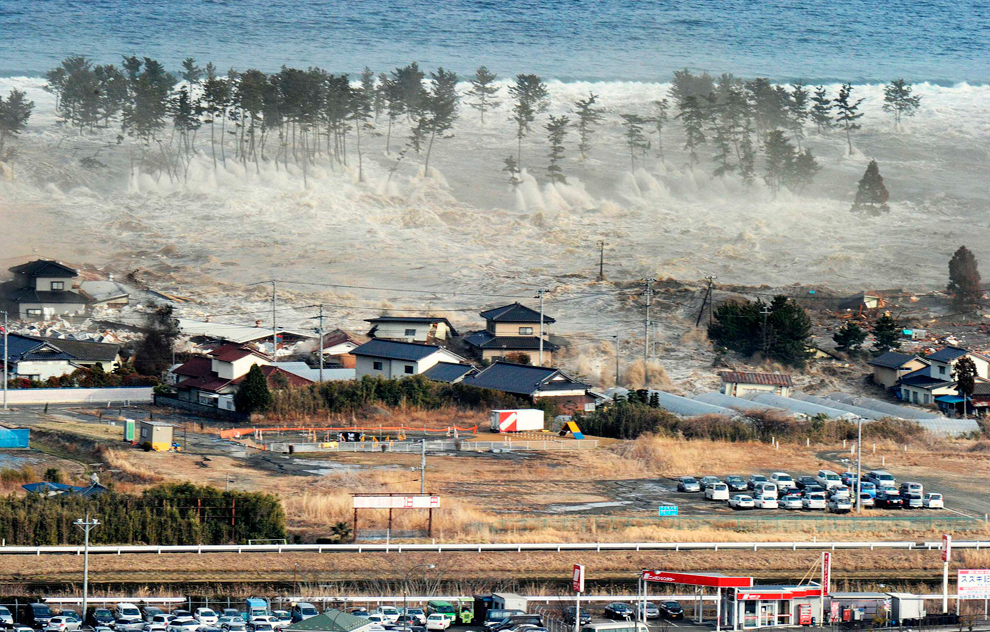
Houses are swept by a tsunami in Natori City in northeastern Japan March 11, 2011. A massive 8.9 magnitude quake hit northeast Japan on Friday, causing many injuries, fires and a ten-metre (33-ft) tsunami along parts of the country's coastline. There were several strong aftershocks and a warning of a 10-metre tsunami following the quake, which also caused buildings to shake violently in the capital Tokyo. (Reuters) #
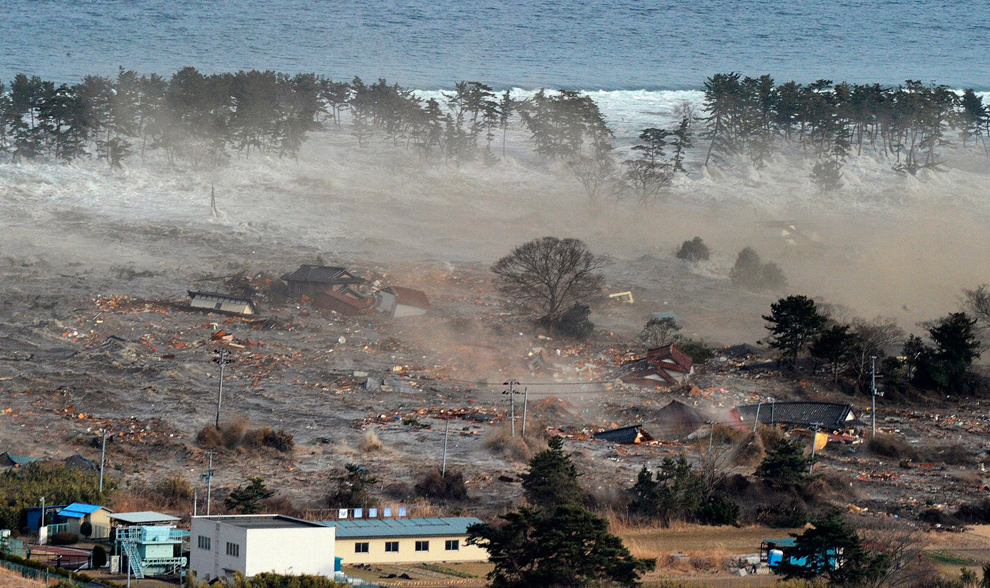
A massive tsunami sweeps in to engulf a residential area after a powerful earthquake in Natori, Miyagi Prefecture in northeastern Japan. (Reuters) #

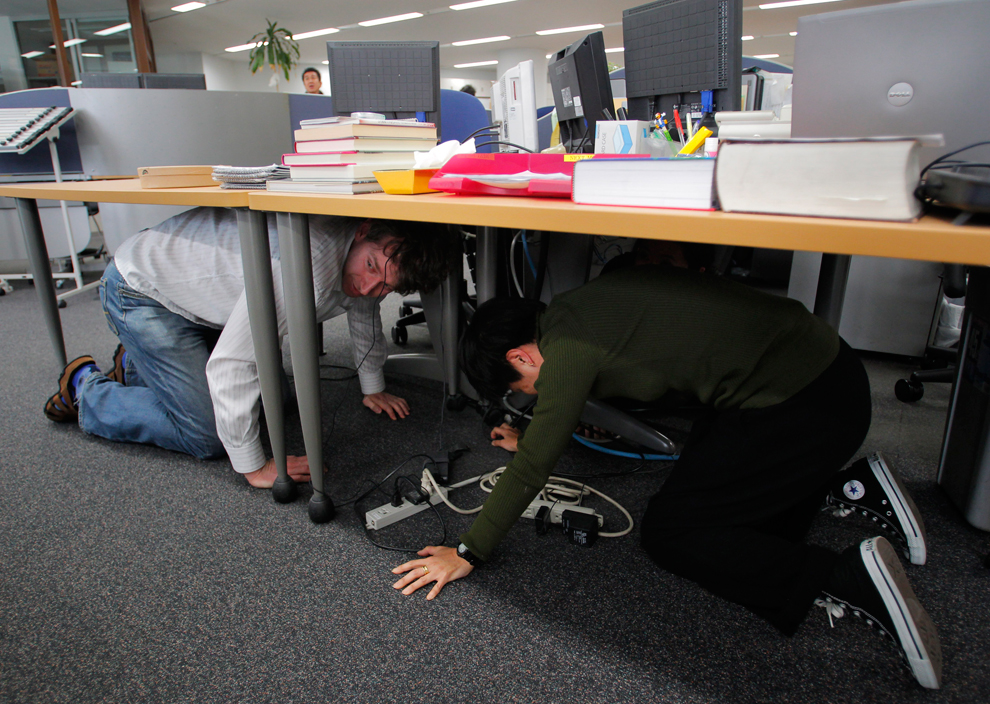
Reporters at the Associated Press Tokyo Bureau in Tokyo take shelter under a table while a strong earthquake strikes eastern Japan. (Itsuo Inouye/Assoctiated Press) #

People take shelter as a ceiling collapses in a bookstore during an earthquake in Sendai, northeastern Japan March 11. (Reuters) #

Tsunami swirls near a port in Oarai, Ibaraki Prefecture (state) after Japan was struck by a strong earthquake off its northeastern coast Friday, March 11. (Kyodo News/Associated Press) #

Seismologists pose for the media as they display a seismographic graph showing the magnitude of the earthquake in Japan, on a monitor at the British Geological Survey office in Edinburgh, Scotland March 11, 2011. The biggest earthquake on record to hit Japan struck the northeast coast on Friday, triggering a 10-metre tsunami that swept away everything in its path, including houses, ships, cars and farm buildings. (David Moir/Reuters) #
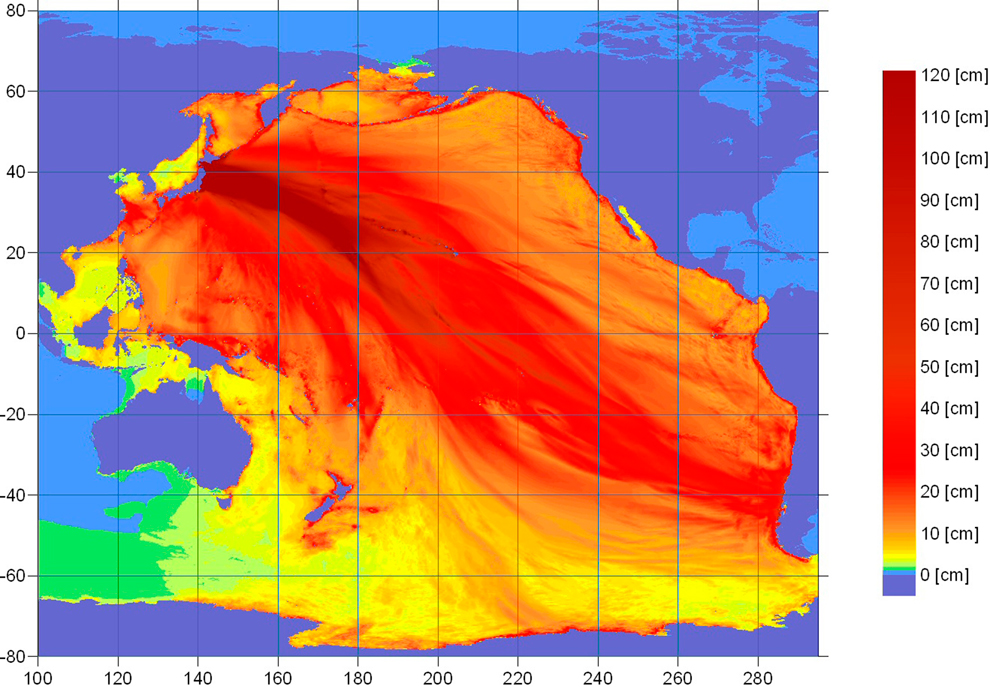
An energy map provided by the National Oceanic and Atmospheric Administration (NOAA) shows the intensity of the tsunami caused by the magnitude 8.9 earthquake which struck Japan on March 11, 2011. A tsunami warning has been issued for the entire Pacific basin except mainland United States and Canada following a huge earthquake that hit Japan on Friday, the U.S. Pacific Tsunami Warning Center said. The warning includes Hawaii and extends from Mexico down to South American countries on the Pacific, the center said. (NOAA/Tsunami Warning Center/)#
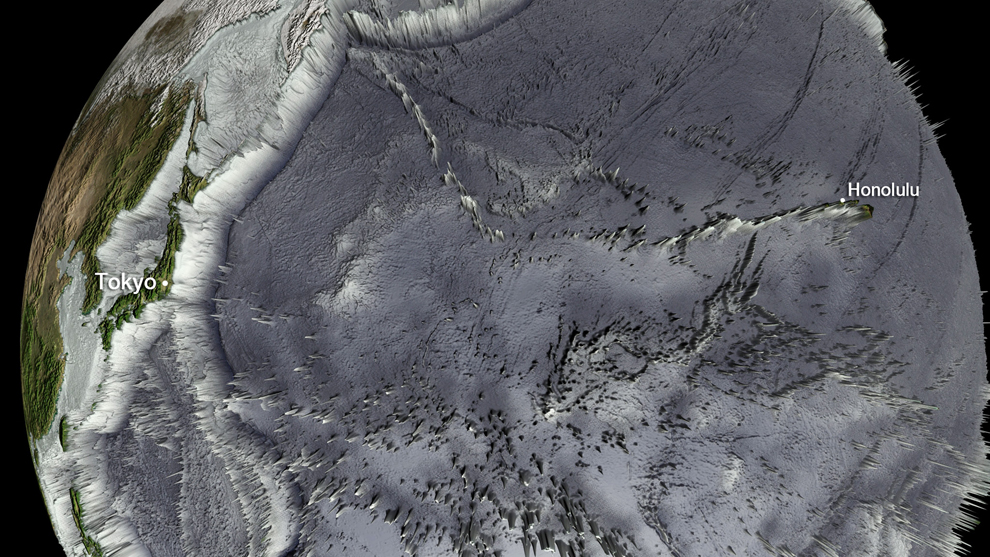
This National Oceanic and Atmospheric Administration (NOAA) Global bathymetry map image released on March 11, 2011 shows features of the ocean floor depth (or bathymetry) from a NOAA ETOPO-1 dataset. The image shows the entire Western Pacific basin. Notice how abruptly the Japanese islands rise out of the ocean. Other coastal Asian areas have much more gradual slopes. The islands and mountain ranges throughout the ocean, visible in this imagery, also affect the tsunami travel time and speed. In the open ocean, tsunamis can travel at speeds up to 500 mph (800 kph). This momentum is what creates such a destructive force as the wave moves inland. Tsunami waves rolled thousands of miles across the Pacific Ocean after a massive earthquake off Japan and washed ashore in Hawaii early March 11, 2011, but the tourist hotspot appeared to escape major damage. As sirens blared and Hawaiian authorities rapidly evacuated low-lying areas, the Pacific Tsunami Warning Center reported wave changes at Waianae Harbor at around 3:24 a.m. (NOAA/handout)#
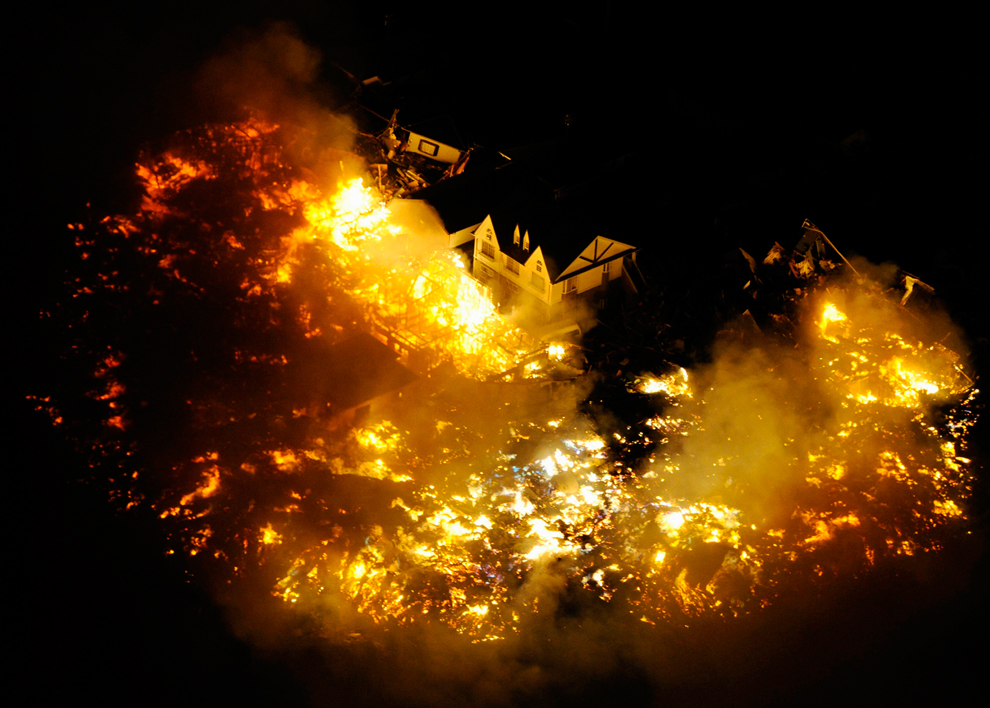
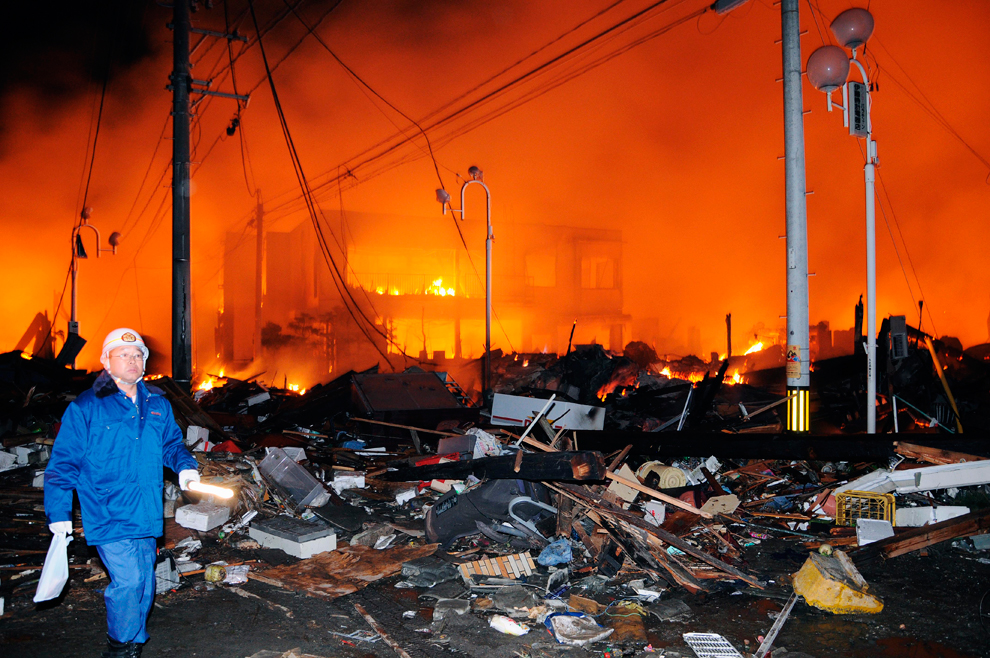
A building is in flames near Sendai airport, Miyagi prefecture (state), Japan, after a powerful earthquake, the largest in Japan's recorded history, slammed the eastern coasts Friday, March 11. (Kyodo News/Associated Press) #

A helmeted man walks past the rubbles and a burning building after a powerful earthquake, the largest in Japan's recorded history, slammed the eastern coasts in Iwaki city, Fukushima prefecture, Japan. (Kyodo News/Associated Press) #

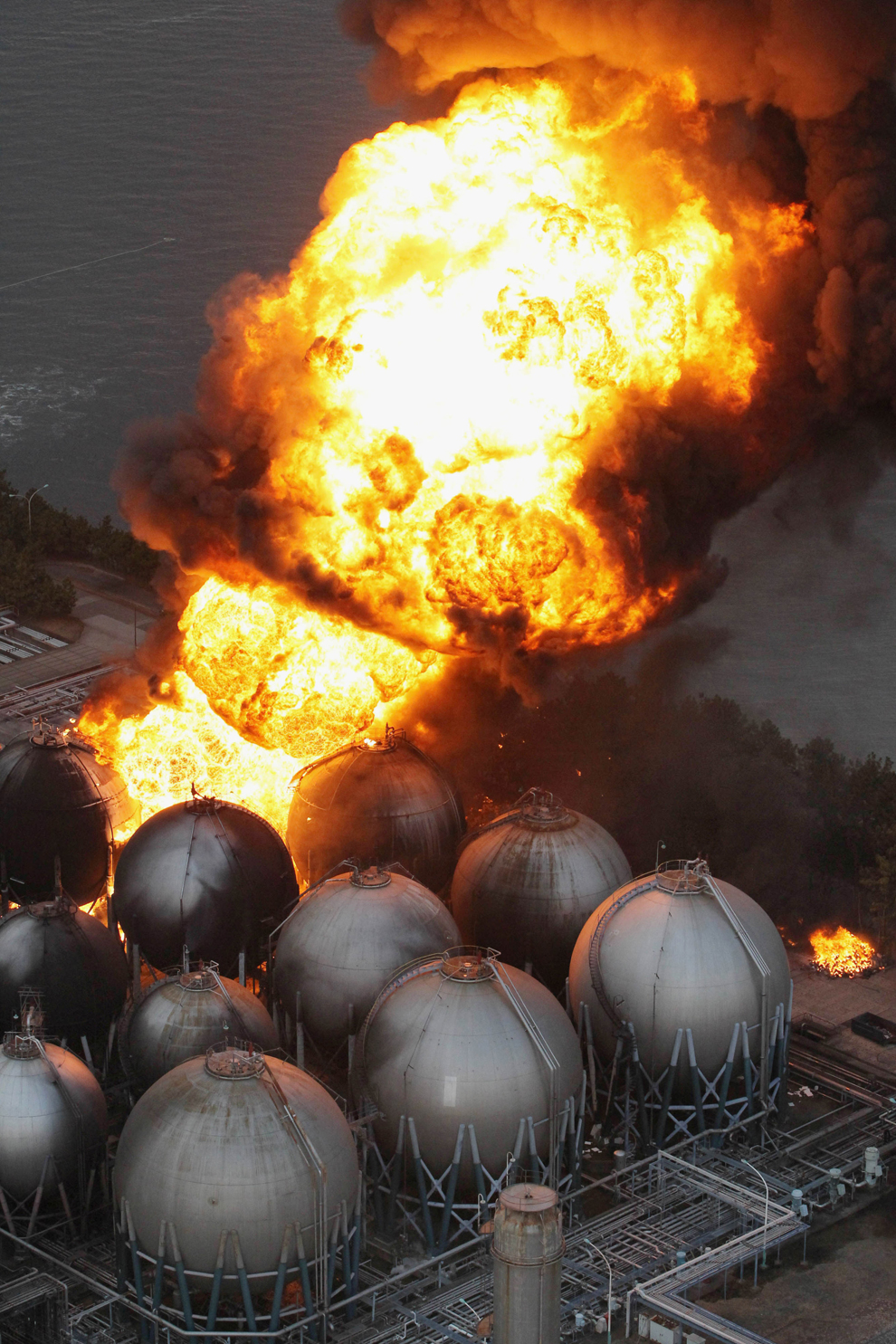
Giant fireballs rise from a burning oil refinery in Ichihara, Chiba Prefecture (state) after Japan was struck by a strong earthquake off its northeastern coast. (Kyodo News/Associated Press) #

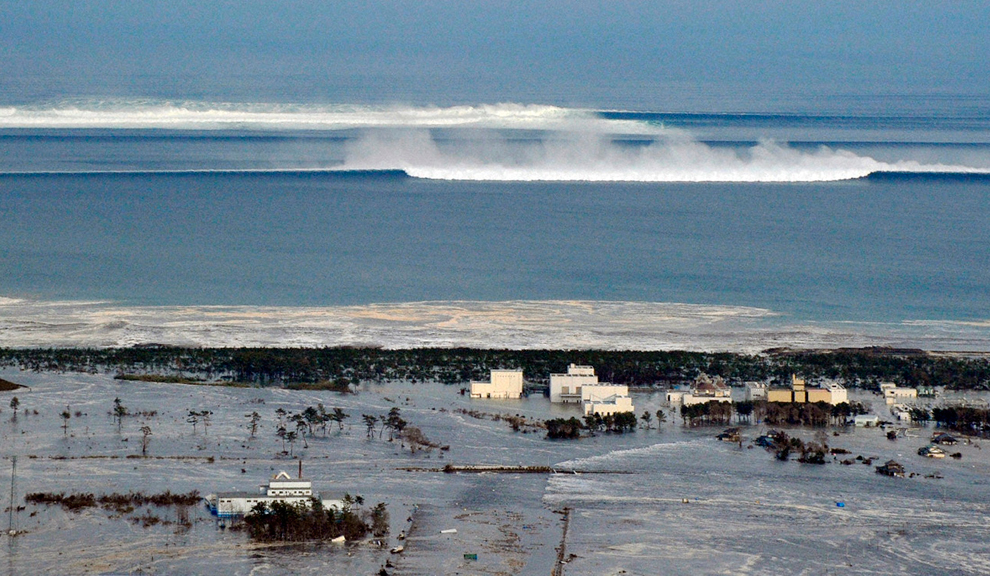
An oncoming tsunami strikes the coast in Natori City, Miyagi Prefecture, northeastern Japan March 11, 2011. The biggest earthquake to hit Japan in 140 years struck the northeast coast on Friday, triggering a 10-metre tsunami that swept away everything in its path, including houses, cars and farm buildings on fire. (Reuters) #
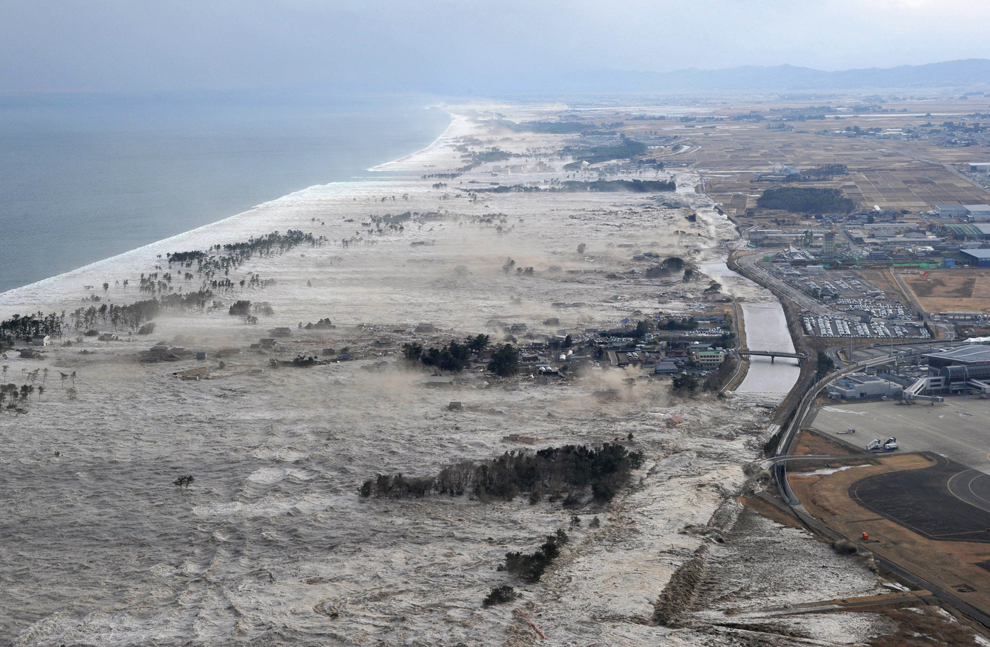
Earthquake-triggered tsumanis sweep shores along Iwanuma in northern Japan. (Kyodo News/Associated Press) #

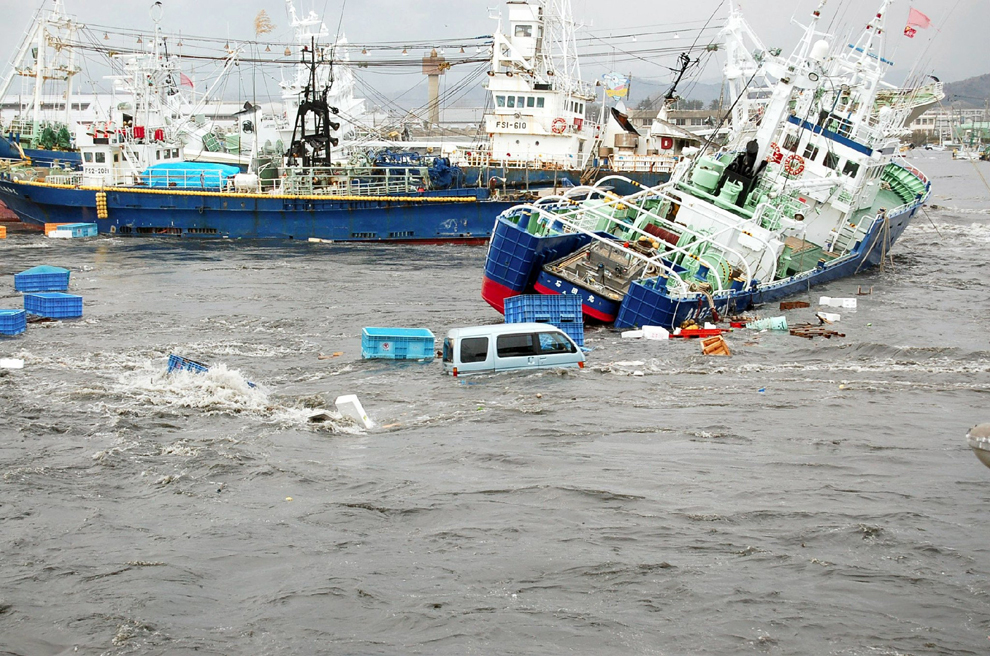
Fishing boats and vehicles are carried by a tsunami wave at Onahama port in Iwaki city, in Fukushima prefecture, northern Japan. (Fukushima Minpo/AFP/Getty Images) #

A tsunami, tidal wave smashes vehicles and houses at Kesennuma city in Miyagi prefecture, northern Japan. (AFP/Getty Images) #

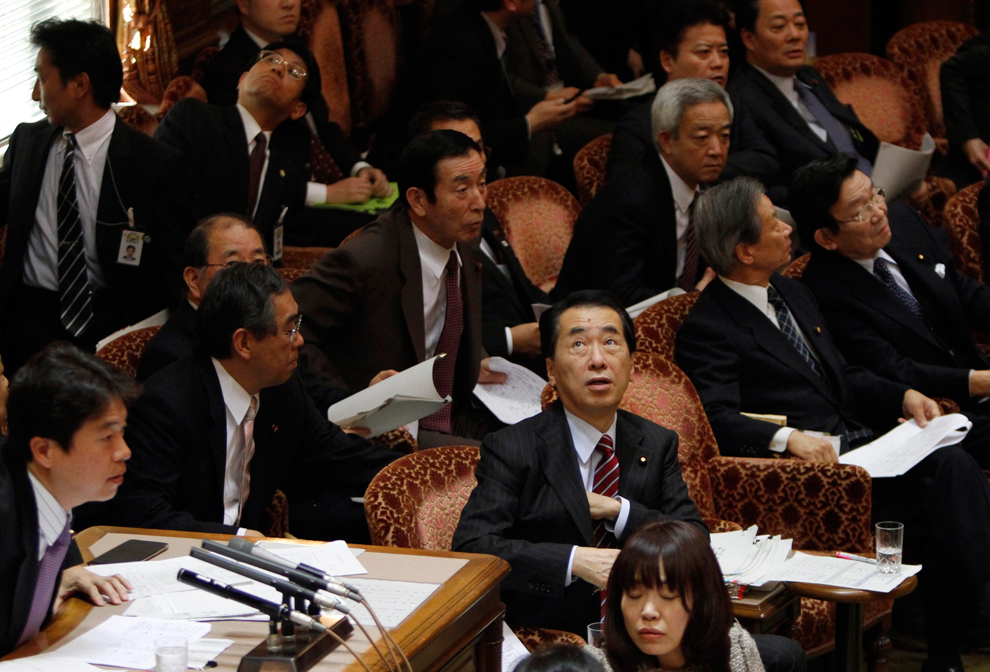
Japan's Prime Minister Naoto Kan (center) reacts he he feels an earthquake as he attends a committee meeting in the upper house of parliament in Tokyo March 11. A massive 8.8 magnitude quake hit the northeast coast of Japan on Friday, shaking buildings in the capital Tokyo, causing "many injuries", at least one fire and triggering a four-metre (13-ft) tsunami, NHK television and witnesses reported. (Toro Hanai/Reuters) #
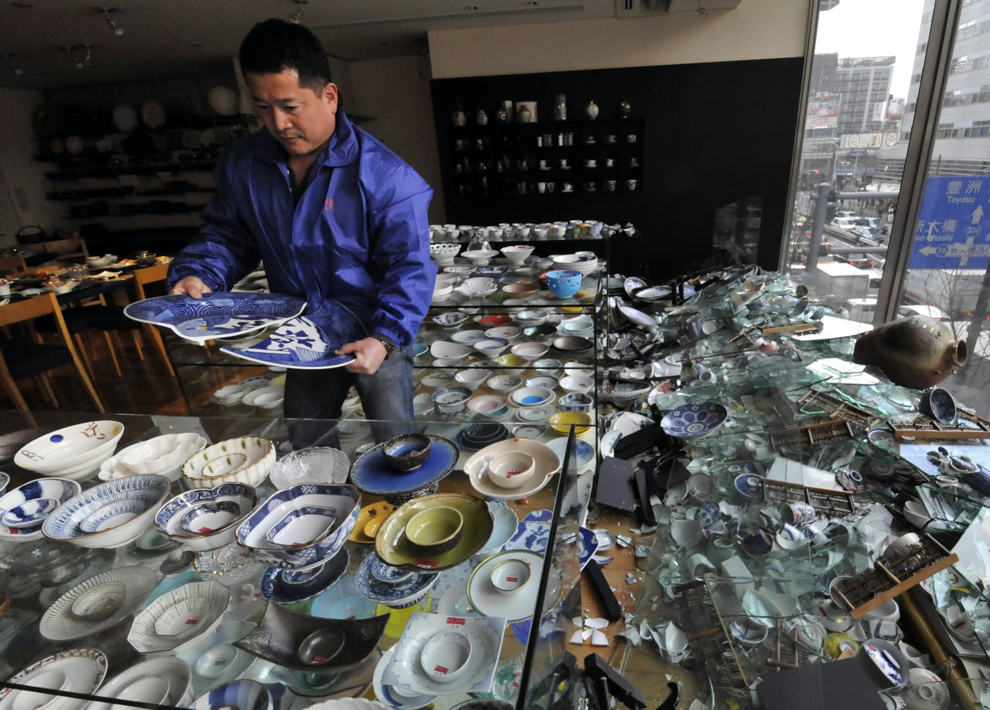
The owner of a ceramic shop checks his damaged wares following the massive 8.9-magnitude earthquake in Tokyo. (Yoshikazu Tsuno AFP/Getty Images) #

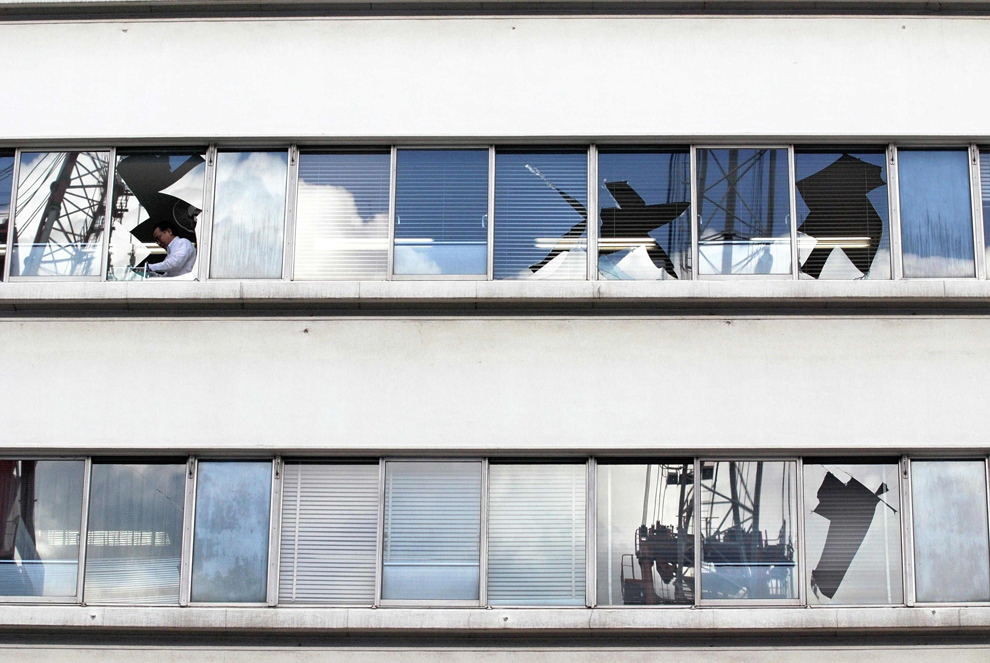
Broken windows of a building are seen after an earthquake in Tokyo , March 11, 2011. A massive 8.9 magnitude quake hit northeast Japan on Friday, causing many injuries, fires and a ten-metre (33-ft) tsunami along parts of the country's coastline. (Reuters) #

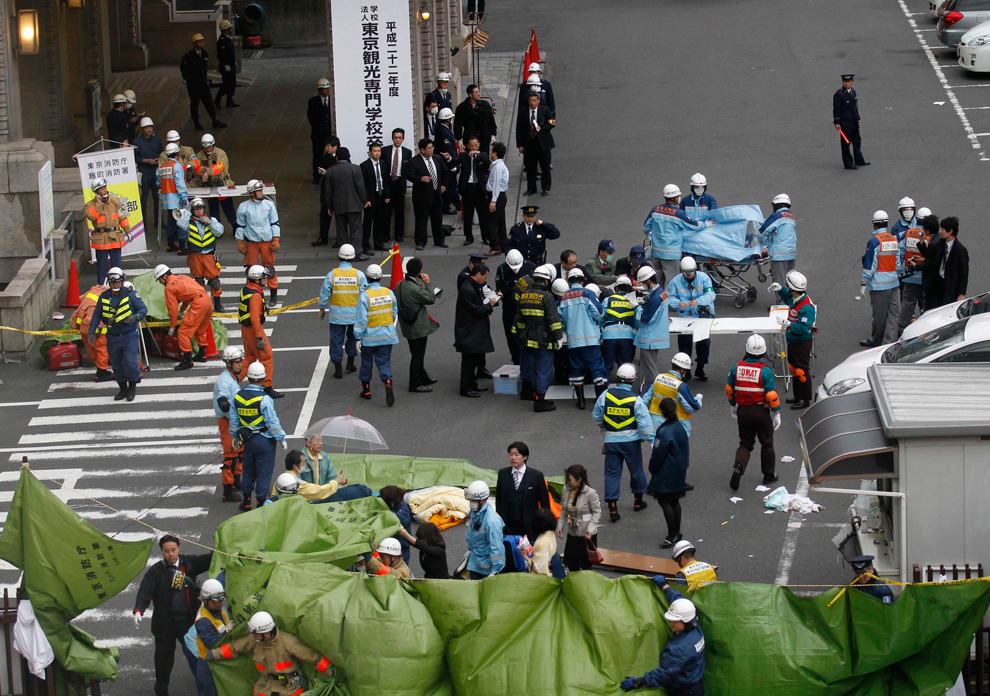
Rescue workers hurry to a building following reports of injuries in Tokyo's financial district after an earthquake hit off the coast of northern Japan. There were several strong aftershocks and a warning of a 10-metre tsunami following the quake, which also caused buildings to shake violently in the capital Tokyo. (Kim Kyung-Hoon/Reuters) #
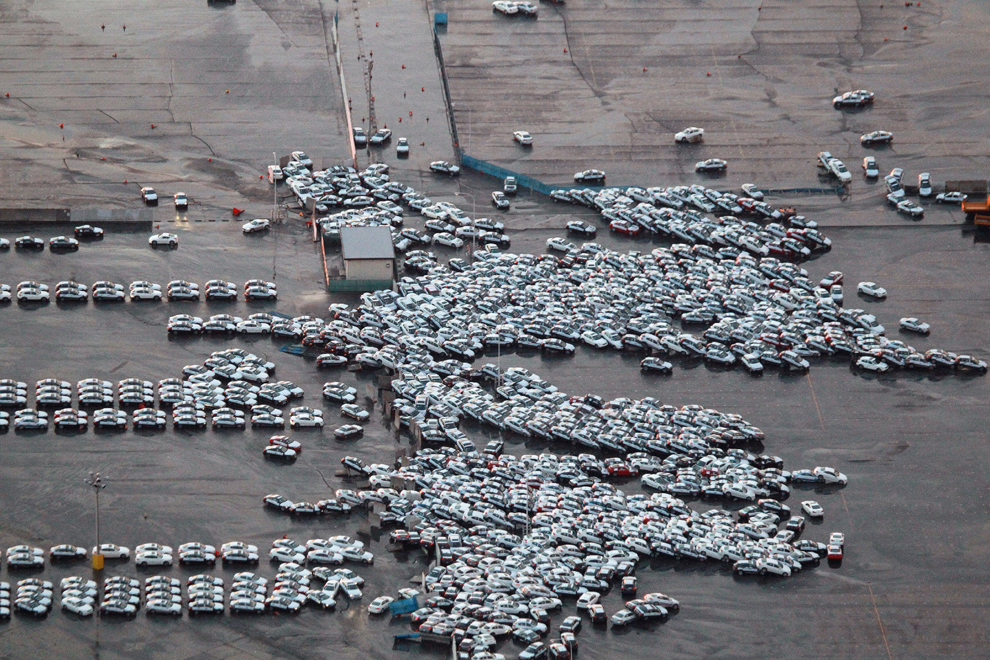
An aerial shot shows vehicles ready for shipping being carried by a tsunami tidal wave at Hitachinaka city in Ibaraki prefecture on March 11, 2011. A massive 8.8-magnitude earthquake shook Japan, unleashing a powerful tsunami that sent ships crashing into the shore and carried cars through the streets of coastal towns. (AFP/Getty Images) #
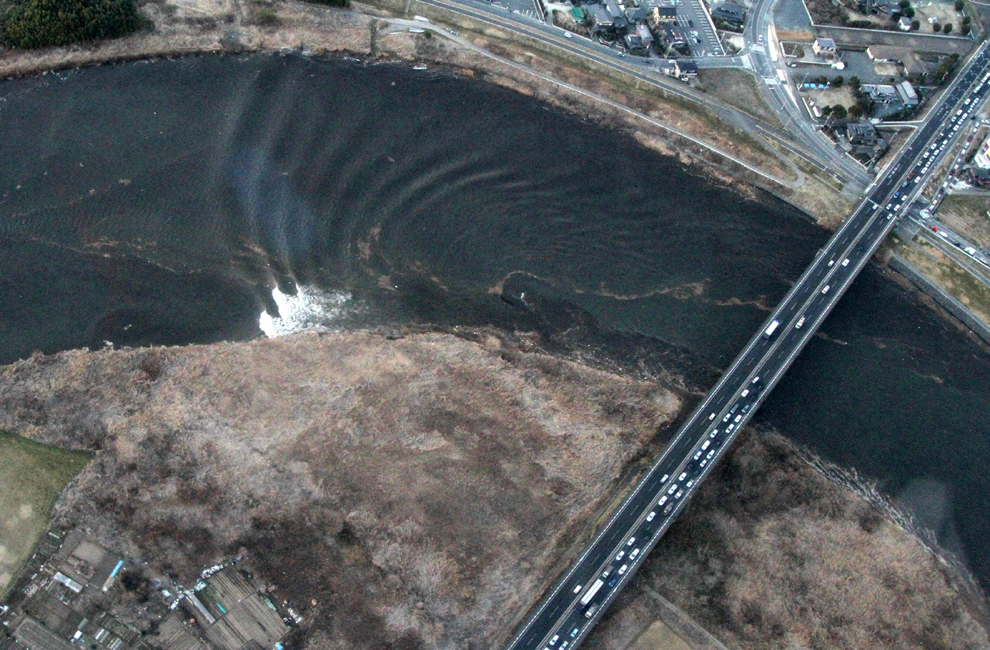
This aerial shot shows the tsunami tidal waves moving upstream (left side) in the Naka river at Hitachinaka city in Ibaraki prefecture on March 11. (AFP/Getty Images) #

Houses, cars and other debris are washed away by tsunami tidal waves in Kesennuma in Miyagi Prefecture, northern Japan, after strong earthquakes hit the area Friday, March 11. (Keichi Nakane/Associated Press/The Yomiuri Shimbun) #

Houses swept by a tsunami smoulder near Sendai Airport. (Reuters) #

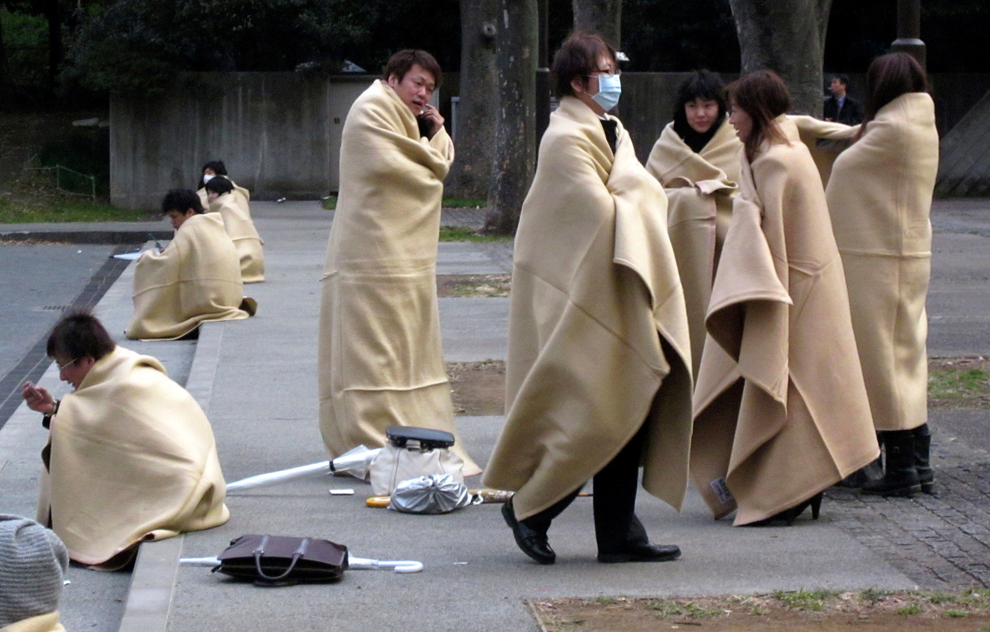
Stranded commuters wrap themselves in blankets bracing for chilly evening at a park in Yokohama, near Tokyo, following a strong earthquake hit eastern Japan on Friday, March 11. (Shuji Kajiyama/Associated Press) #

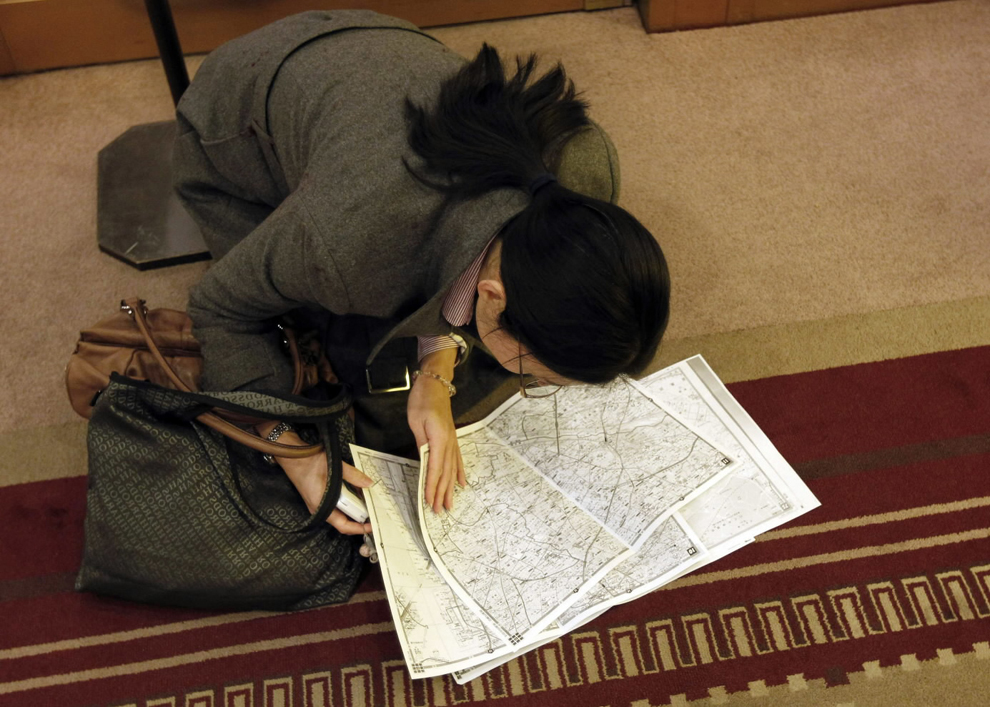
A woman checks a map to find a route as she takes a rest at a hotel lobby after subway and train services were suspended after an earthquake, in Tokyo. (Kim Kyung-Hoon/Reuters) #

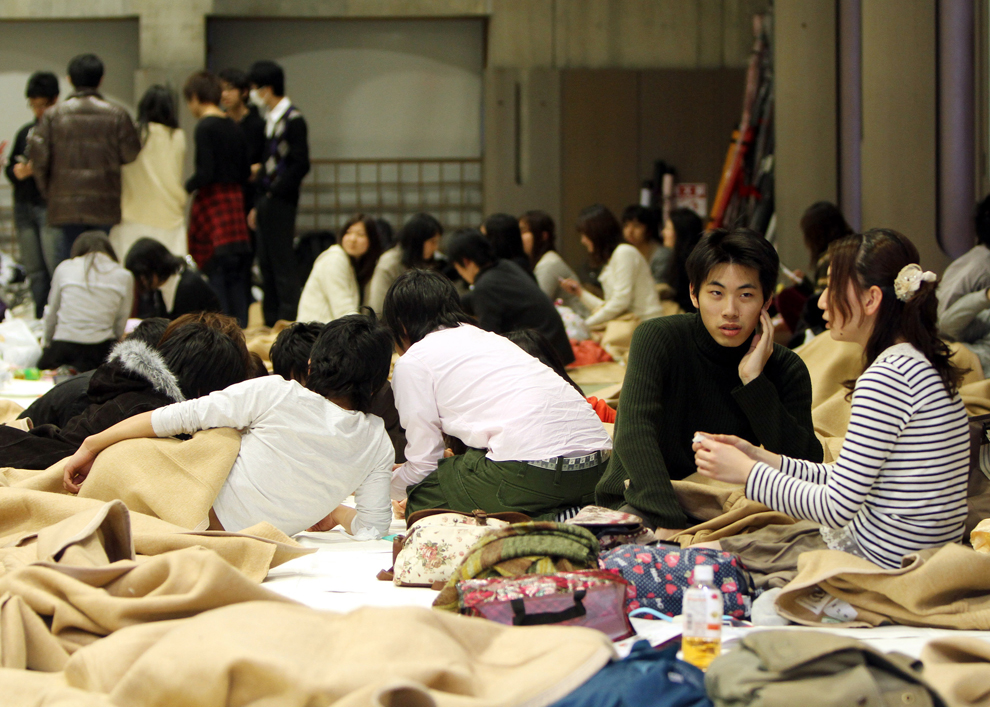
Evacuees wait in an evacuation area following an earthquake in Tokyo, Japan, on Friday, March 11, 2011. Japan was struck by its strongest earthquake on record, an 8.9-magnitude temblor that shook buildings across Tokyo and unleashed a seven-meter-high tsunami that killed hundreds as it engulfed towns on the northern coast. (Haruyoshi Yamaguchi/Bloomberg) #
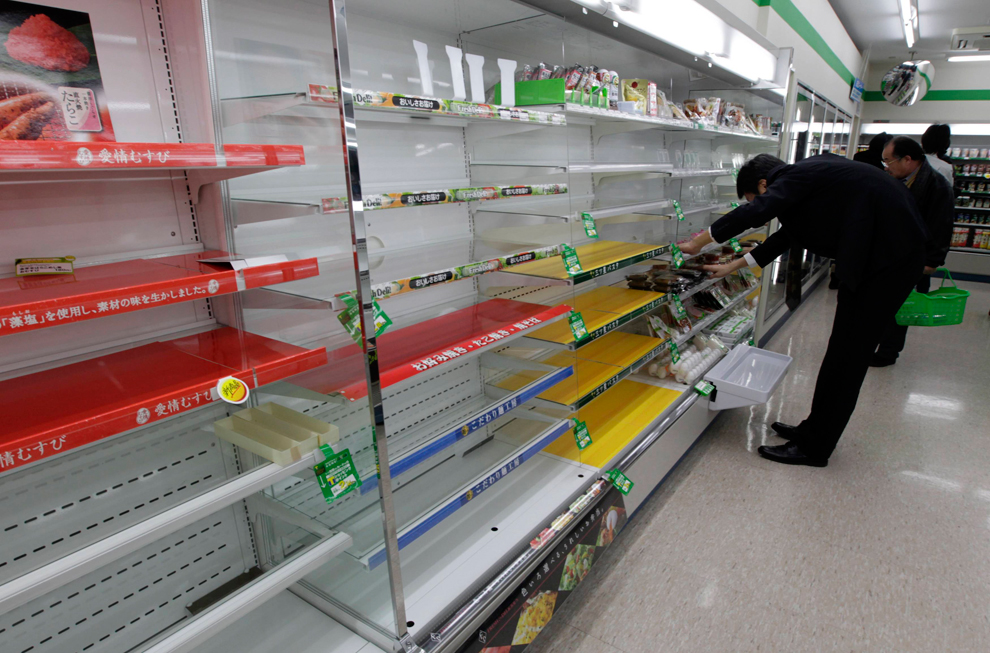
A man looks for supplies in a store in Tokyo that has almost sold out of food and drink as people are unable to return home after an earthquake March 11. (Yuriko Nakao/Reuters) #

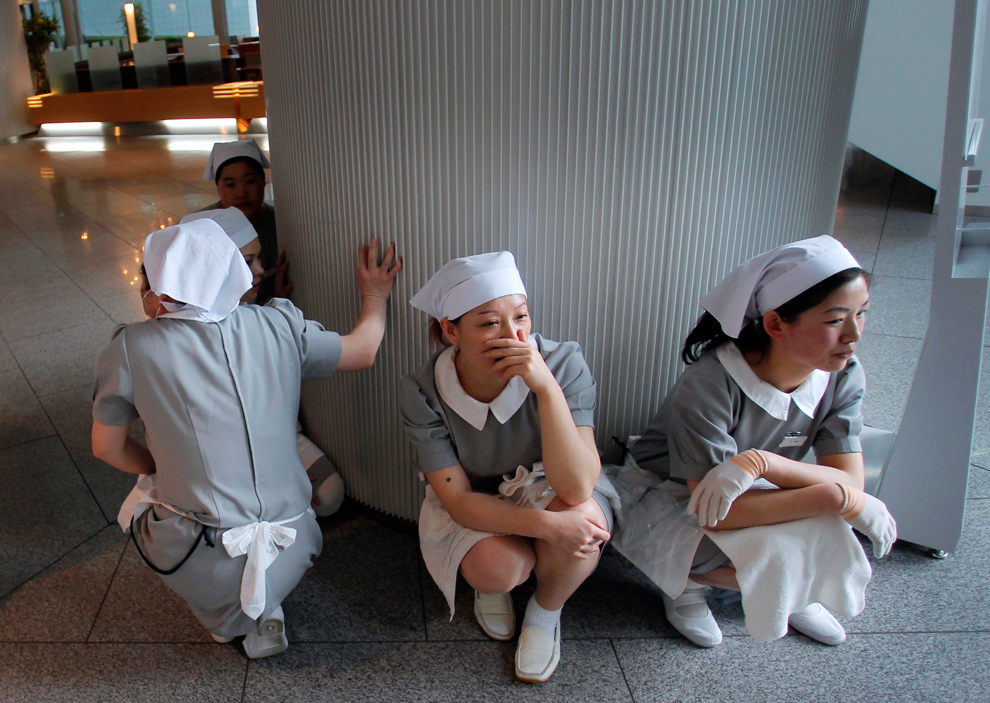
Hotel employees squat down in horror at the hotel's entrance in Tokyo after a strong earthquake hit Japan. (Itsuo Inouye/Associated Press) #

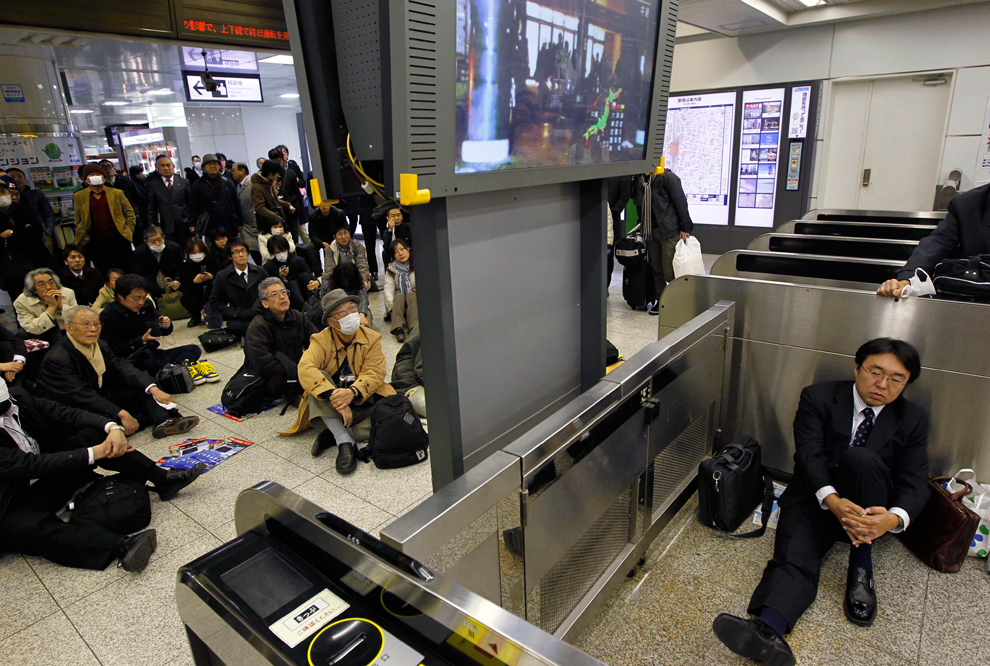
Stranded commuters watch a TV news on a powerful earthquake at Tokyo railway station as train services are suspended in Tokyo. (Hiro Komae/Associated Press) #

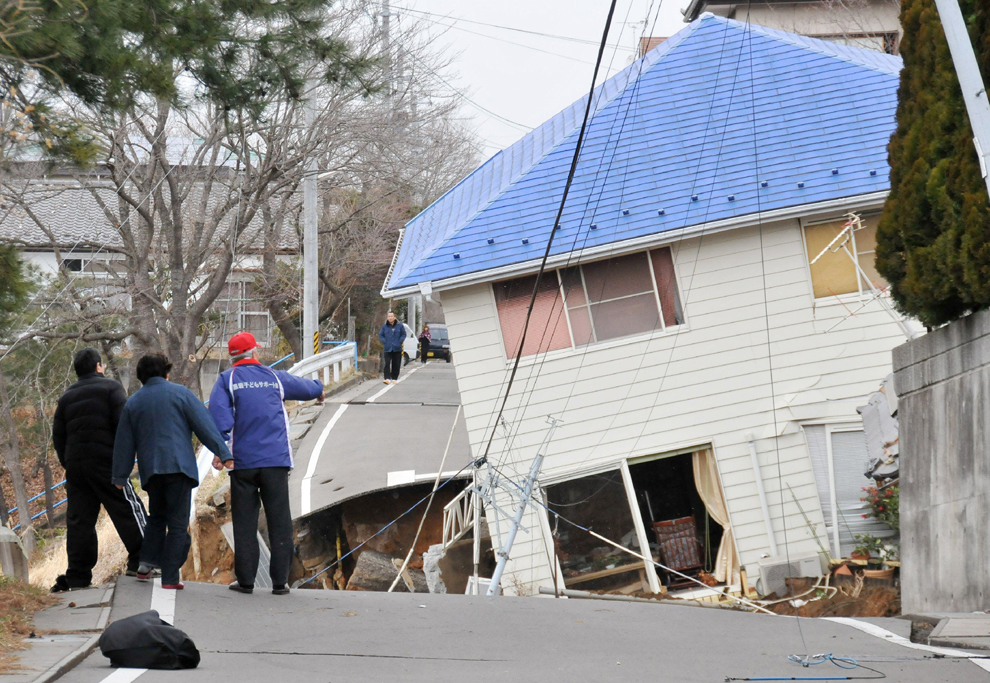
Residents check the damaged done on a road a house in Sukagawa city, Fukushima prefecture, in northern Japan. (Fukushima Minpo/AFP/Getty Images) #

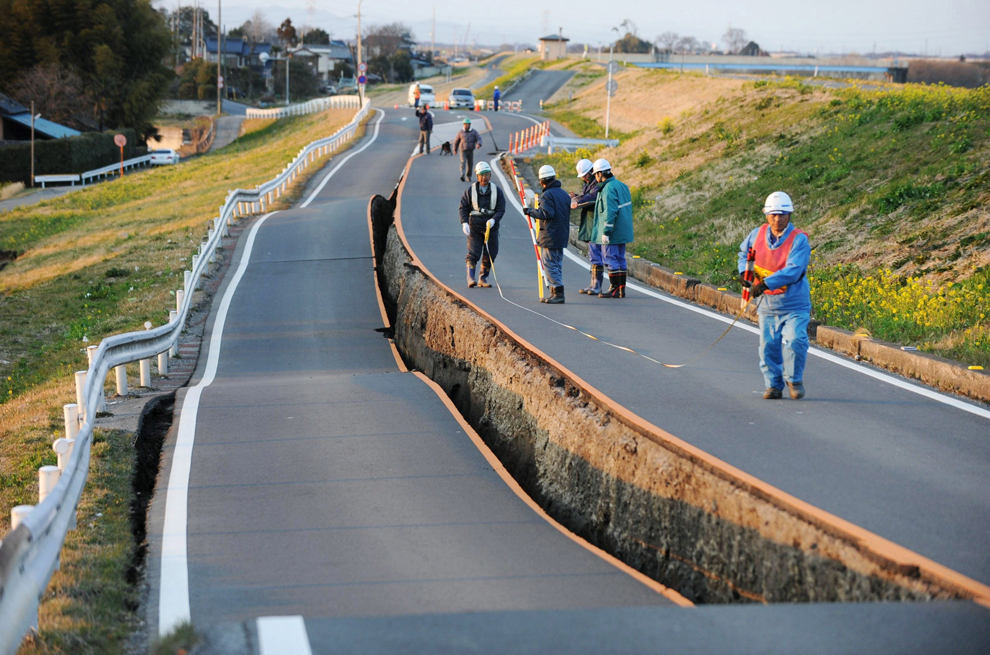
Workers inspect a caved-in section of a prefectural road in Satte, Saitama Prefecture, after one of the largest earthquakes ever recorded in Japan slammed its eastern coast March 11. (Saitama Shimbun/Associated Press/Kyodo News) #

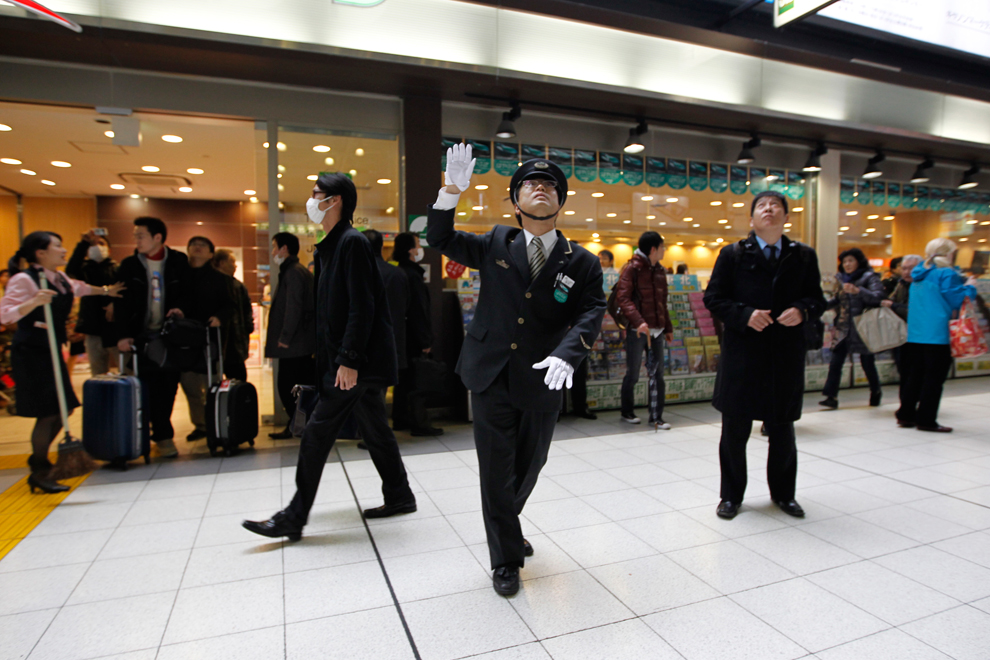
A station staff directs passengers at Tokyo's Shinagawa train station after a magnitude 8.9 earthquake slammed Japan's eastern coast. (Hiro Komae/Associated Press) #

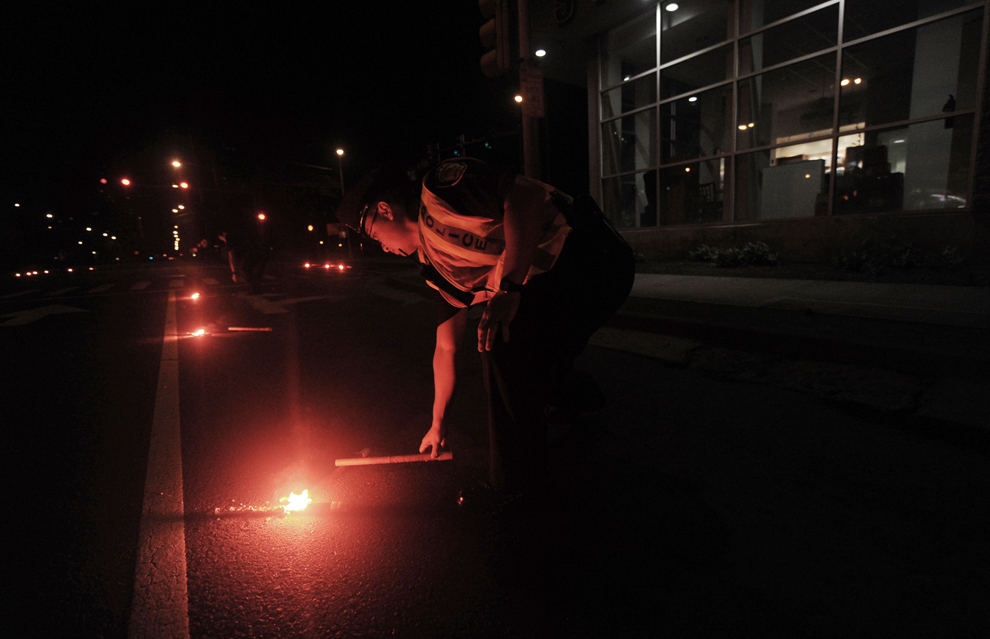
Police place roadside flares along the highway on March 11 in Honolulu, Hawaii. An earthquake measuring 8.9 on the Richter scale has hit the northeast coast of Japan causing tsunami alerts throughout the Pacific Ocean. Thousands along the coast are evacuating their homes in Hawaii as the state prepares for tsunami waves. (Lucy Pemoni/Getty Images) #
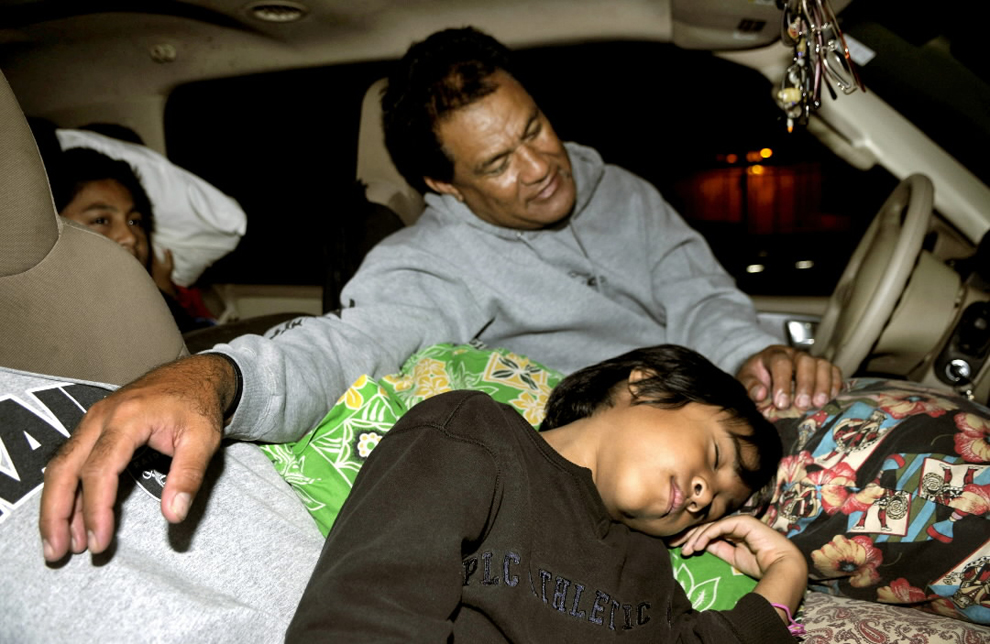
Puipui Faletoi, of Moiliili, Oahu, background center, rests in his vehicle with his sons Daniel, left, and Fletcher Faletoi in the parking lot of Manoa District Park in Oahu, Hawaii. The site is a volunteer staging area which could turn into a Red Cross shelter if a tsunami arrives. The Faletoi family plan to take shelter here. (Rebecca Breyer/Associated Press)#
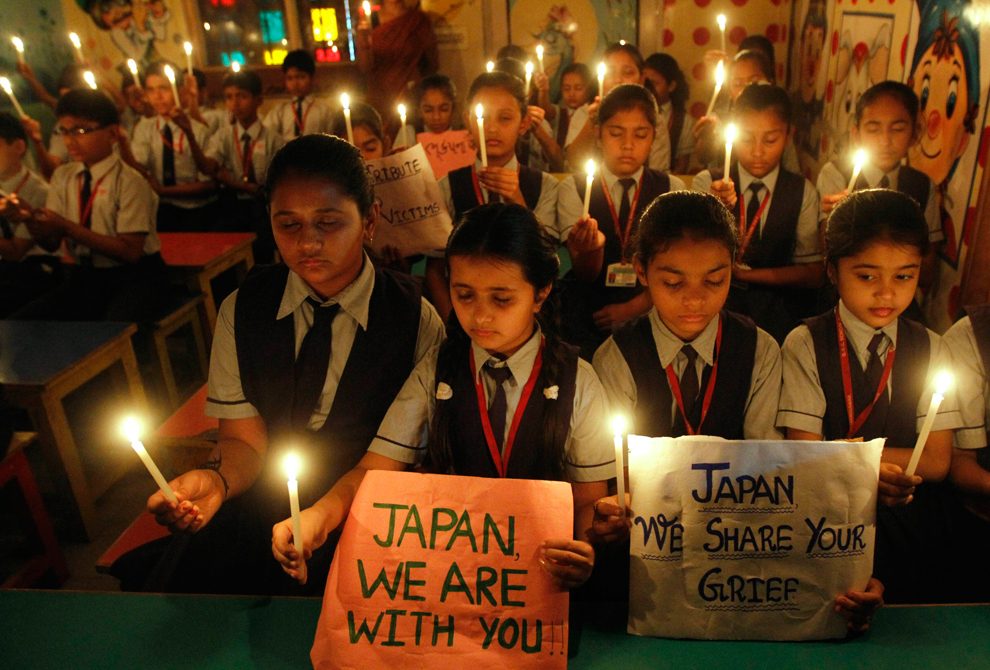
Students hold candles as they pray for Japan's earthquake victims inside their school in the western Indian city of Ahmedabad March 11. (Amit Dave/Reuters) #

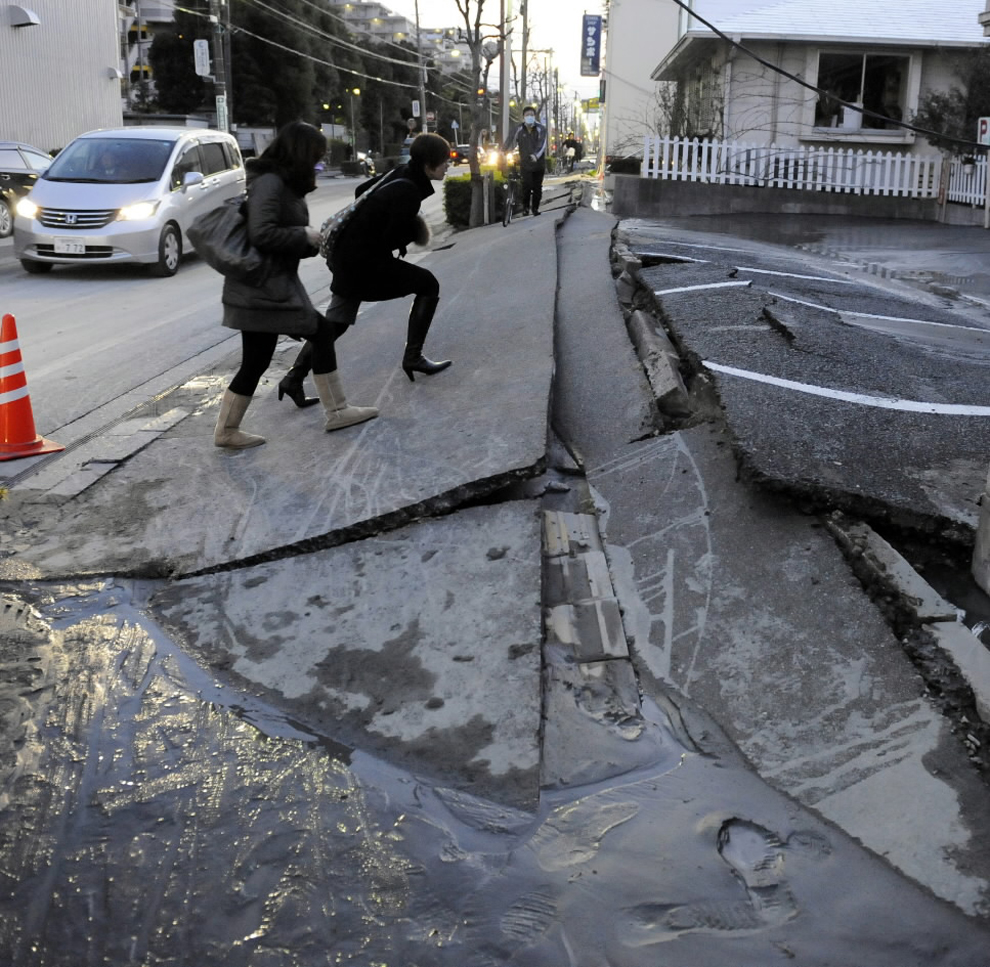
A pedestrian road collapsed in the massive 8.9-magnitude earthquake in Urayasu city, Chiba prefecture on March 11. (Toshifumi Kitamura/AFP/Getty Images) #

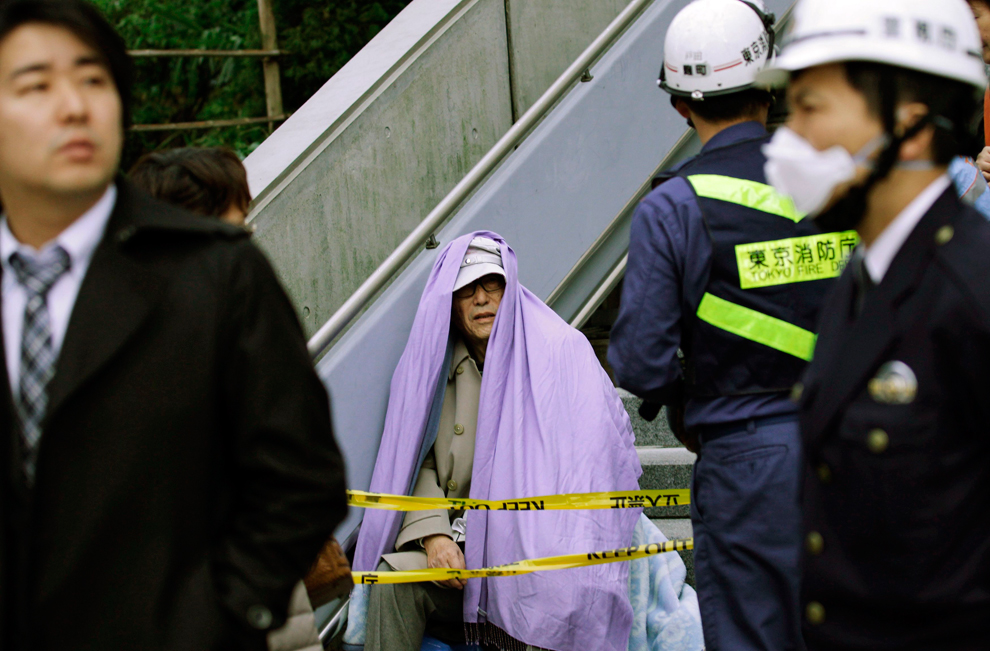
A man sits wrapped in a blanket after he was evacuated from a building in Tokyo's financial district, after an earthquake off the coast of northern Japan, March 11. (Kim Kyung-Hoon/Reuters) #

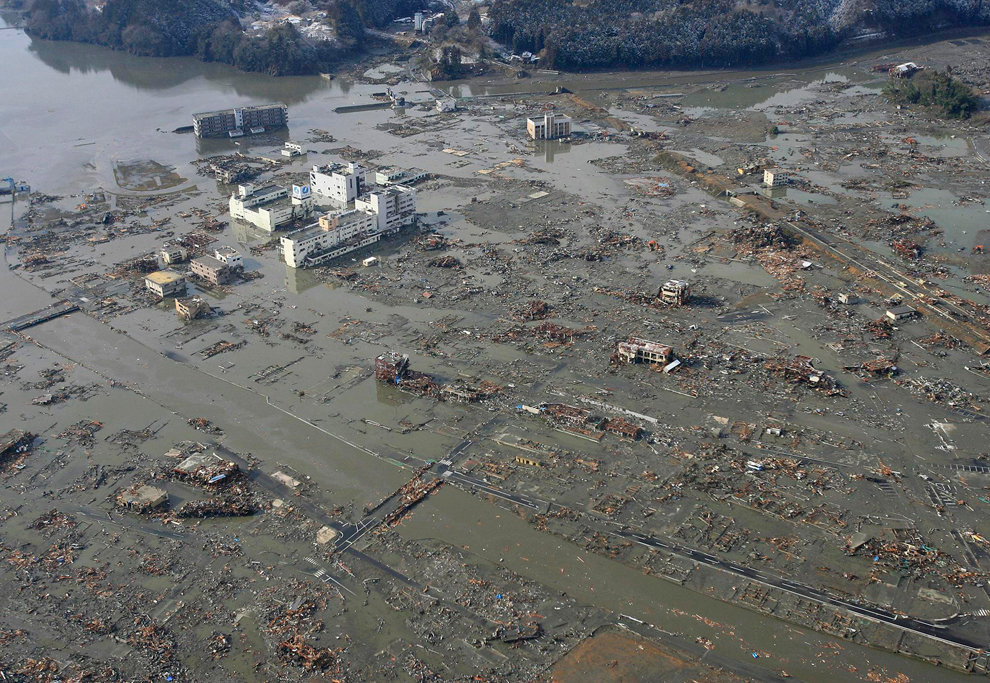
Shores are submerged in Natori city, Miyagi prefecture (state), Japan, after a ferocious tsunami spawned by one of the largest earthquakes ever recorded, slammed Japan's eastern coasts Friday, March 11, 2011. (Kyodo News) #


[ 本帖最后由 馬六甲 于 2011-3-14 00:56 编辑 ]
作者: jiliyacui    时间: 2011-3-12 06:21

灾难再次降临到日本过。
  为逝去的无辜生命祈祷.................
作者: 馬六甲    时间: 2011-3-12 06:34     标题: 大地震地鐵立即疏散乘客 日本市民冷靜應對


2011-03-11

本臺記者李建軍目前身在日本東京市中心,他表示,地震發生時,他正處於地鐵內,當時他感到整個車廂劇烈搖晃,隨後地鐵公司宣布發生地震,民眾即時疏散到地面。

metro_closedown305.jpg
地震發生後,東京站新幹線服務關閉。(李建軍攝)


Tokyo_waiting305.jpg
3月11日,日本關東發生大地震,因地震無法回家的乘客,大批滯留在東京車站內。(李建軍攝)


phone_line305.jpg
3月11日,由於東京手機網絡話音通訊癱瘓,大批民眾排隊輪候使用公用電話。(李建軍攝)


shop_food305.jpg
地震後,無法返家的東京上班族搶購糧食,便利店貨架全空。(李建軍攝)

在大約十分鐘後再有強烈余震發生,當時李建軍在人行道上也能感到強烈震感。李建軍說,日本市民在地震中反應冷靜、訓練有素,沒有出現類似汶川大地震時的混亂情況。

地震過後東京未有出現混亂,東京市內未見大型建筑倒塌,部分殘舊建筑出現零星火警。

現時當地主要的公共交通均已停止服務,大批災民正在各大地鐵站、火車站內暫避,部分地區仍然電力中斷,入夜後東京的氣溫跌至低於10攝氏度。東京地區的互聯網速度較平日緩慢,Skype 和 Twitter 等一些基本網上通訊服務仍然正常,但手機及短訊服務則幾近癱瘓,政府要求公共電話免費開放,災民目前就正排起長龍等候打電話。

日本政府已宣布市內便利店免費派發食物,但不少地區食物供應出現短缺。日本民眾目前普遍對受地震影響關閉的核電站是否安全感到憂慮。


http://www.rfa.org/cantonese/news/japan_update-03112011102254.html?encoding=traditional

作者: 柳子慕雪    时间: 2011-3-12 07:08

为什么总是无法显示图片?[
请教
作者: 馬六甲    时间: 2011-3-12 07:24     标题: 回复 4# 柳子慕雪 的帖子

可能是你的瀏覽器問題,試試訪問引用網址能否看到http://www.boston.com/bigpicture ... ake_hits_japan.html


如果還是看不到,建議使用其它瀏覽器,如Google的chrome,下載地址 http://www.google.com/chrome?hl=zh-HK
作者: zzz132    时间: 2011-3-12 07:30

图片太震撼了
作者: 舌在足矣    时间: 2011-3-12 07:35

基地在的日本的朋友来报平安啊,尤其是佳奈
作者: phranksun    时间: 2011-3-12 08:30

引用:
原帖由 舌在足矣 于 2011-3-12 07:35 发表
基地在的日本的朋友来报平安啊,尤其是佳奈
佳奈不是在芬兰么?

作者: hhzz116688    时间: 2011-3-12 09:09

为逝去的无辜生命祈祷
作者: 柳子慕雪    时间: 2011-3-12 09:25     标题: 回复 5# 馬六甲 的帖子

谢谢马六甲先生,通过引用网址能够看到。谢谢
作者: qenjoynel    时间: 2011-3-12 10:01

希望多看到现场图片,地震不可怕,对生命的漠视才是人生的悲剧,看看中国的建筑质量!!!!
作者: a981234    时间: 2011-3-12 11:10

太惨了,在大自然面前人类还是显得渺小。
作者: ameng128    时间: 2011-3-12 11:44

为什么我看到的图片是黑的?就像黑屏。。。
作者: disk_0    时间: 2011-3-12 18:39

说:是哪个把地壳插毁了?男优厉害啊!大海都潮吹了!
作者: jiuyuemori    时间: 2011-3-12 19:28

为什么我看到的图片是黑的?就像黑屏。。。


我的也是
作者: 馬六甲    时间: 2011-3-12 19:32

回14,16樓朋友,該是你的網速慢而不能顯示,或可嘗試直接訪問引用網址http://www.boston.com/bigpicture ... ake_hits_japan.html
作者: bingshanlaike12    时间: 2011-3-12 19:40

为逝去的无辜生命祈祷
作者: wension    时间: 2011-3-12 19:49

Japan we share your grief!
作者: 305422    时间: 2011-3-12 19:53

看样子天灾还是战胜了高科技!
作者: xuan118    时间: 2011-3-13 09:54

祝原她们一切安康吧!
作者: qllxj    时间: 2011-3-13 15:41

在大自然面前,人类真渺小啊。。
作者: 馬六甲    时间: 2011-3-14 00:55

Japan: earthquake aftermath

Japan raced to avert a nuclear meltdown today by flooding a nuclear reactor with seawater after Friday's massive earthquake left more than 600 people dead and thousands more missing. Towns in the country's northeast coast were literally wiped away by an ensuing tsunami, leaving countless people seeking shelter in the aftermath of the quake, which measured 8.9 on the Richter scale and was the country's strongest recorded quake. -- Lloyd Young 44 photos total)

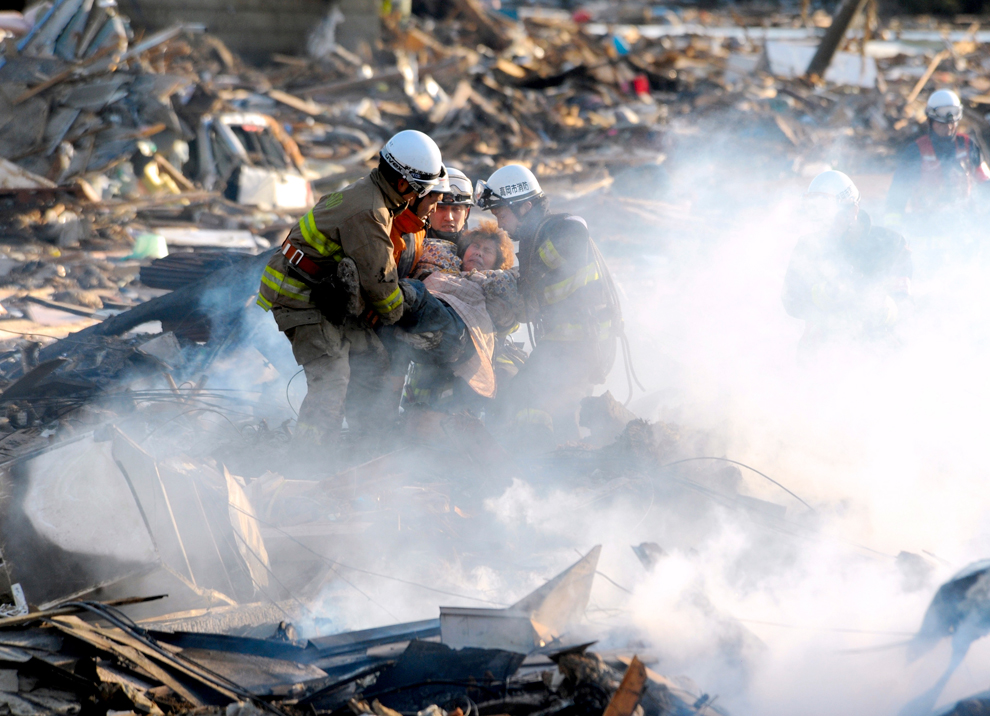
A resident is rescued from debris in Natori, Miyagi, northern Japan March 12 after one of the country's strongest earthquakes ever recorded hit its eastern coast March 11. (Asahi Shimbun, Noboru Tomura/Associated Press)

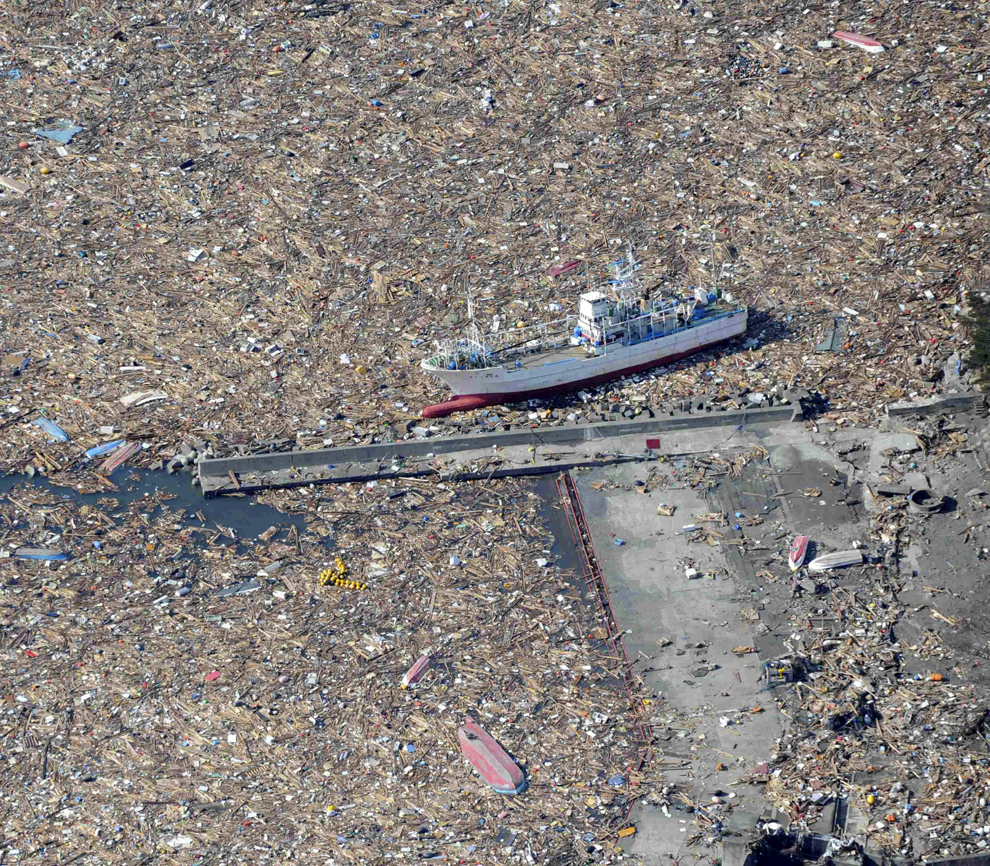
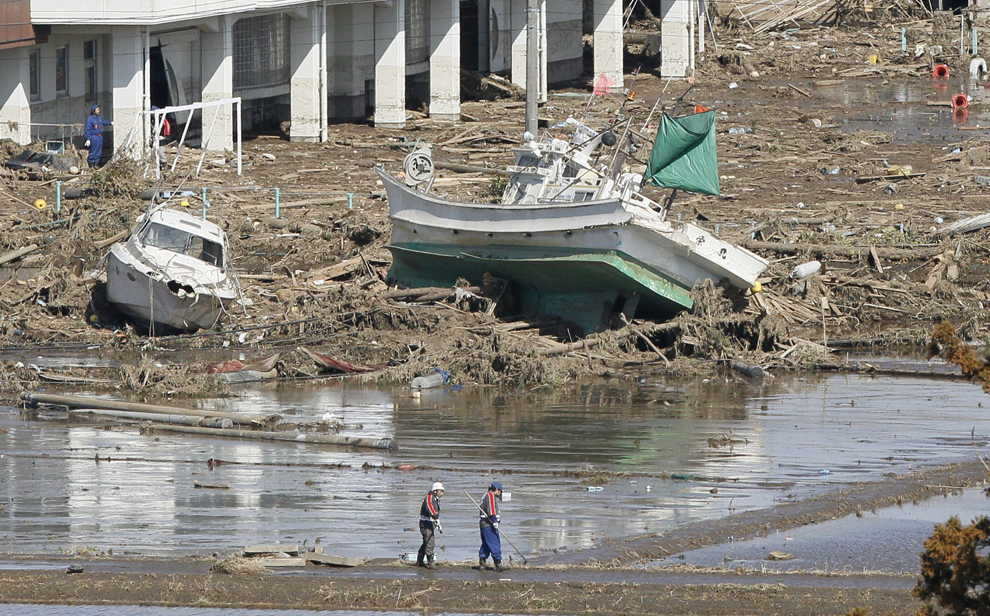
A fishing boat rests surrounded by debri in the city of Kamaishi in Iwate prefecture on March 12. (Yomiuri Shimbun/AFP/Getty Images) #

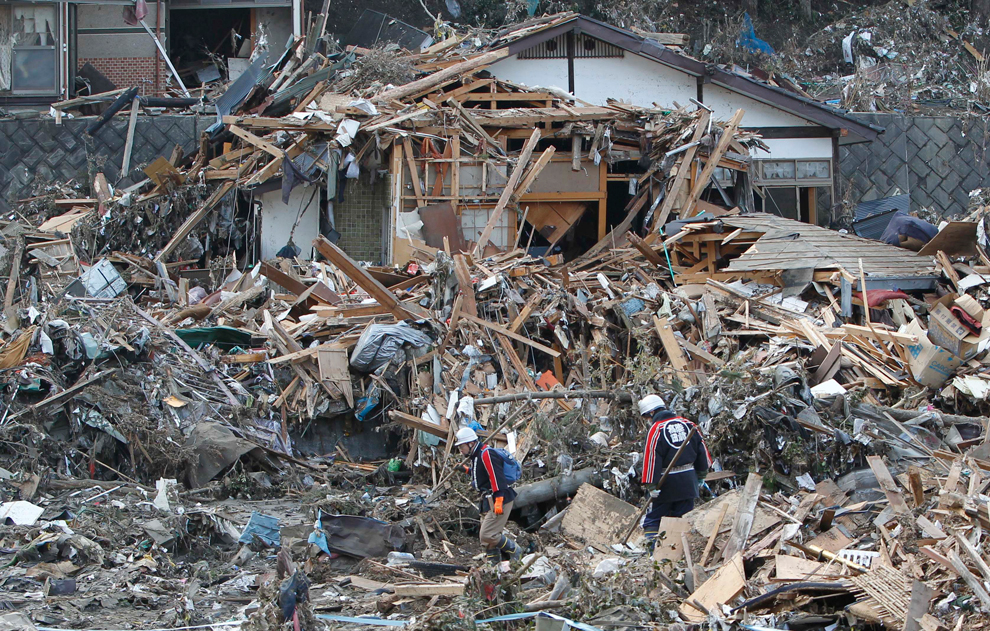
Rescue workers search for victims from the rubble in Rikuzentakata, northern Japan, March 13 after the magnitude 8.9 earthquake and tsunami struck the area. (Toru Hana/Reuters) #

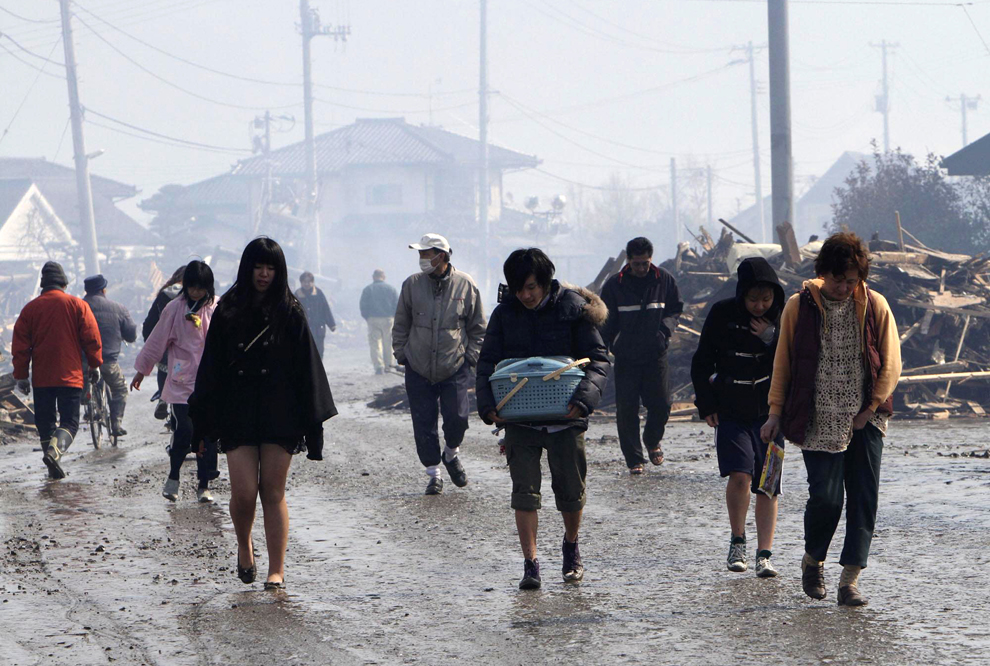
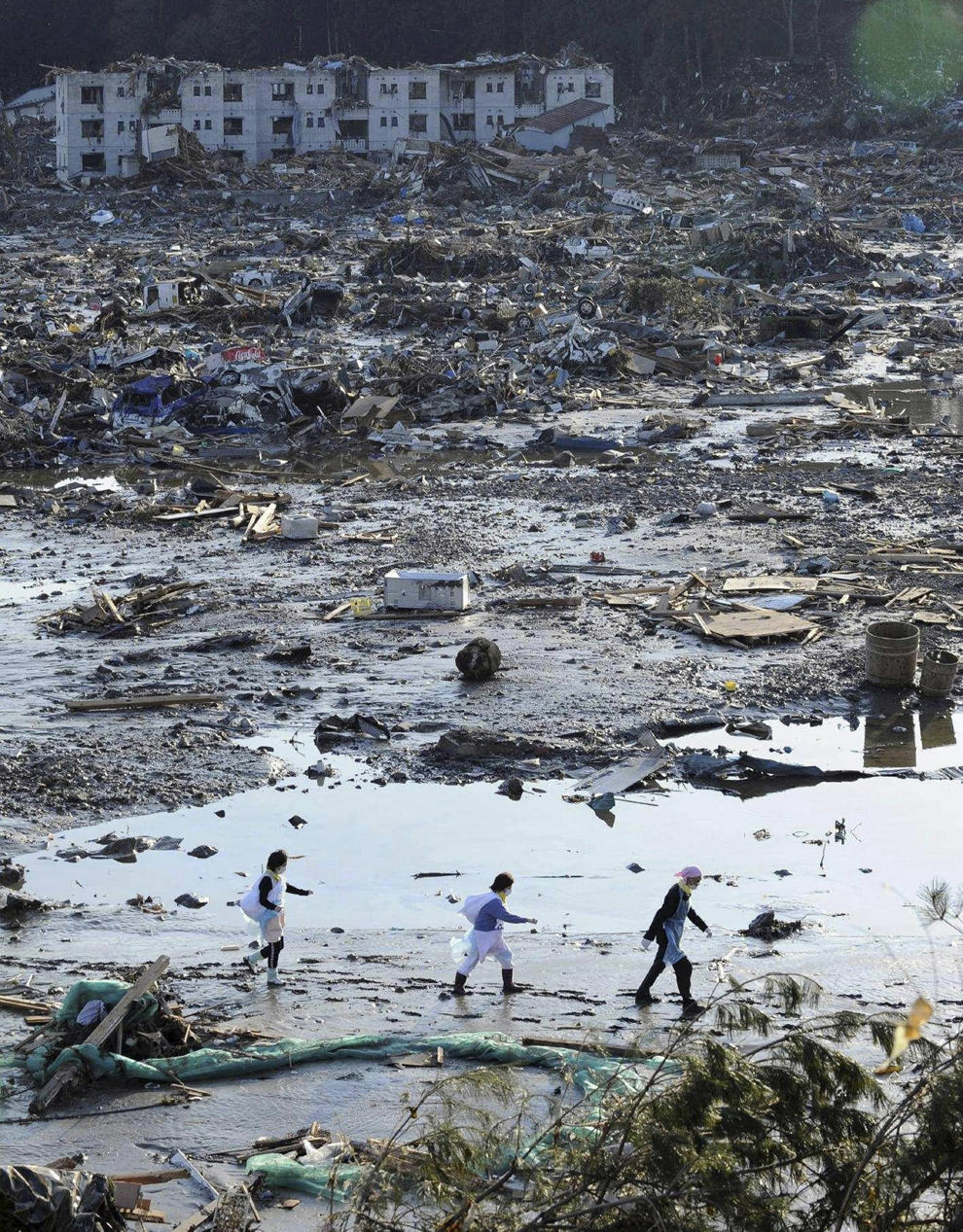
People walk on a muddy road as they evacuate to a shelter in Natori city, Miyagi prefecture on March 12. (AFP/Getty Images) #

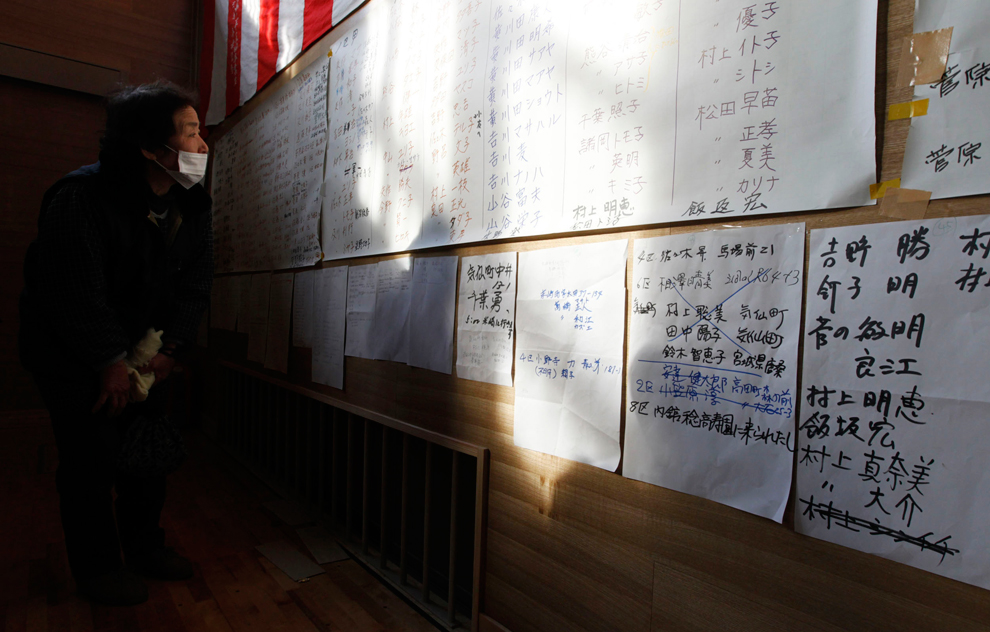
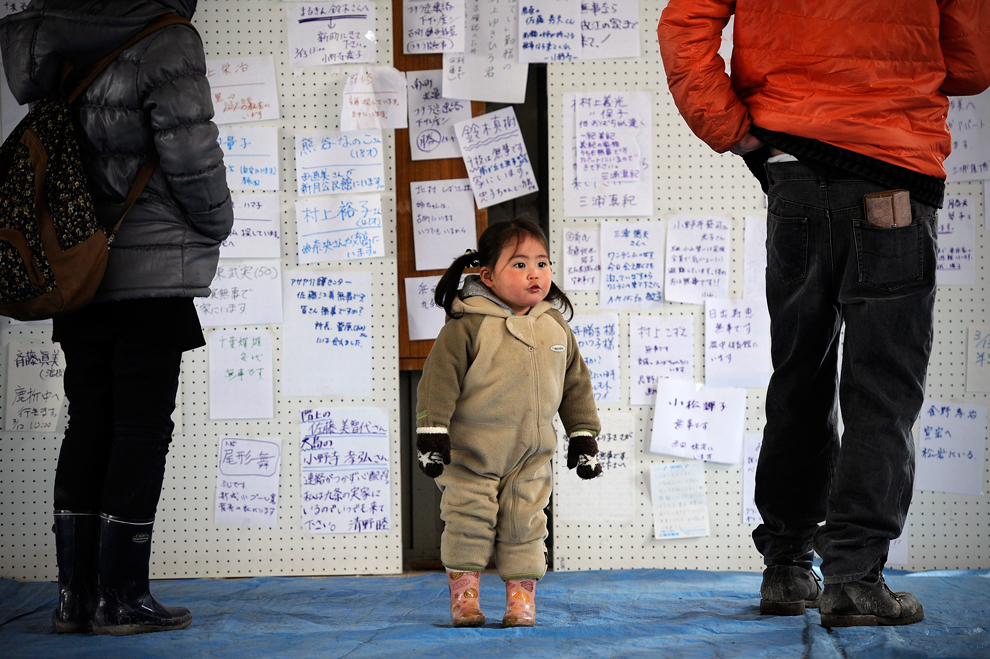
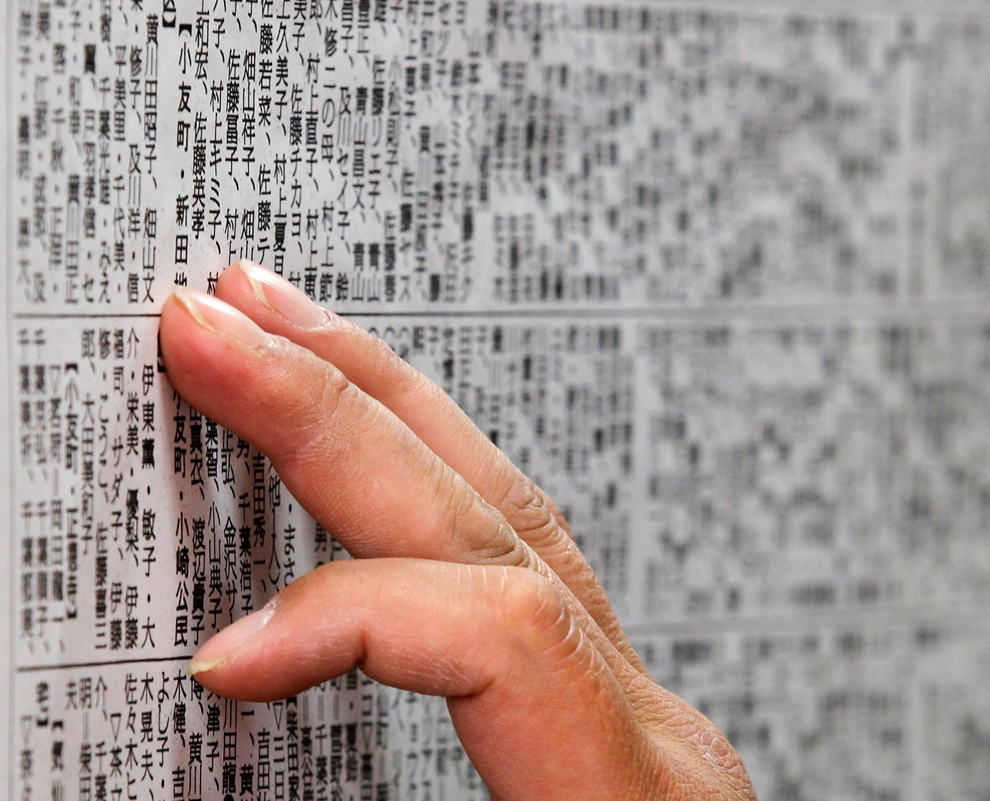
A survivor looks at a board showing names of other survivors at a shelter in a village ruined by an 8.9 magnitude earthquake and tsunami, in Rikuzentakata in Iwate prefecture, northeast Japan March 13. (Lee Jae-Won/Reuters) #

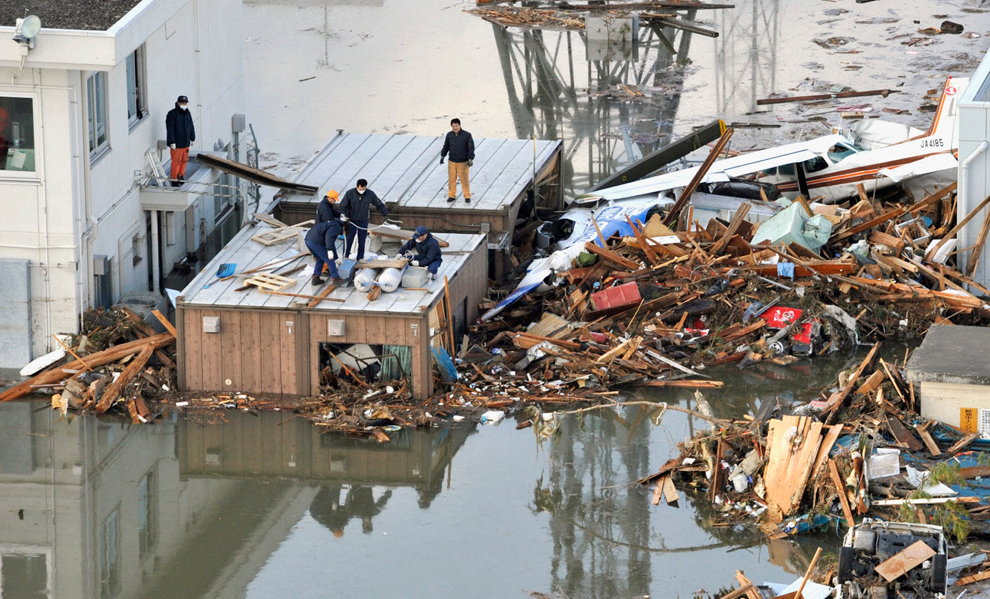
People build a raft on the roof of a building struck by a tsunami and earthquake at Sendai Airport in northeastern Japan March 12. Japan confronted devastation along its northeastern coast on Saturday, with fires raging and parts of some cities under water after a massive earthquake and tsunami. (Kyodo/Reuters) #

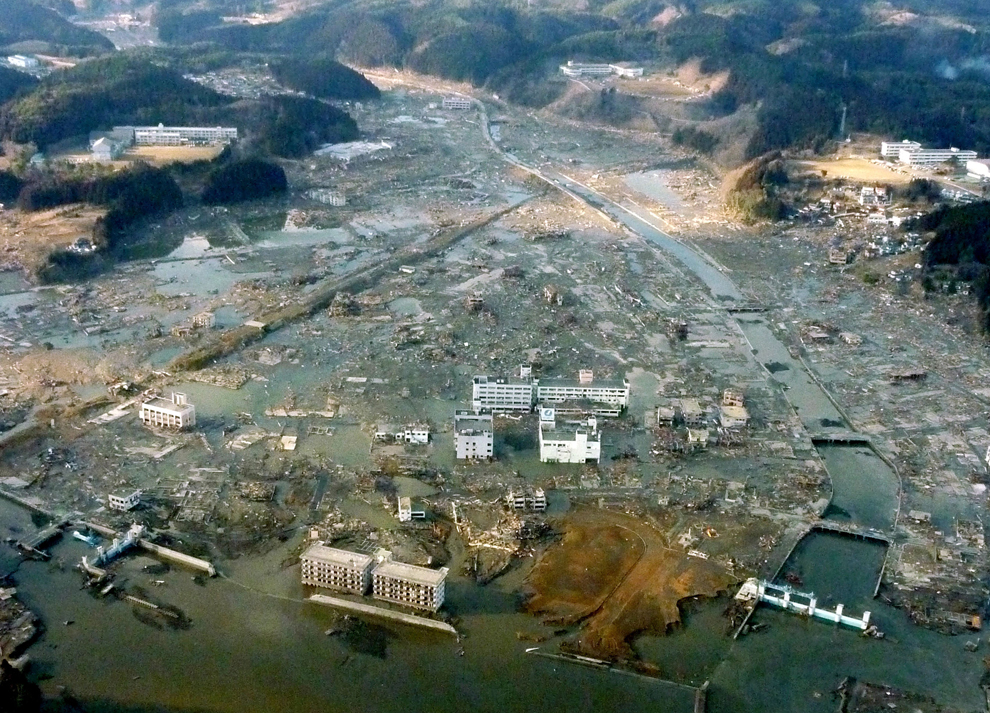
Minamisanriku is submerged after Friday's strong earthquake-triggered tsunami in Miyagi prefecture, northern Japan, March 12. (Kyodo News) #

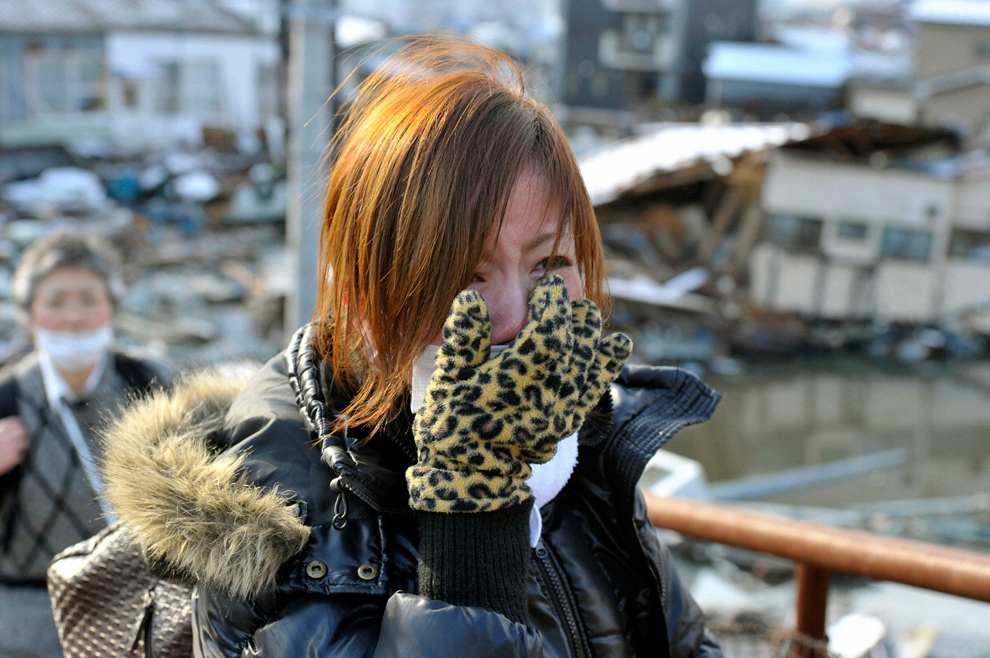
A woman cries after learning that her mother was successfully rescued from a building following an earthquake and tsunami in Miyagi Prefecture, northeastern Japan March 12. (Kyodo News/Reuters) #

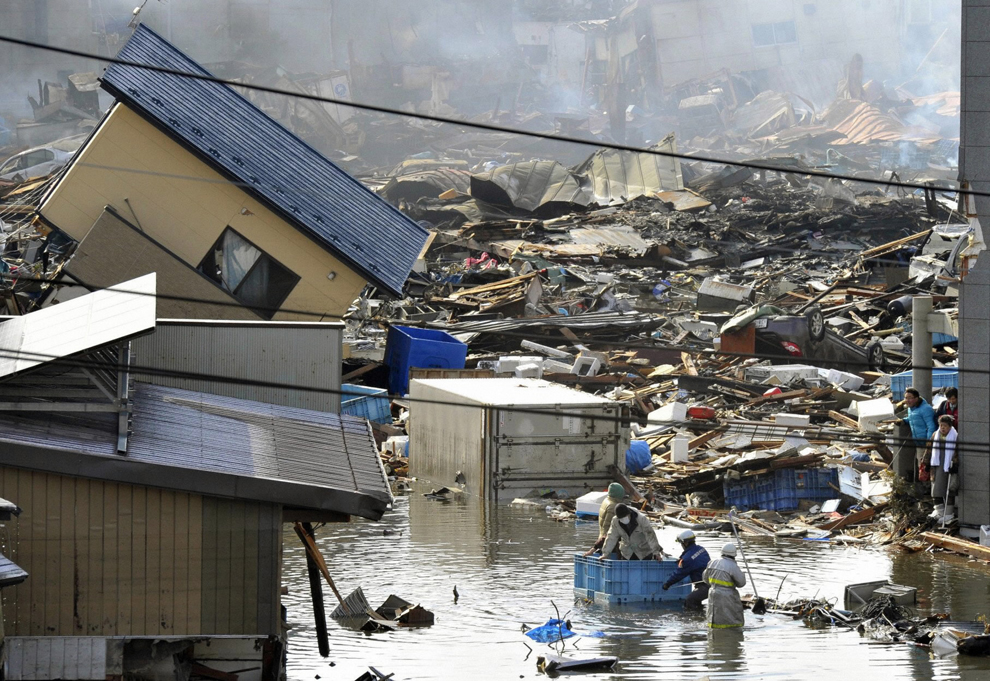
People in a floating container are rescued from a building following an earthquake and tsunami in Miyagi Prefecture, northeastern Japan March 12. (Kyodo News/Reuters) #

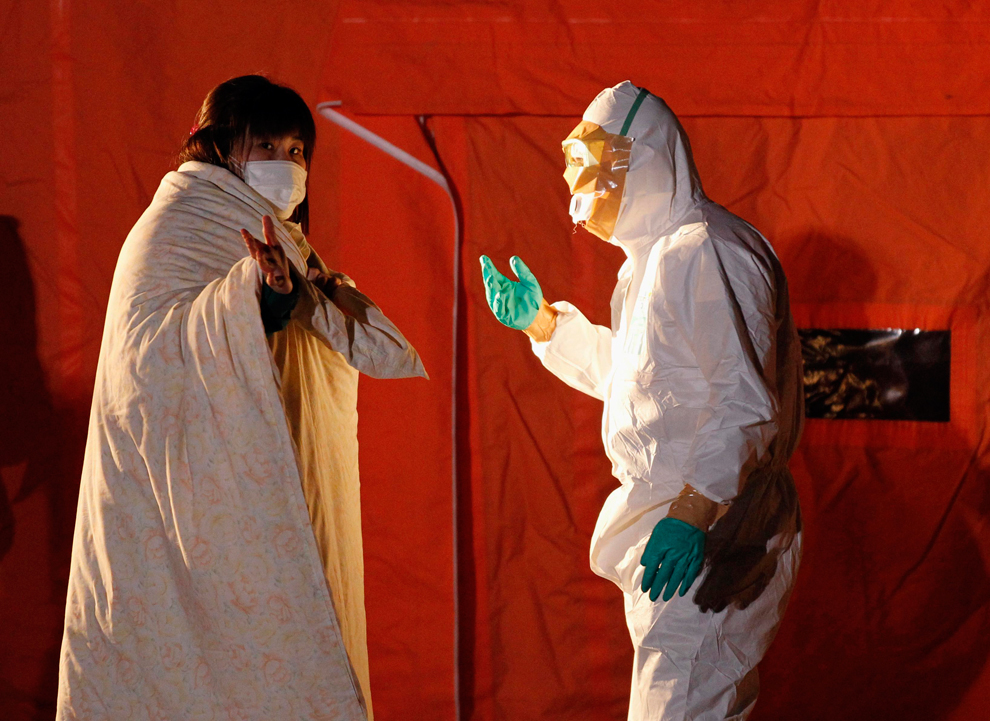
An official in protective gear talks to a woman who is from the evacuation area near the Fukushima Daini nuclear plant in Koriyama March 13. Japanese Chief Cabinet Secretary Yukio Edano confirmed on Saturday there has been an explosion and radiation leakage at Tokyo Electric Power Co's (TEPCO) Fukushima Daiichi nuclear power plant. (Kim Kyung-Hoon/Reuters) #

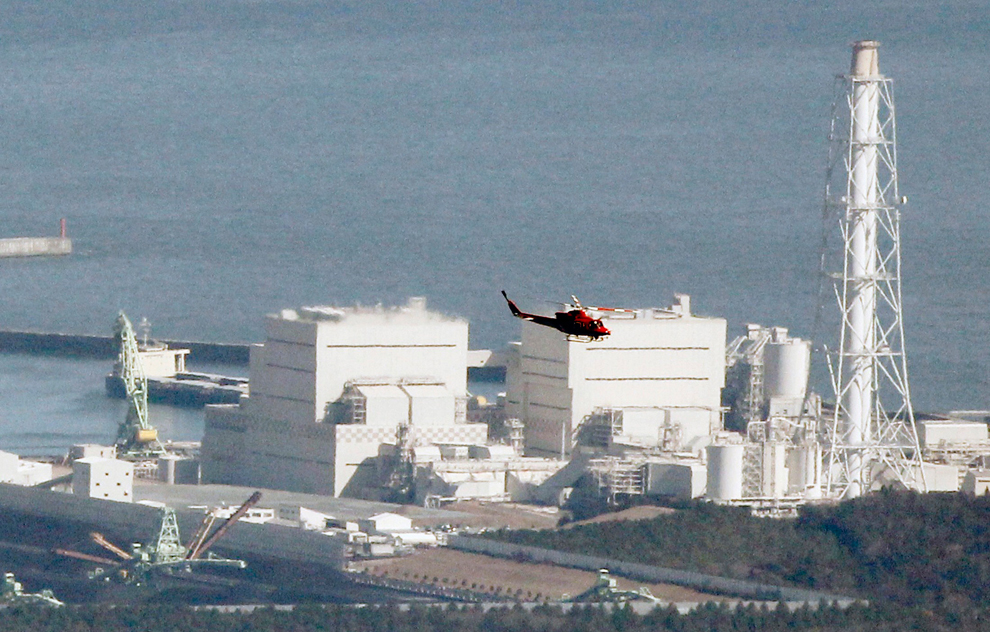
A helicopter flies past Japan's Fukushima Daiichi No.1 Nuclear reactor March 12. An explosion blew the roof off the unstable reactor north of Tokyo on Saturday, Japanese media said, raising fears of a disastrous meltdown at a nuclear plant damaged in the massive earthquake that hit Japan. (Kim Kyung-Hoon/Reuters) #

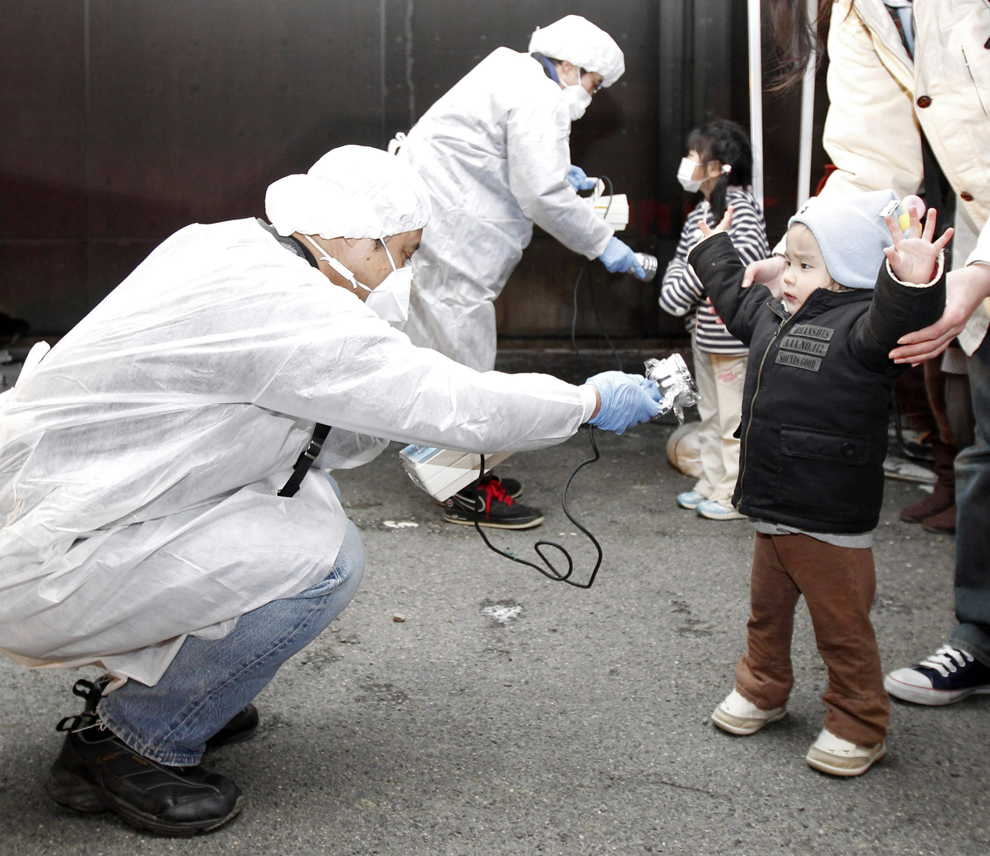
Officials in protective gear check for signs of radiation on children who are from the evacuation area near the Fukushima Daini nuclear plant in Koriyama. (Kim Kyung-Hoon/Reuters) #

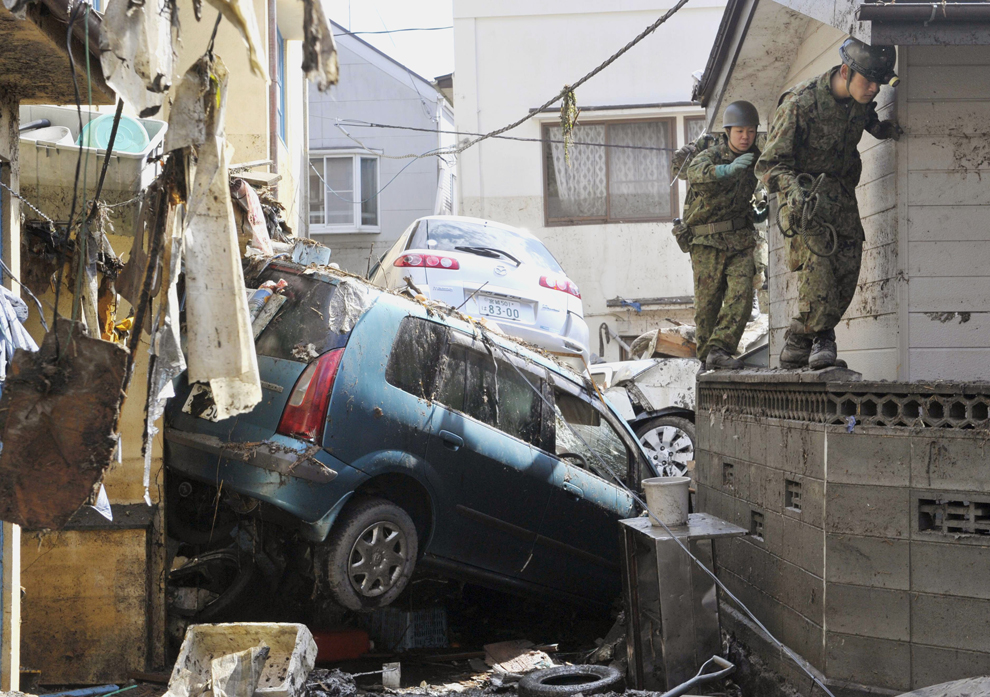
Japanese soldiers make their way atop a wall to get around vehicles swept by a tsunami at Kesennnuma, northeastern Japan March 12. (Kyodo News/Associated Press) #

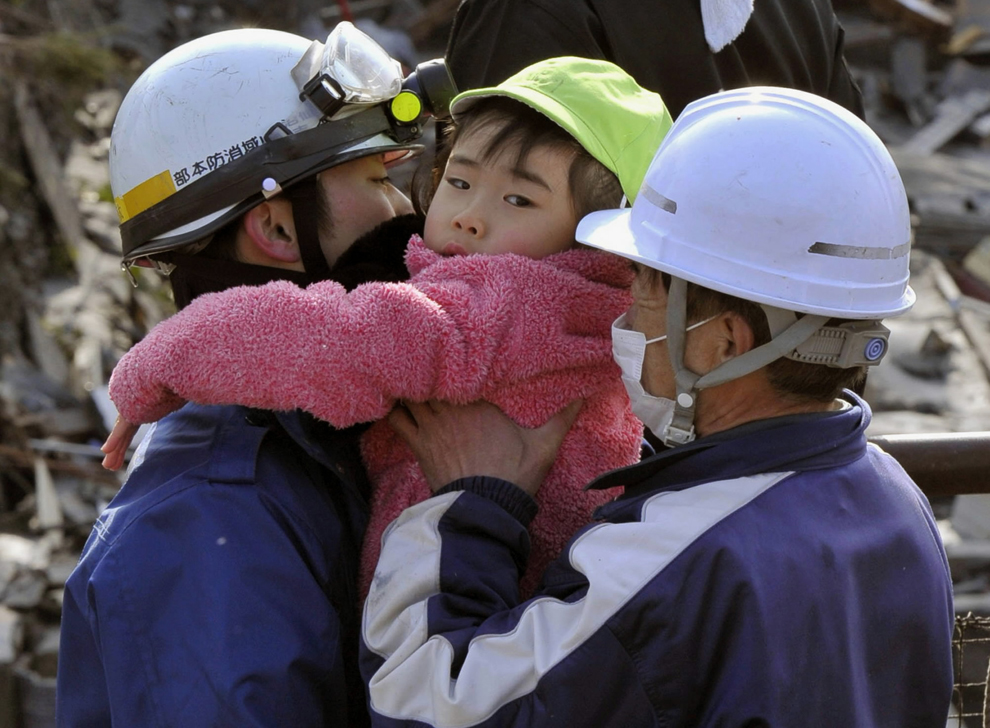
A child is held by rescue workers after being rescued from a building at Kesennuma, northeastern Japan March 12. (Kyodo News/Associated Press) #

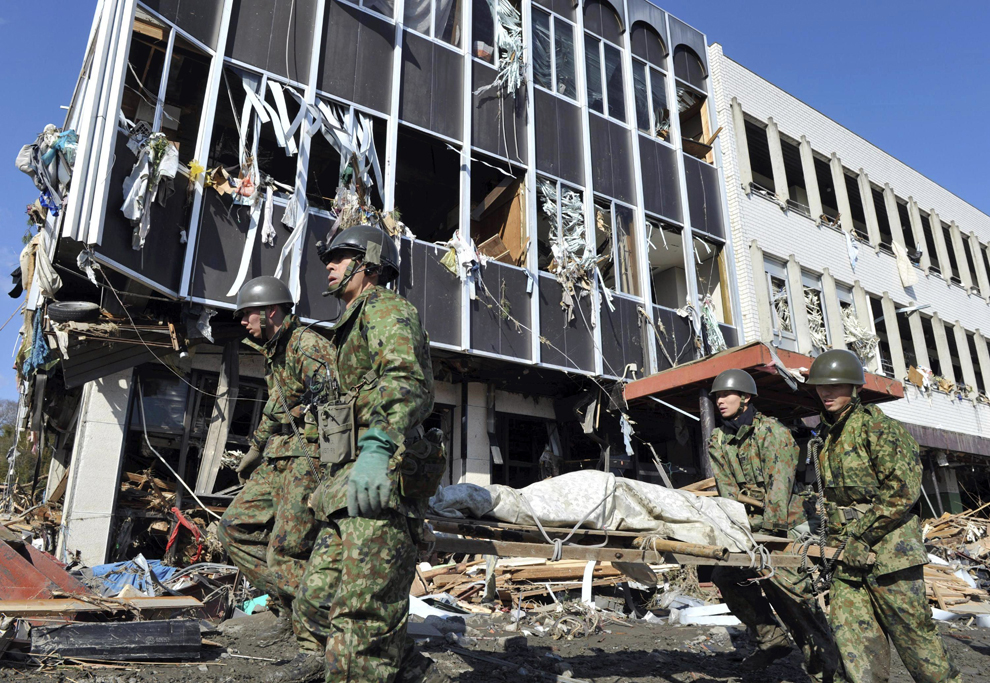
Japanese soldiers carry on with rescue operations as they walk past a damaged building in the city of Rikuzentakada in Iwate prefecture on March 12. (Yomiuri Shimbun/AFP/Getty Images) #

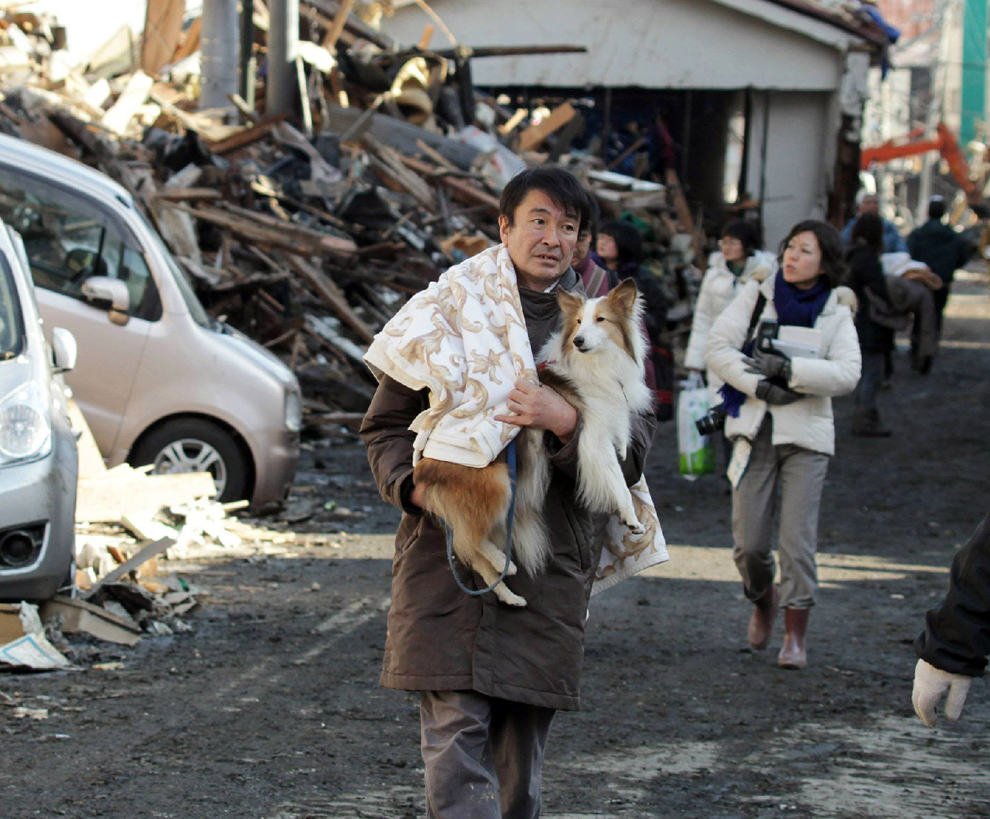
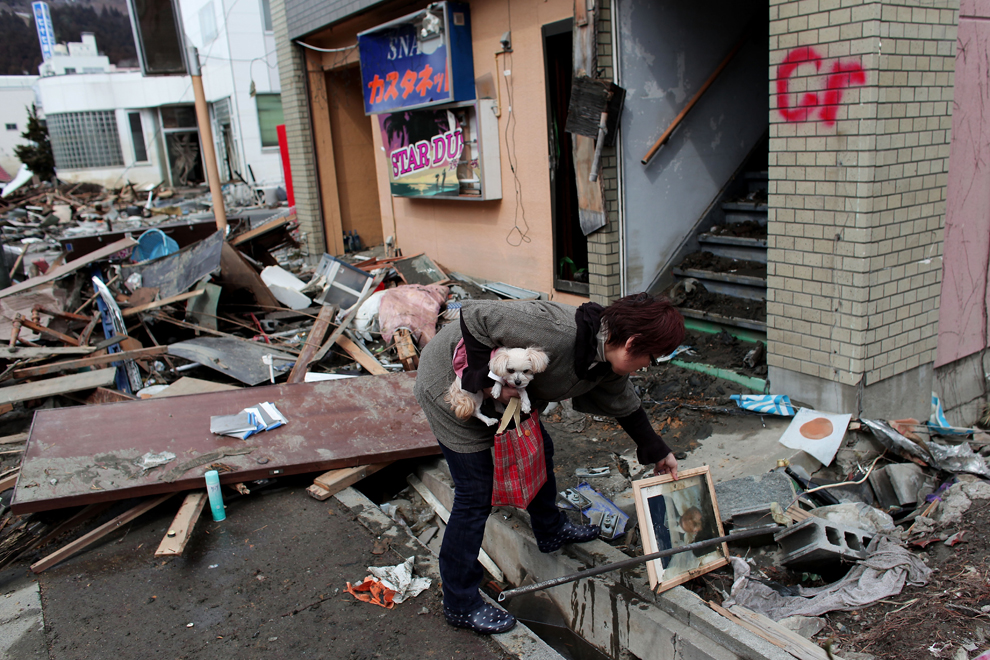
A man holding a dog walks on a street in Kesennuma city, Miyagi prefecture on March 12. (AFP/Getty Images) #

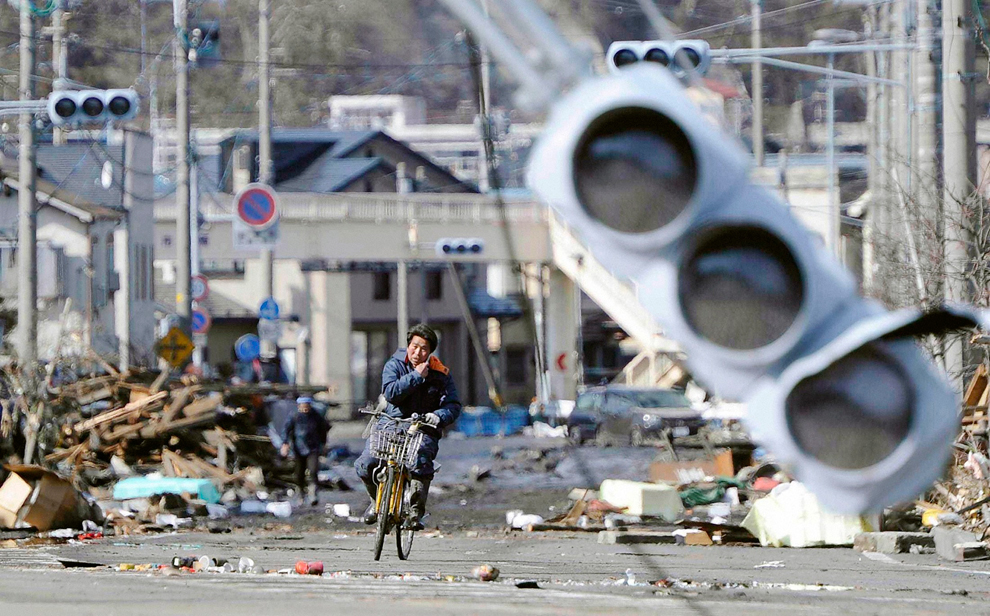
A man rides a bicycle through a debris-strewn street in Miyako, Iwate Prefecture in northeastern Japan March 12. (Kyodo/Reuters) #

A man who was trapped by a tsunami is rescued by a Japan Self-Defense Force soldier in Kesennuma City in Miyagi Prefecture in northeastern Japan March 12. Japan confronted devastation along its northeastern coast on Saturday, with fires raging and parts of some cities under water after a massive earthquake and tsunami. (Kyodo/Reuters) #

Displaced vehicles are seen at Sendai Port in Sendai, northeastern Japan March 12. (Koji Sasahara/Associated Press #

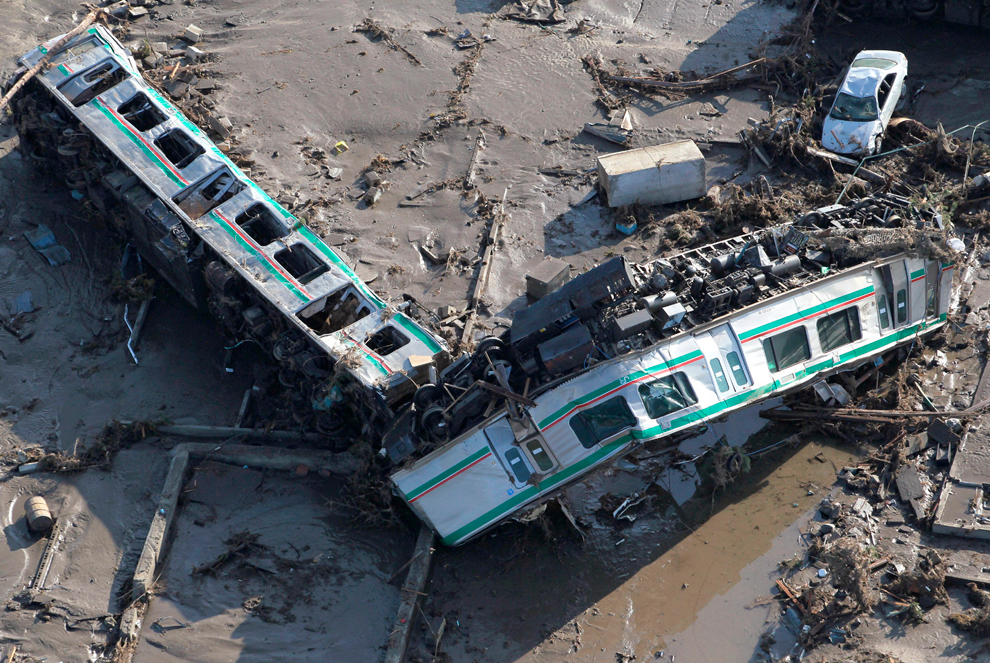
Cars of a train lie overturned in Shinchi March 12 after being washed away by an earthquake-triggered tsunami. The powerful tsunami created by one of the strongest earthquakes ever recorded swept away Japan's east coast. (Kyodo News/Associated Press) #

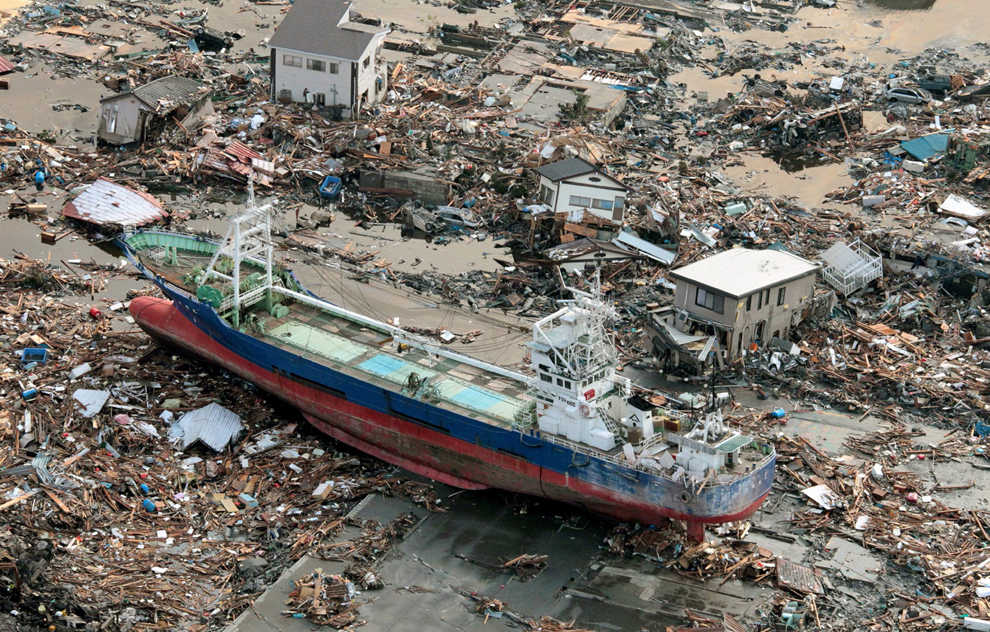
A vessel sits after it was washed away by tsunami into urban area in Kesennuma, Miyagi, northern Japan March 12. (Kyodo News/Associated Press) #

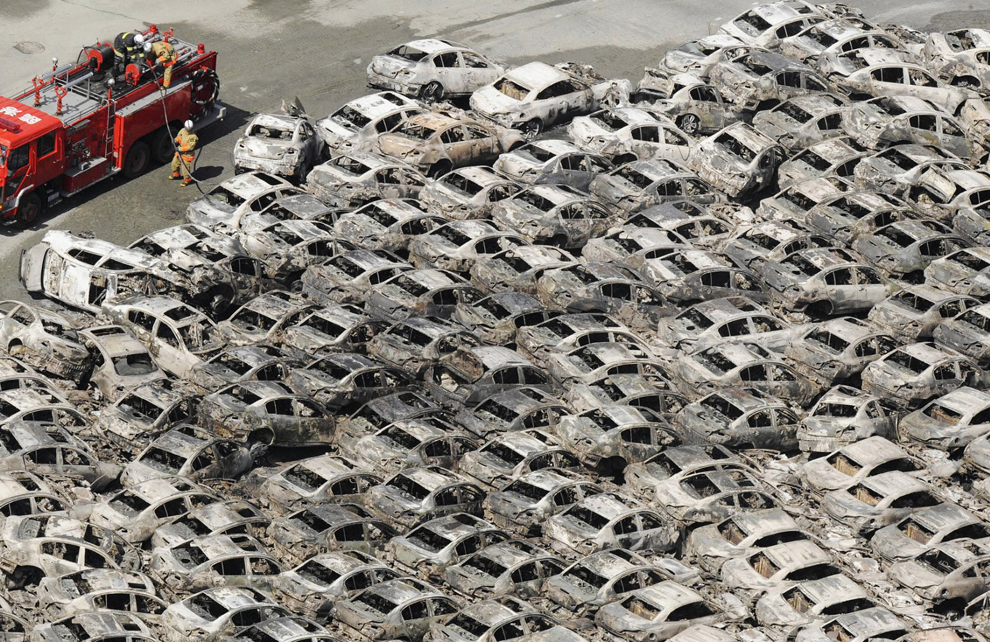
Burned-out cars are pictured at Hitachi Harbour, Ibaraki Prefecture in northeastern Japan March 12. (Kyodo/Reuters) #

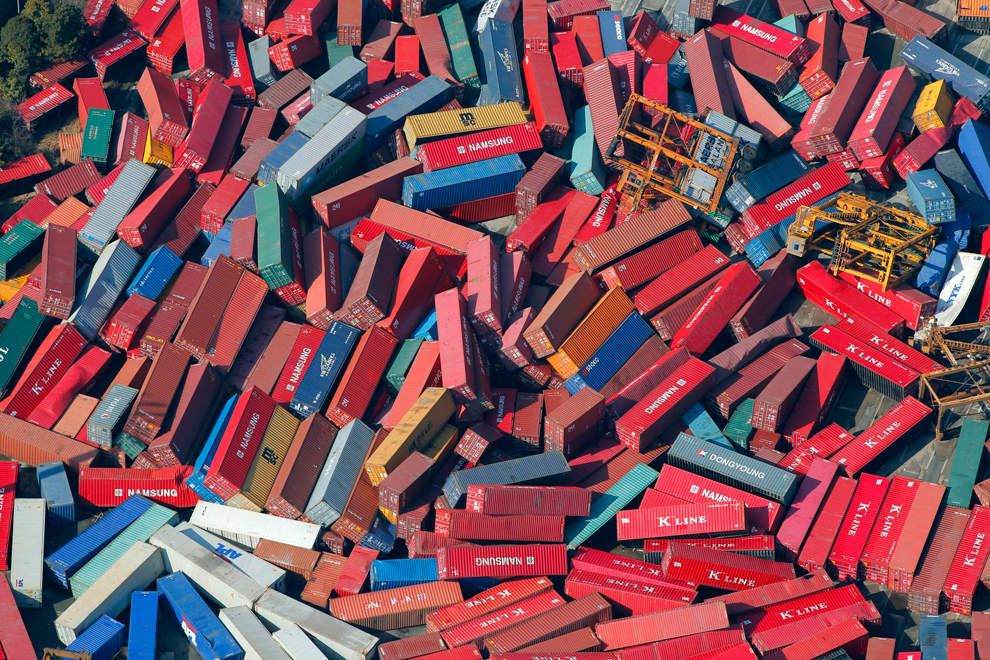
Cargo containers are strewn about in Sendai Japan March 12. Japan launched a massive military rescue operation Saturday after a giant, earthquake-fed tsunami killed hundreds of people and turned the northeastern coast into a swampy wasteland, while authorities braced for a possible meltdown at a nuclear reactor. (Itsuo Inouye/Asociated Press) #

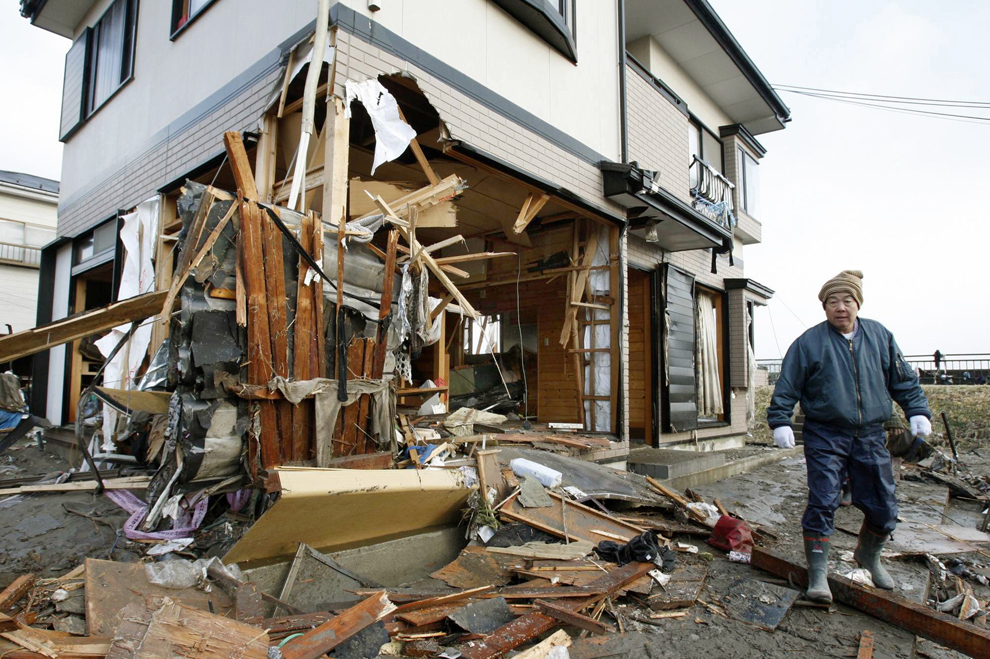
A man walks outside a two-story house, with its first floor structure destroyed by the tsunami in Natori March 12. (Kyodo News/Associated Press) #

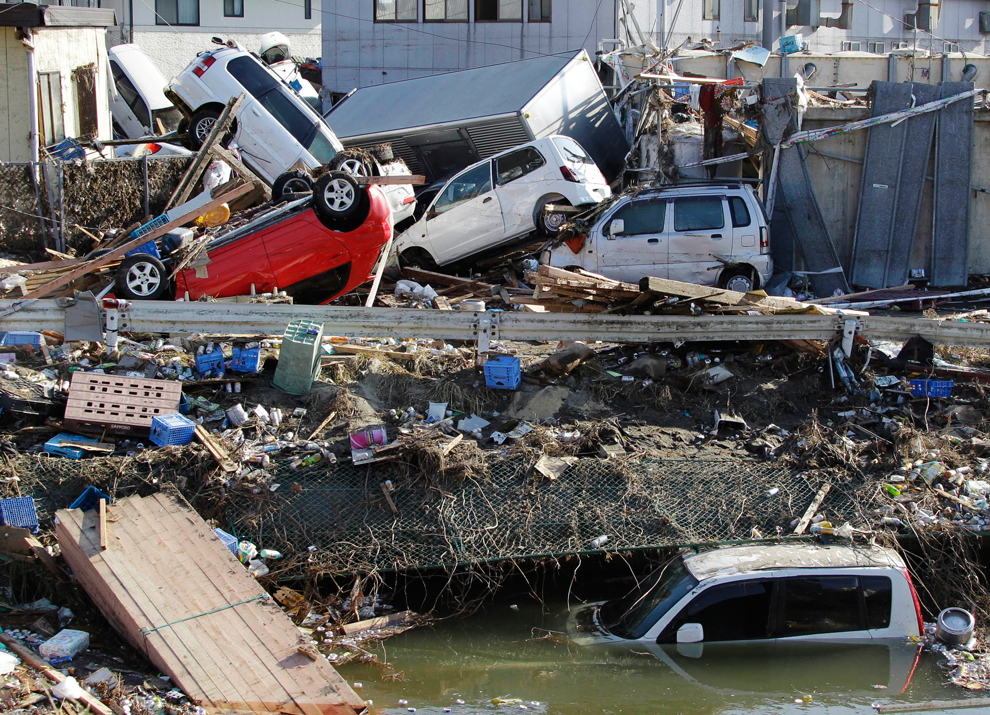
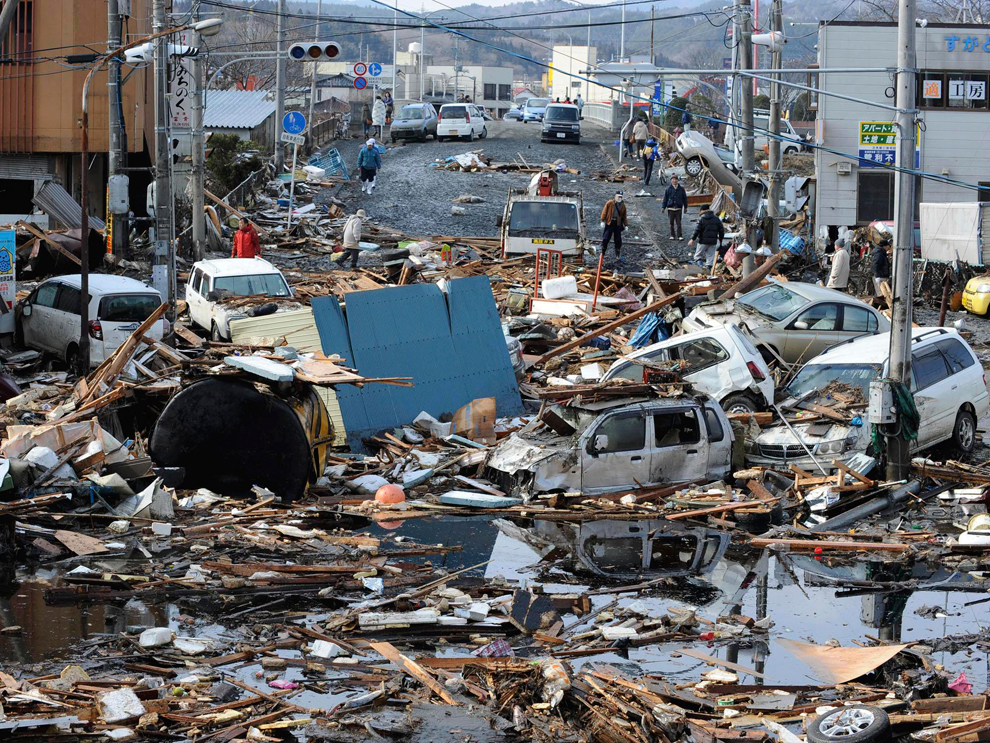
Vehicles and rubble cover a road in Kesennuma Japan March 12 after being washed away by an earthquake-triggered tsunami. (Miho Iketani/Associated Press/The Yomiuri Shimbum) #

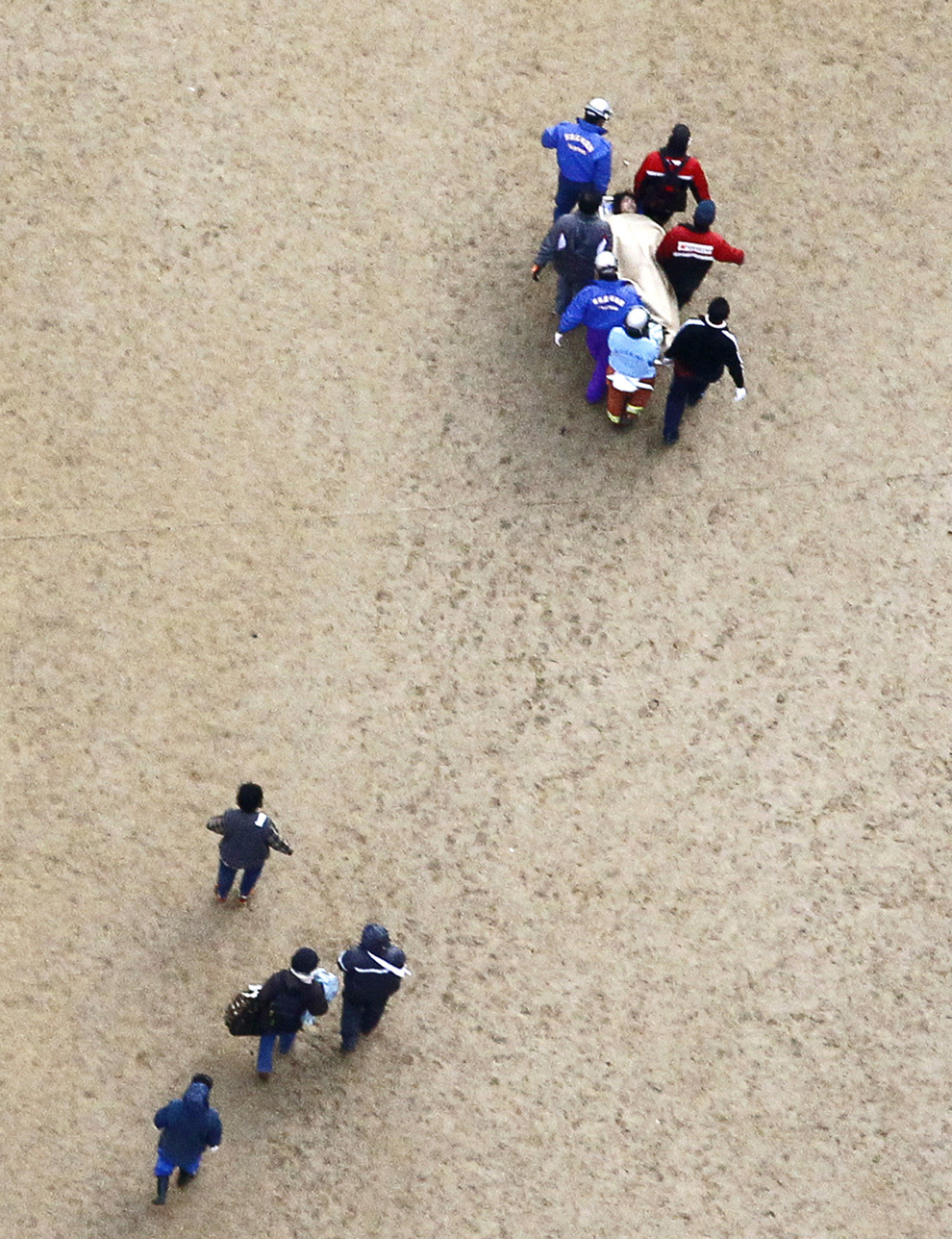
Rescue workers carry a quake victim on a stretcher in Miyako March 12. (Kyodo News/Associated Press) #

Vessels washed away by the tsunami sit on land in Minami Soma, Fukushima, northern Japan March 12. (Kyodo News/Associated Press) #

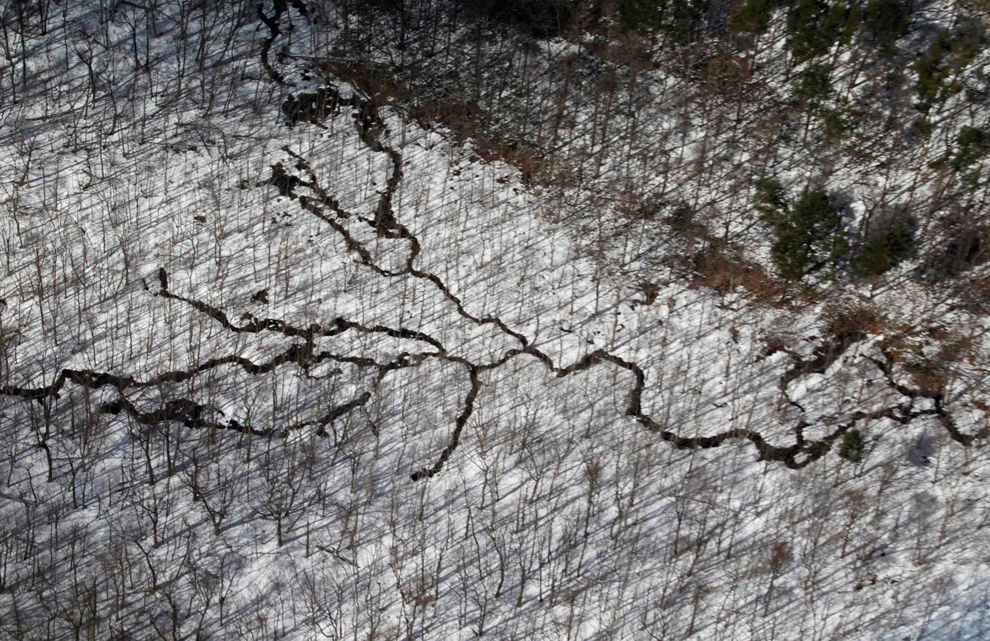
Cracks are seen on the snow-covered ground in woodlands near the earthquake and tsunami-devastated town of Sendai March 12. (Jo Yong-Hak/Reuters) #

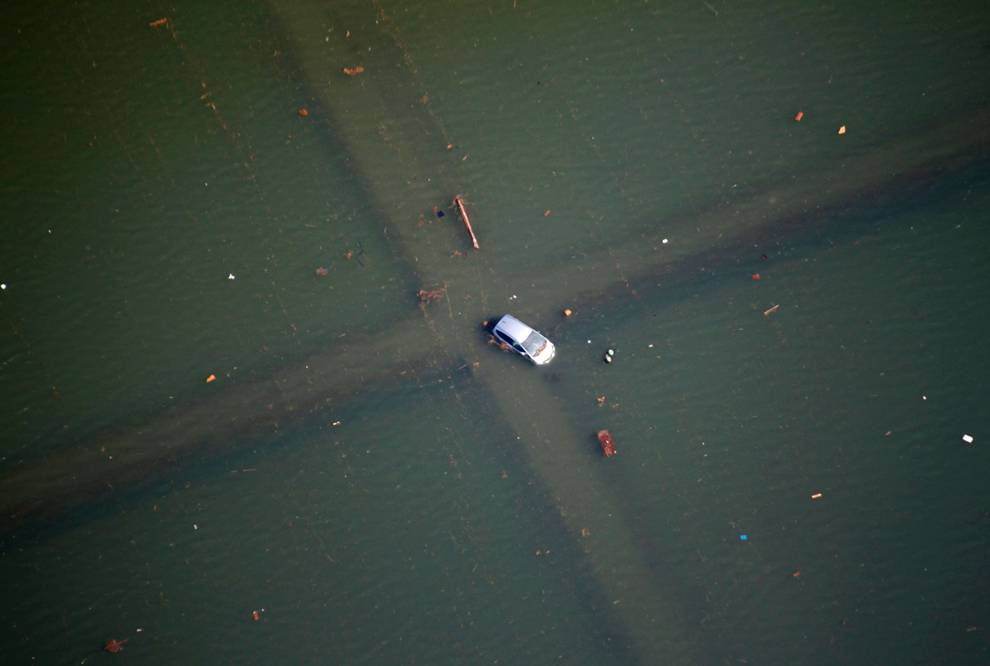
A vehicle is half submerged at a crossroad in Sendai, northeastern Japan, March 12. (Jo Yong-Hak/Reuters) #

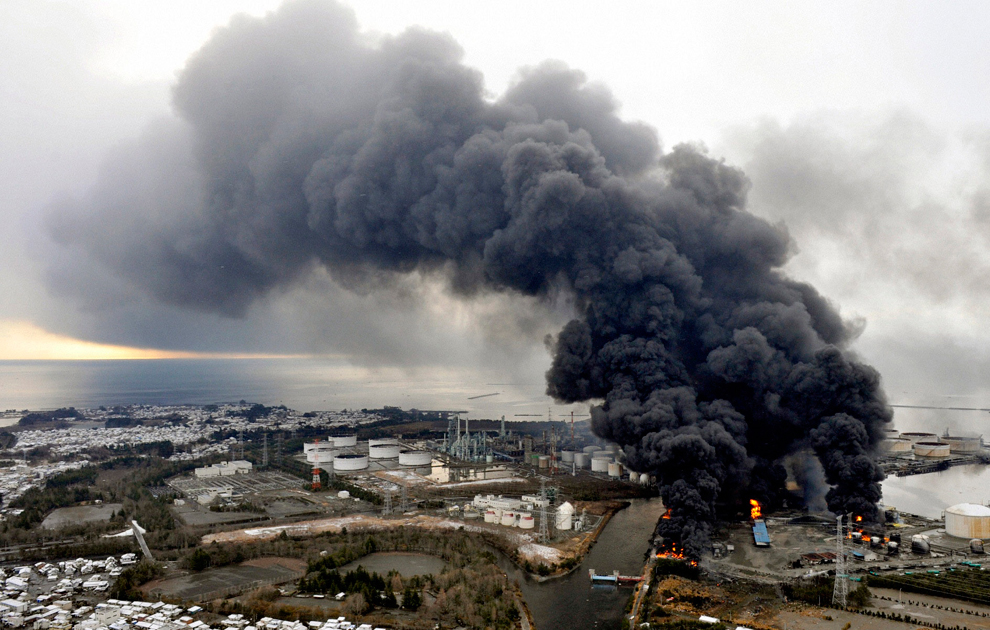
Smoke rises from a burning factory in Sendai March 12. (Kyodo/Reuters) #

An aerial view shows tsunami damage and flooding in Natori city, Miyagi prefecture on March 12. (Jiji Press/AFP/Getty Images) #

Buildings are covered with mud in Minamisanriku, Miyagi prefecture, March 12. (Naoki Ueda/The Yomiuri Shimbum/Associated Press) #

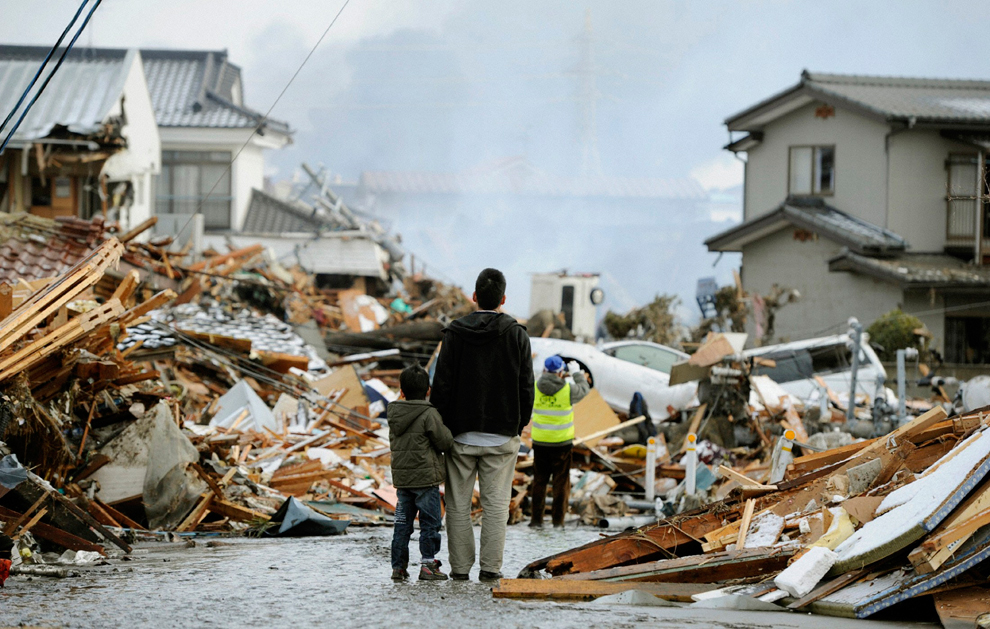
A man and child look out over destroyed homes March 12, a day after the tsunami and earthquake hit northeastern Japan. (Kyodo/Reuters) #

A volunteer firefighter searches for victims of the tsunami at Rikuzentakada, Iwate Prefecture, northern Japan March 13. (Shizuo Kambayashi/Associated Press)#
People walk on debris scattered across the town of Minamisanriku in Miyagi prefecture on March 12. (Yomiuri Shimbun/AFP/Getty Images) #
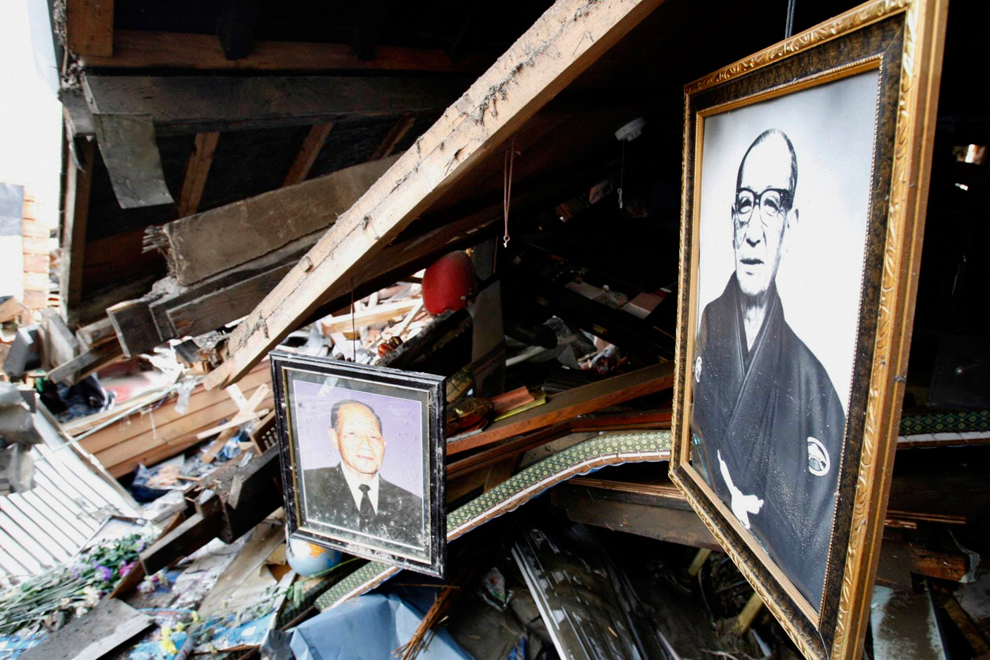
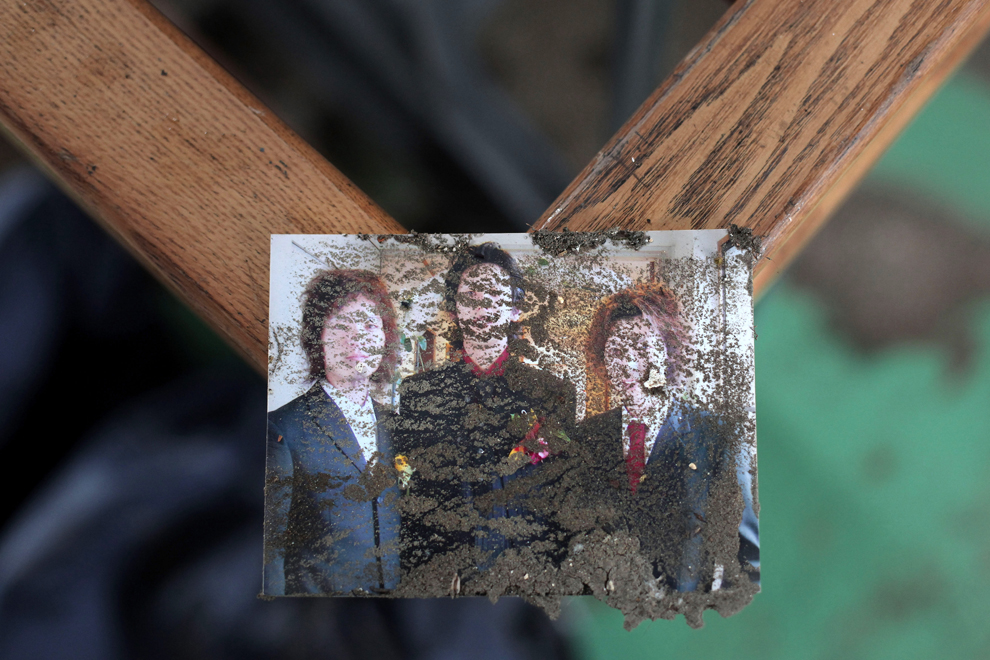
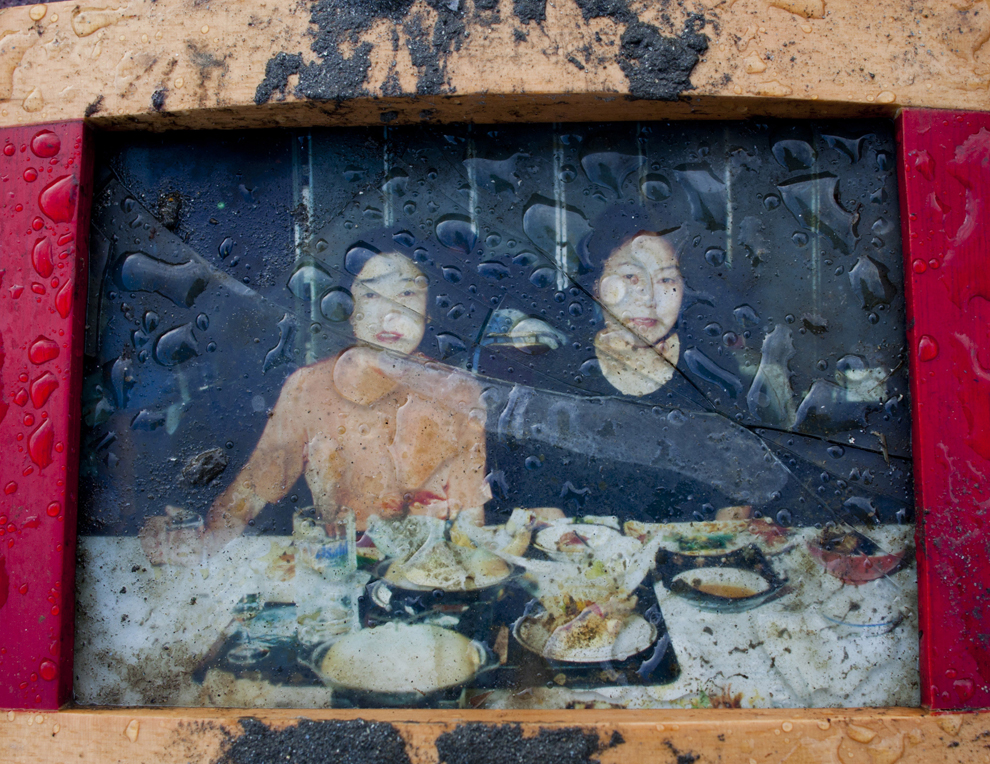
Pictures left in a destroyed building in Natori City, Miyagi Prefecture, northeastern Japan March 12. (Kyodo/Reuters) #
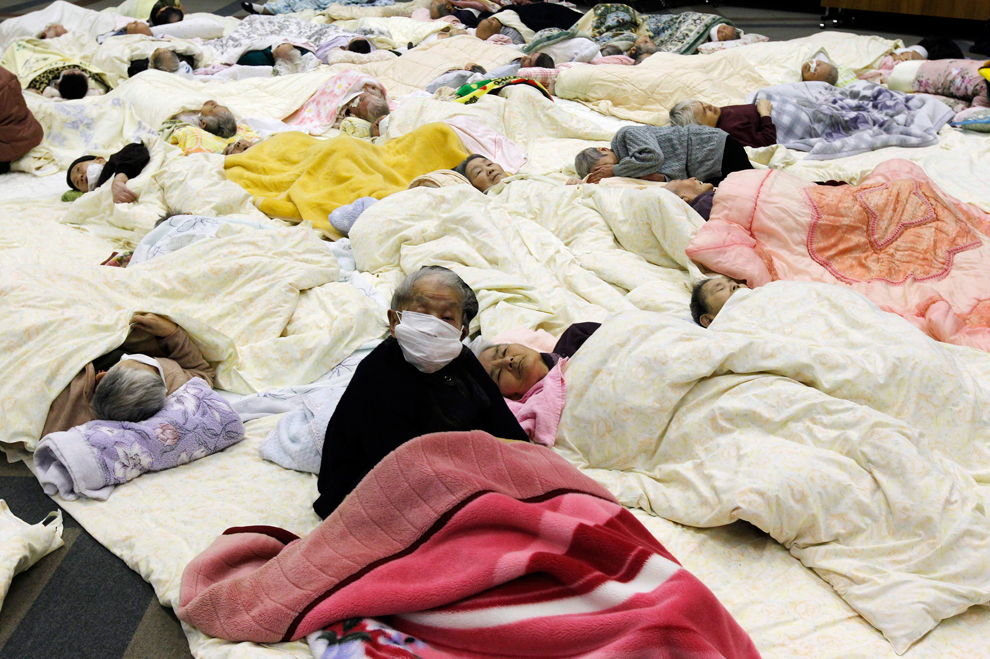
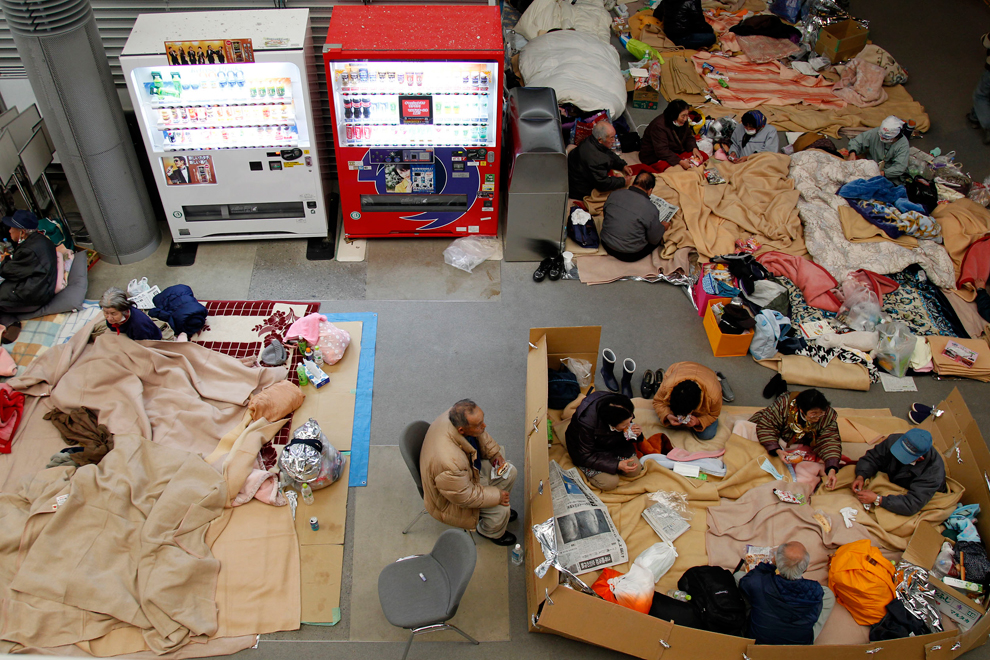
People evacuated from a nursing home located in the evacuation area around the Fukushima Daini nuclear plant, rest at a temporary shelter in Koriyama, March 13. Japanese Chief Cabinet Secretary Yukio Edano confirmed on Saturday there has been an explosion and radiation leakage at Tokyo Electric Power Co's (TEPCO) Fukushima Daiichi nuclear power plant. (Kim Kyung-Hoon/Reuters) #

People evacuate to higher ground during a tsunami warning after the area was struck by an earthquake and tsunami in Iwate prefecture March 12. (Kyodo/Reuters) #

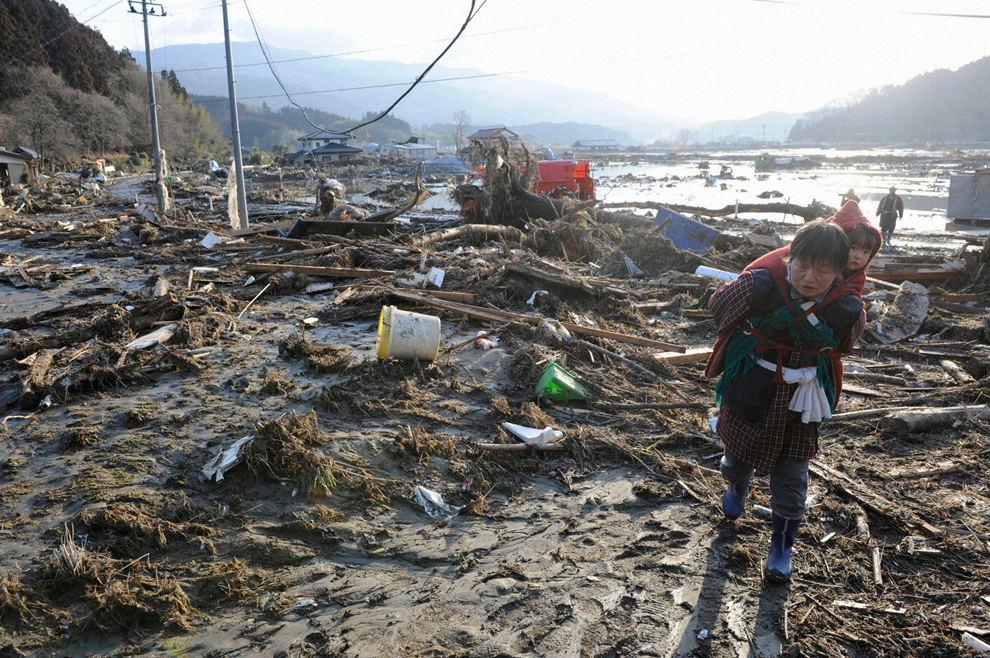
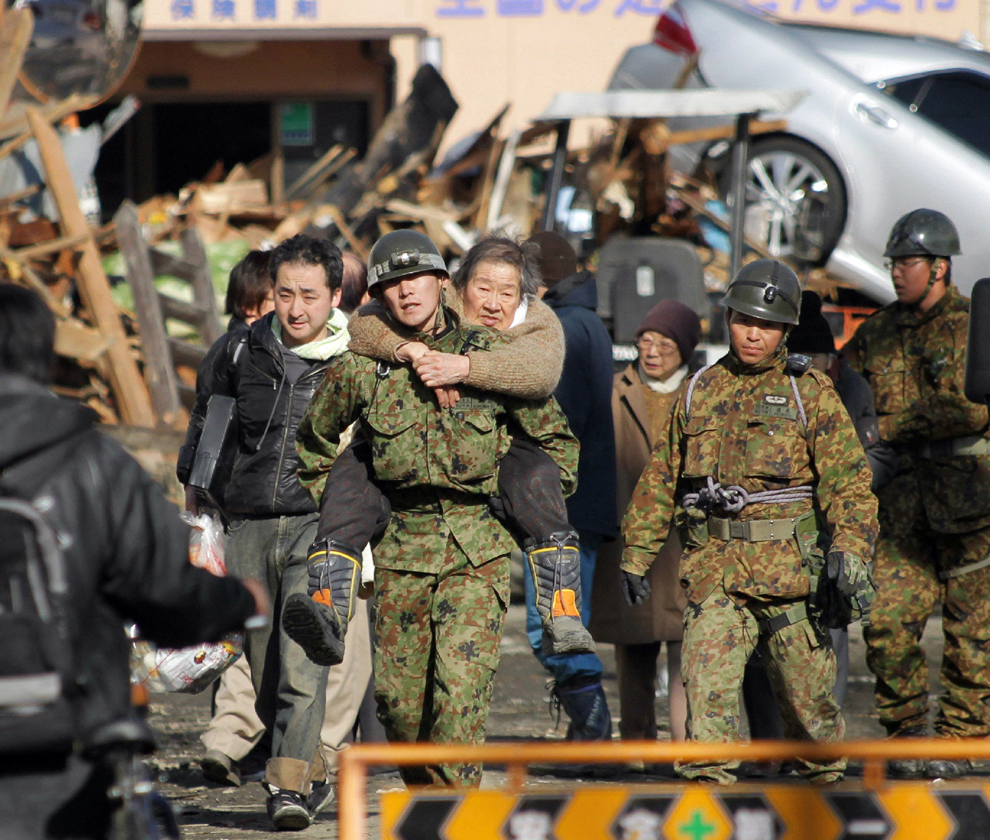
A soldier carries an elderly woman on his back as people are evacuated to a shelter at Kesennuma city in Miyagi prefecture on March 12. (Jiji Press/AFP/Getty Images) #

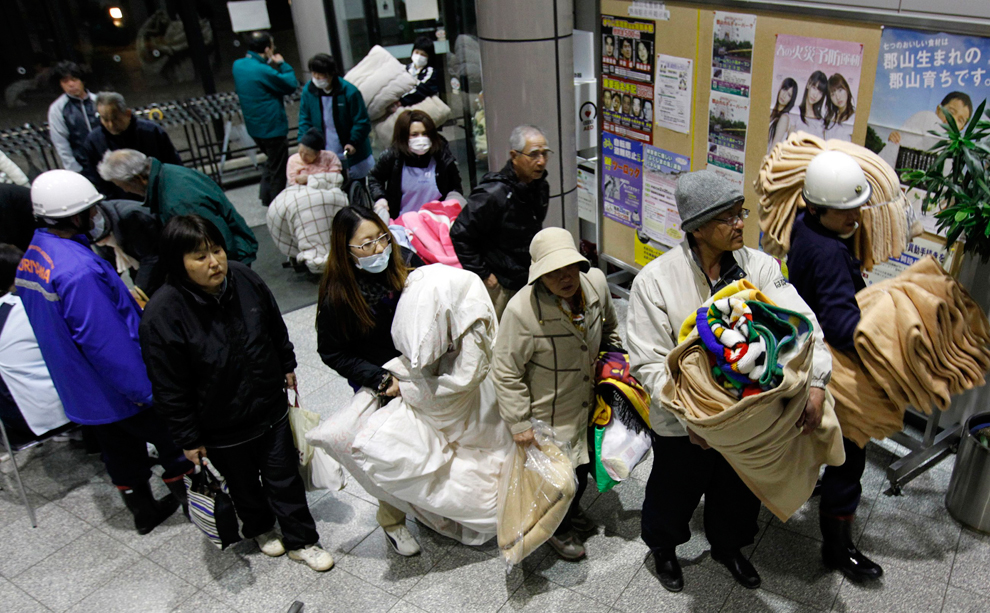
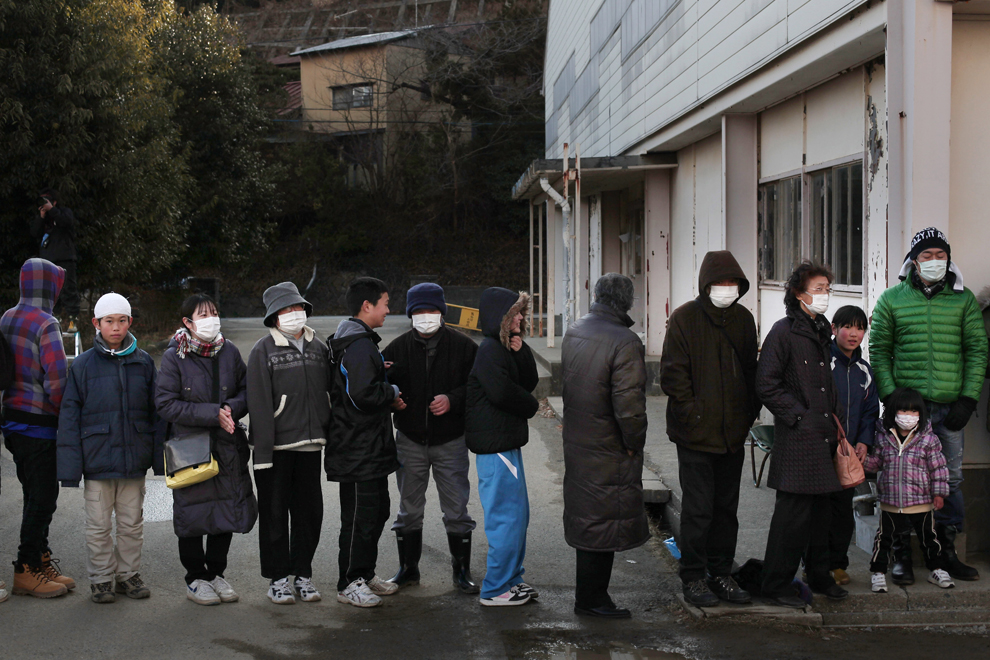
Evacuees hold blankets as they stand in a line to enter a temporary shelter after radiation leaked from an earthquake-damaged Fukushima nuclear reactor, in Koriyama, northeastern Japan March 12. (Jo Yong-Hak/Reuters) #

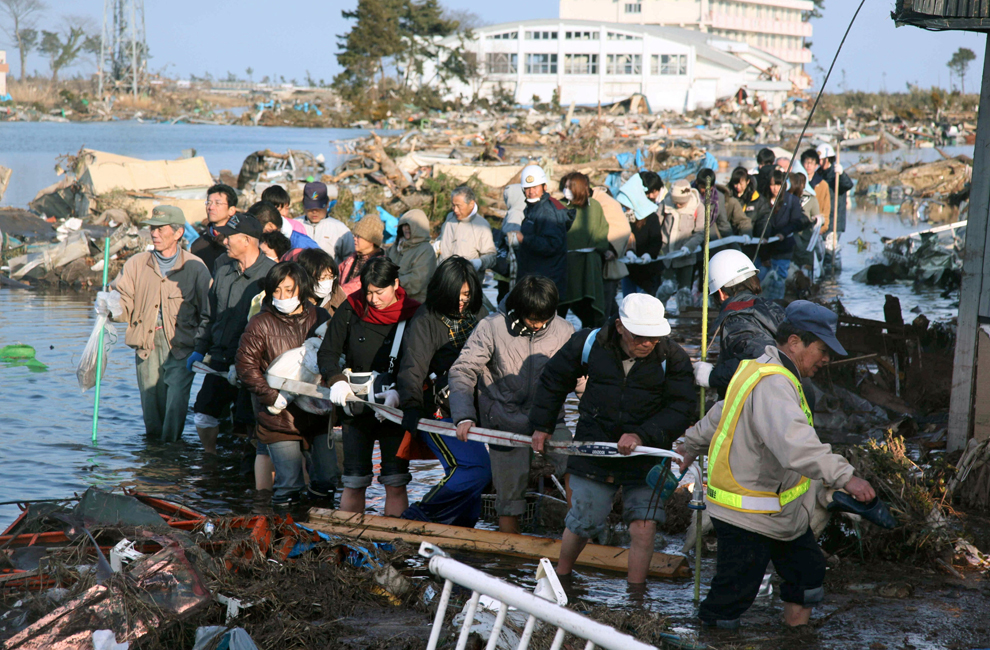
People who were isolated at an elementary school, head for a safe place in Sendai, northern Japan Saturday, March 12. (Asahi Shimbun, Shiro Nishihata/Associated Press) #

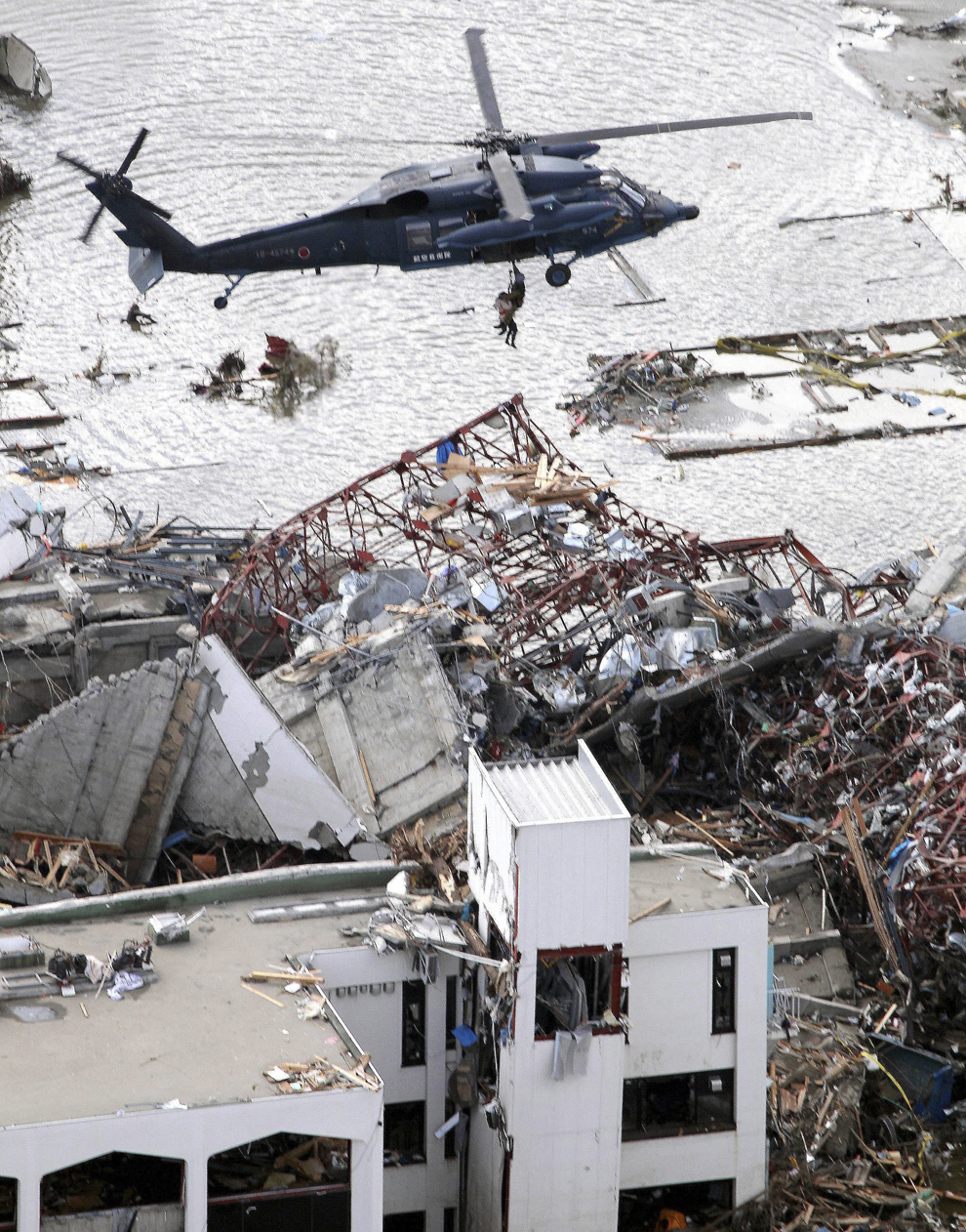
A resident is rescued by a self-defense force helicopter in Rikuzentakata, Iwate, northern Japan March 12 after one of the country's strongest earthquakes ever recorded hit its eastern coast on March 11. (Asahi Shimbun, Shiro Nishihata/Associated Press) #

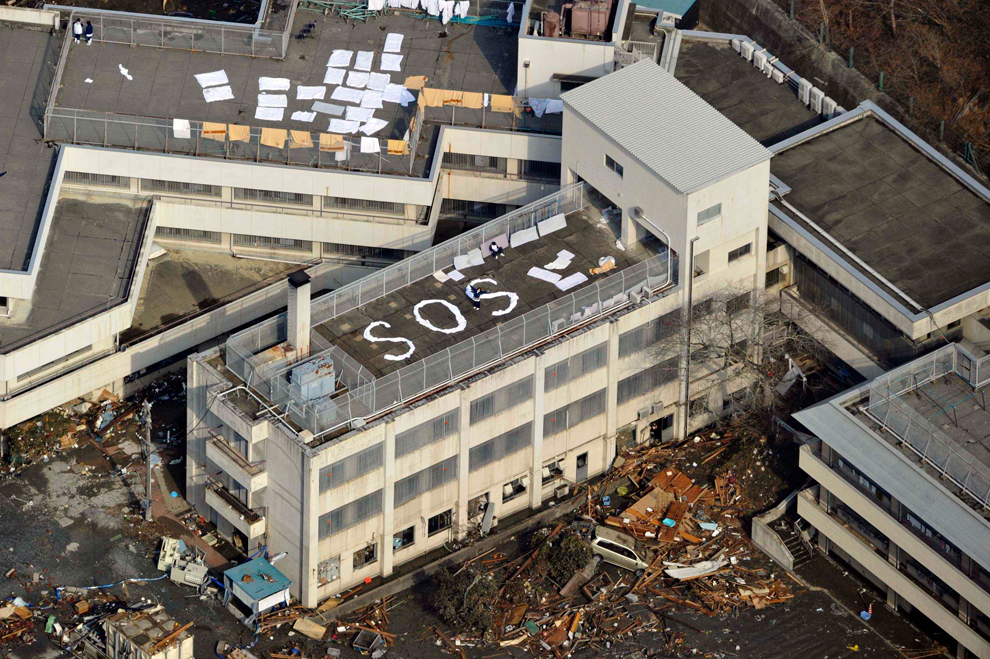
People wait to be rescued atop a building with the letters "SOS" in Kesennuma, Miyagi Prefecture March 12. (Yomiuri/Reuters) #

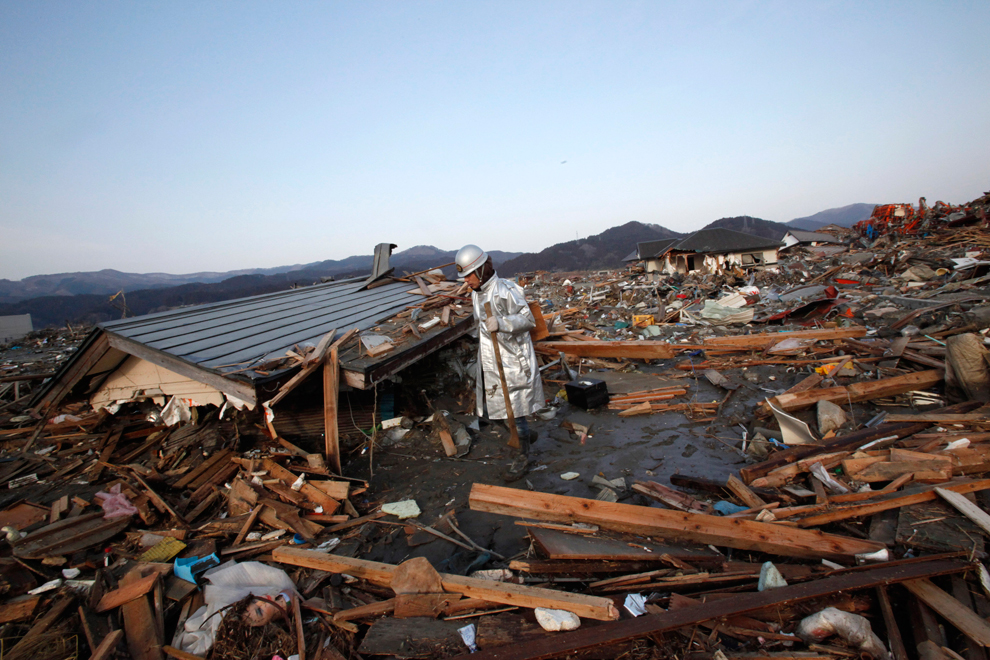
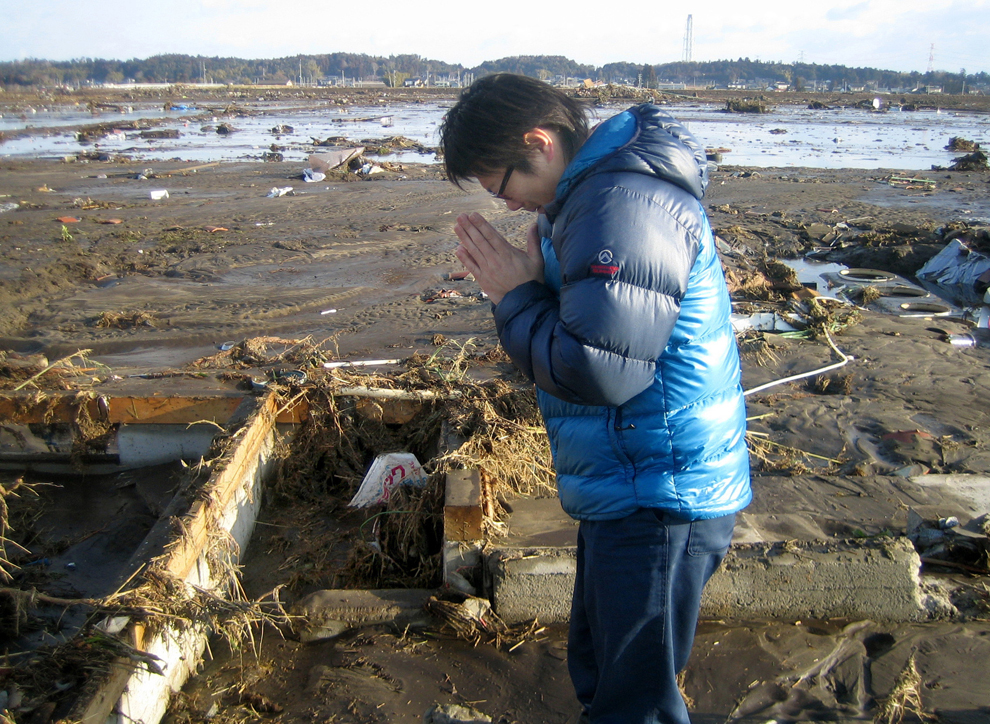
A man prays in front of a house devastated by tsunami in Minami Soma, Fukushima, northern Japan after Japan's biggest recorded earthquake slammed into its eastern coast March 11. #


作者: 馬六甲    时间: 2011-3-18 09:37

Japan: Hopes fade for finding more survivors

As officials desperately tried to prevent disaster at a damaged nuclear facility, hopes faded for finding survivors amid the rubble as snow and cold blanketed the areas most affected by the earthquake and tsunami in northeast Japan. Residents were allowed back into damaged areas for the first time since the disaster to inspect what might be left of their homes. And flights out of Japan were full as foreign nationals and others left the country. The Big Picture continues special daily coverage of the disaster through tomorrow, with later updates anticipated as events merit. -- Lane Turner (27 photos total)

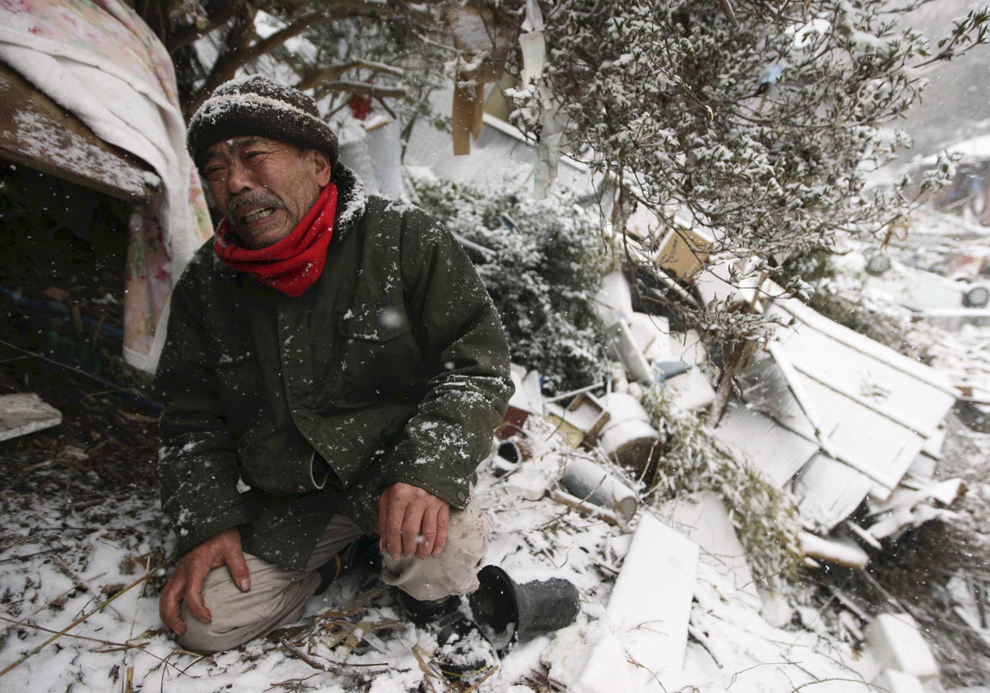
Sixty-six-year-old Yoshikatsu Hiratsuka cries in front of his collapsed house with his mother still missing, possibly buried in the rubble, at Onagawa town in Miyagi prefecture on March 17. The official number of dead and missing after a devastating earthquake and tsunami that flattened Japan's northeast coast is approaching 15,000, police said. (Yomiuri Shimbun/AFP/Getty Images)

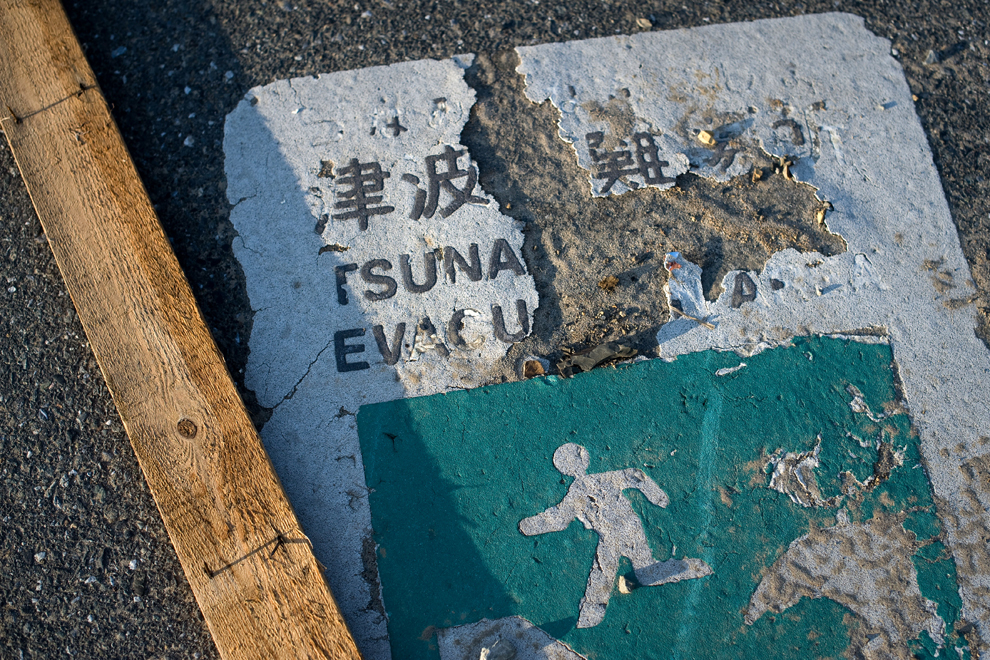
A sign showing the tsunami evacuation route sits partly covered by debris in the city of Kesennuma, in Miyagi prefecture on March 17. (Nicolas Asfouri/AFP/Getty Images) #

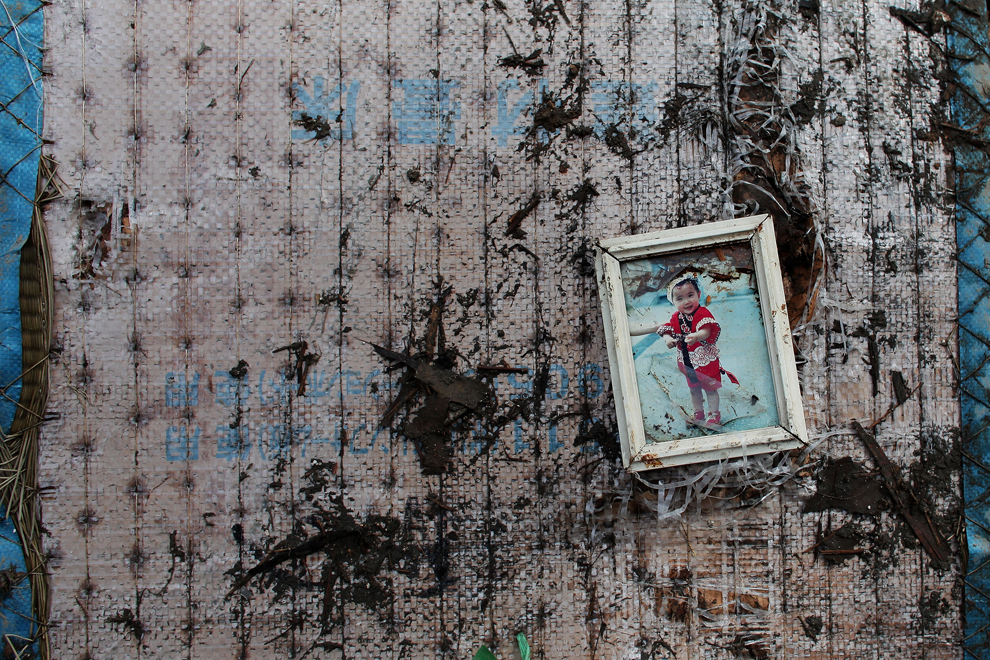
A muddied family photograph sits in an apartment block on March 17 in Kensennuma. Residents were allowed back to their homes today and began the massive cleanup operation. (Chris McGrath/Getty Images) #

Personal photos sit in the rubble of a house March 17 in Minamisanriku. (Paula Bronstein /Getty Images) #

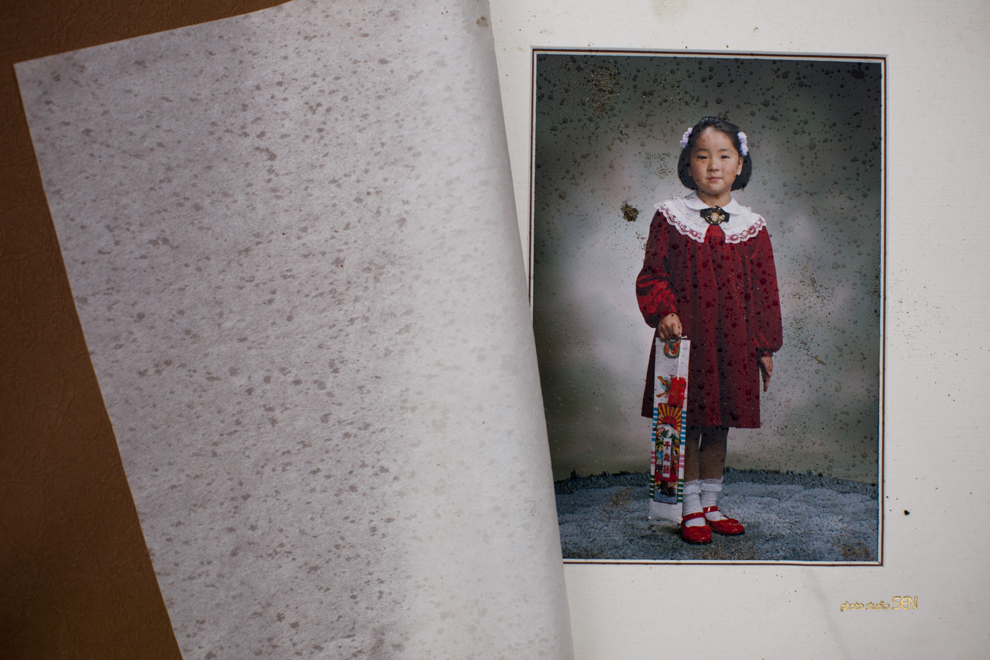
A child's photograph sits on the underside of a mattress March 17 in Kensennuma. (Chris McGrath/Getty Images) #

A personal photo sits in the rubble of a house March 17 in Minamisanriku. (Paula Bronstein /Getty Images) #

Mitsuyo Murakami sifts through the rubble outside her apartment on March 17 in Kensennuma. (Chris McGrath/Getty Images) #

A woman takes care of a dog at an evacuation center for pets and their owners near an area devastated by an earthquake and tsunami in Kesennuma March 17. (Kim Kyung-Hoon/Reuters) #

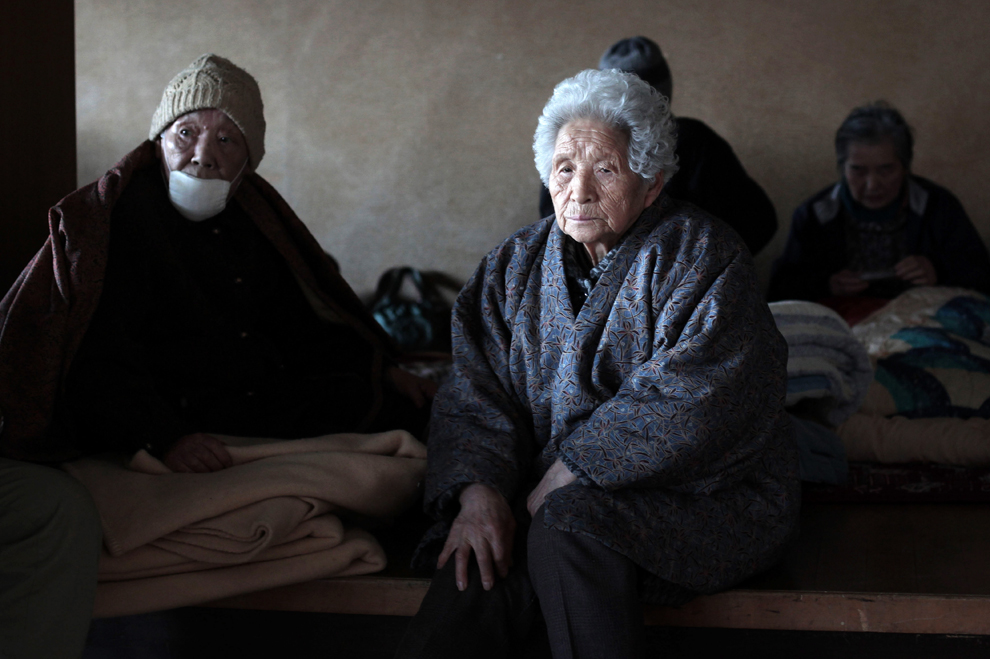
Elderly women wait for rice to be given out at an evacuation center on March 17 in Kensennuma. (Chris McGrath/Getty Images) #

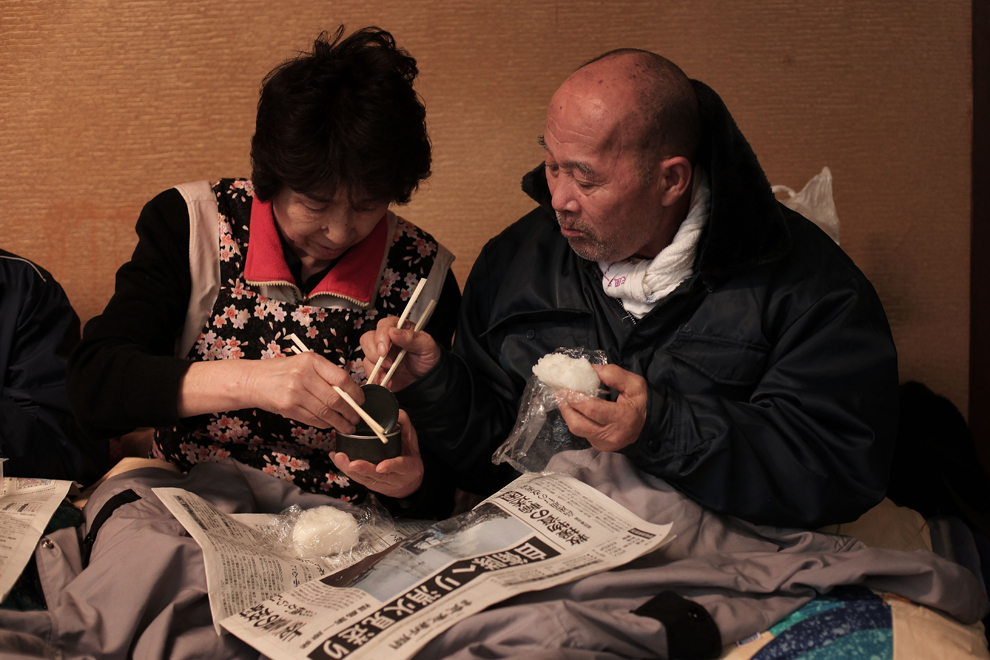
A couple eats rice and vegetable handouts at an evacuation center on March 17 in Kensennuma. (Chris McGrath/Getty Images) #

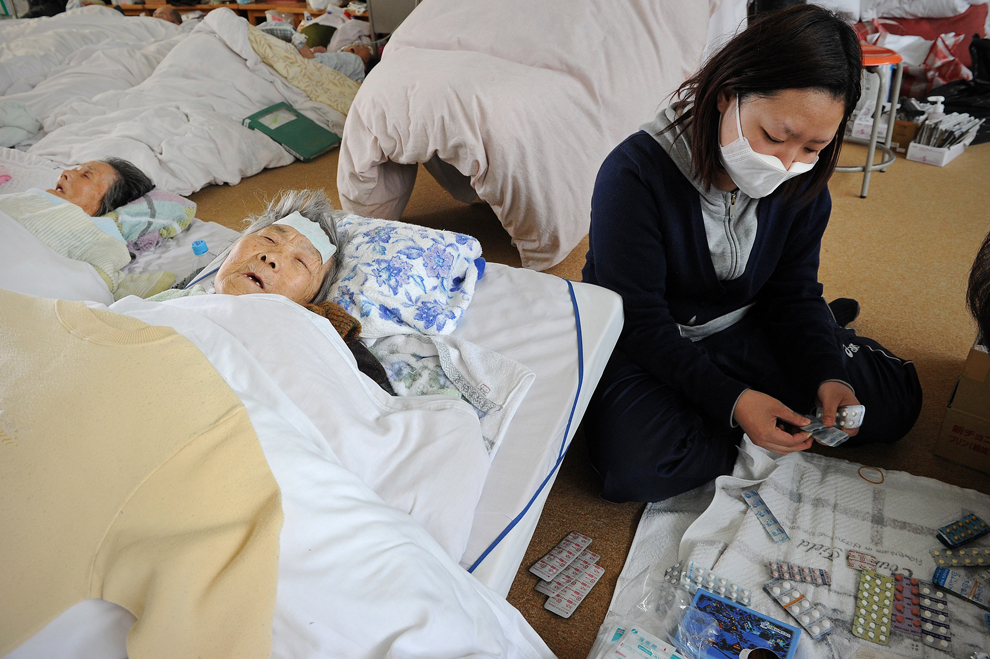
An elderly Japanese tsunami survivor lies in a bed as a woman sorts medicine tablets at a shelter for earthquake victims in Kesennuma on March 17. (Philippe Lopez/AFP/Getty Images) #

Survivors check a message board at a shelter for earthquake victims in Kesennuma on March 17. Half a million evacuees struggled to stay warm as rescuers said their efforts to help the devastated population were at risk, almost a week after the 9.0 magnitude quake and massive tsunami hit. (Philippe Lopez/AFP/Getty Images) #

A picture released by the International Federation of Red Cross and Red Crescent Societies (IFRC) shows elderly people at the high school evacuation center in Ostuchi on March 14. (HO/AFP/Getty Images) #

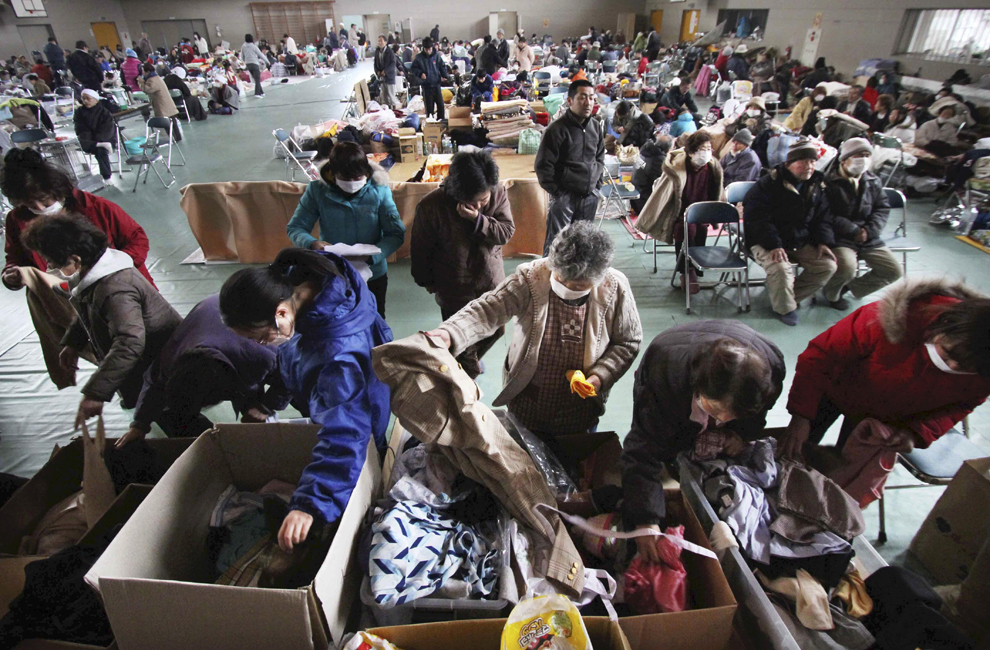
People check secondhand clothes at a shelter for earthquake survivors at Minamisanriku city in Miyagi Prefecture on March 17. (Yomiuri Shimbun/AFP/Getty Images) #

People line up for noodles and soup at an evacuation center on March 17 in Kensennuma. (Chris McGrath/Getty Images) #

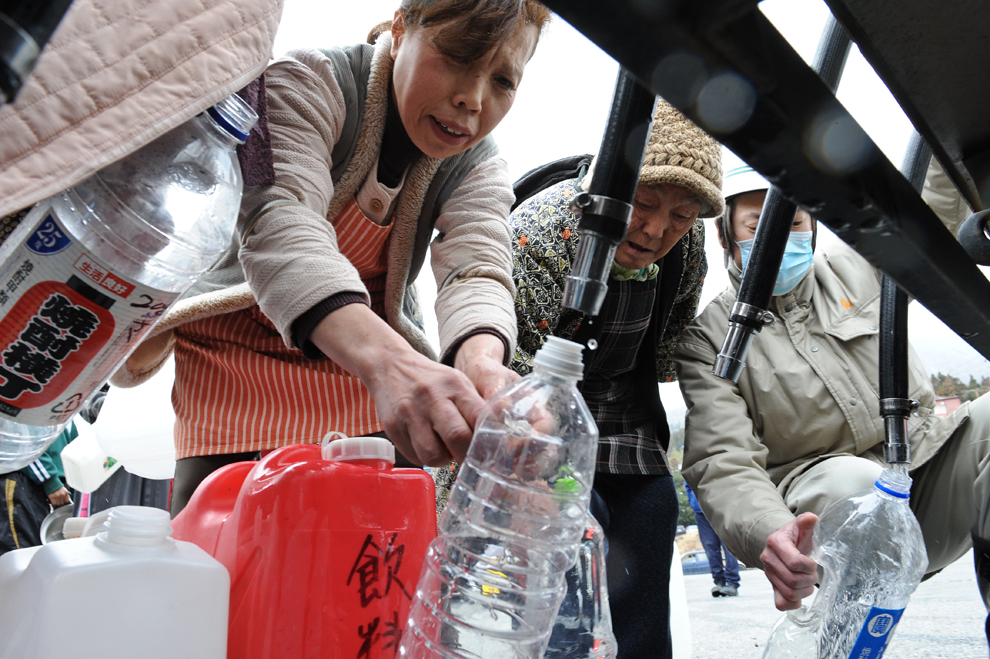
People fill containers at a water distribution point in Ofunato on March 16. (Nicholas Kamm/AFP/Getty Images) #

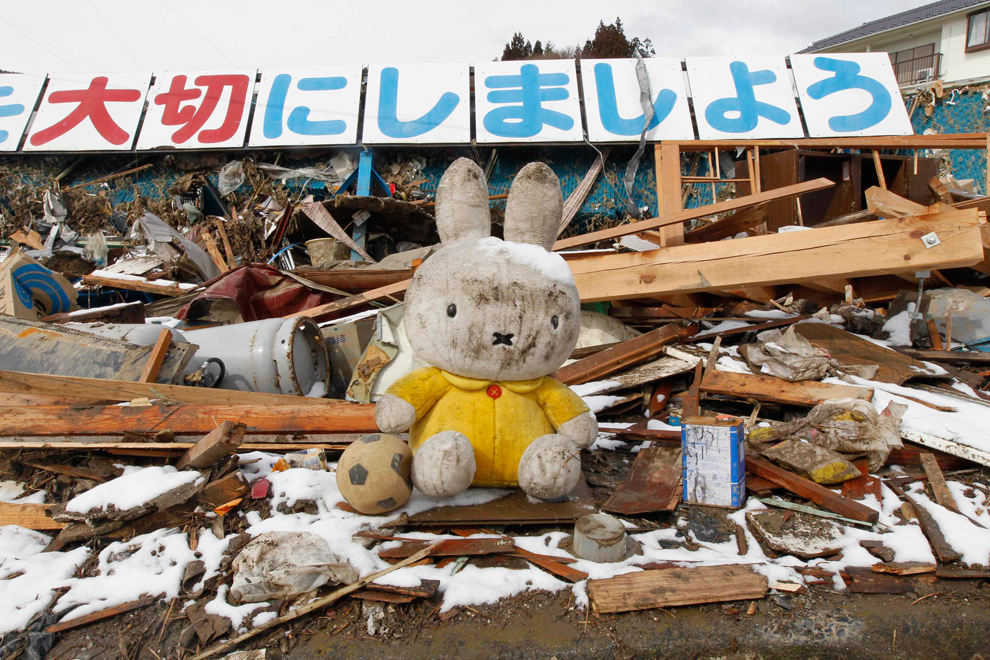
A stuffed toy is seen amidst rubble in Kesennuma March 17. (Kim Kyung-Hoon/Reuters) #

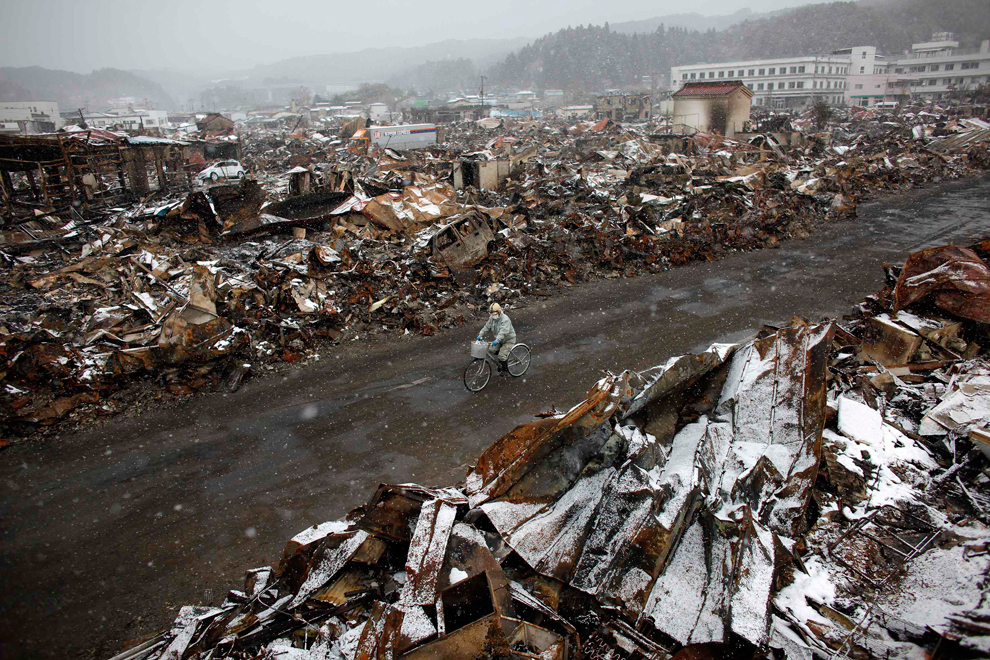
An emergency worker cycles past debris in Yamada, Iwate Prefecture March 17. (Aly Song/Reuters) #

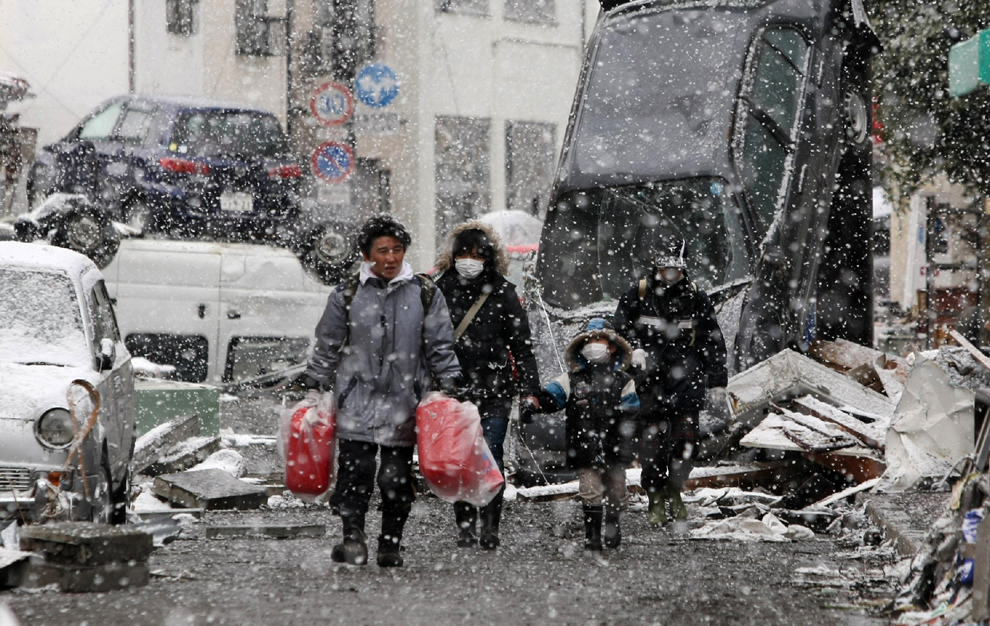
A family walk through the tsunami and earthquake damage under snowfall in Kamaishi, Iwate prefecture on March 17. Thick snow covered the wreckage littering quake-hit Japan, all but extinguishing hopes of finding anyone alive in the debris. (JIJI PRESS/AFP/Getty Images) #

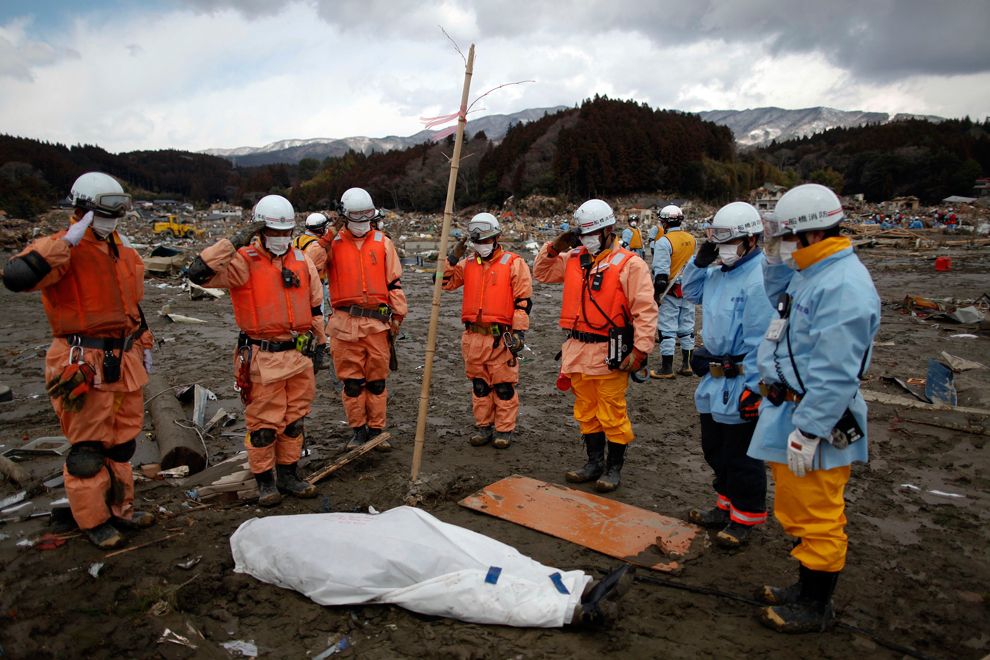
Rescue workers salute next to a body they retrieved from the rubble in Rikuzentakat March 17. (Damir Sagolj/Reuters) #

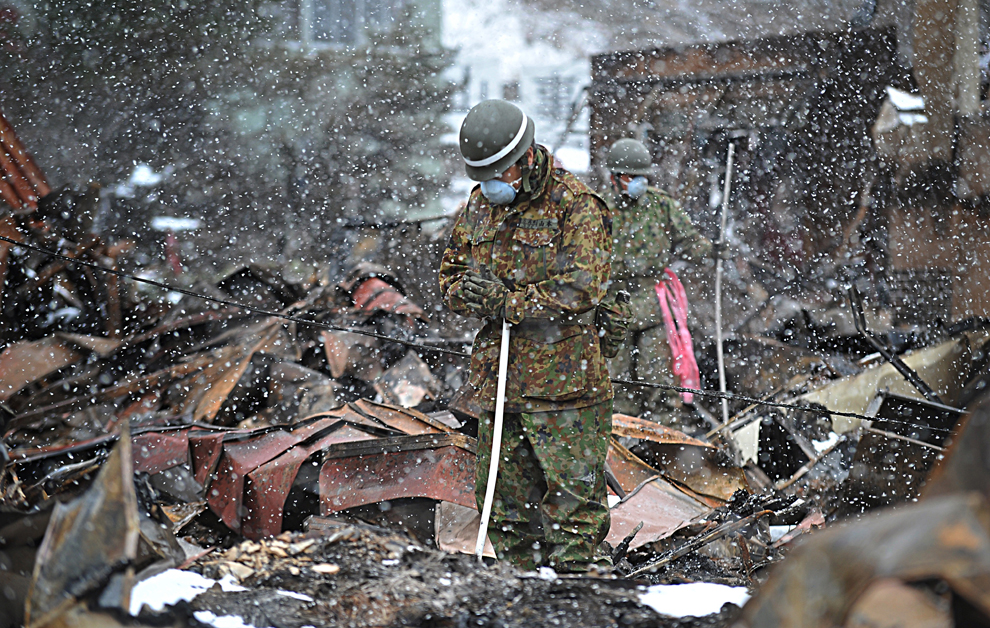
A Japanese Self Defense Force soldier prays before removing the body of a tsunami victim found in the debris in the town of Otsuchi in Iwate prefecture on March 17. (Takashi Noguchi/AFP) #

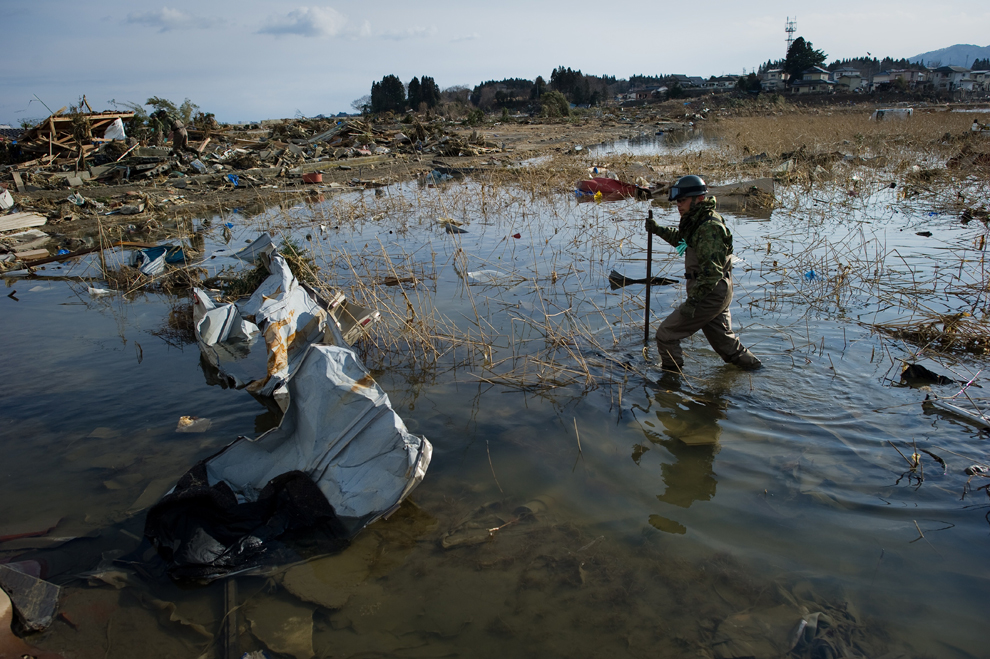
A Japanese Self Defense Force soldier wades through water as he checks for bodies in Kesennuma, Miyagi prefecture on March 17. (Nicolas Asfouri/AFP) #

A dog receives a radiation exposure scanning in Koriyama March 17. (Koichi Nakamura/Yomiuri Shimbun/AP) #

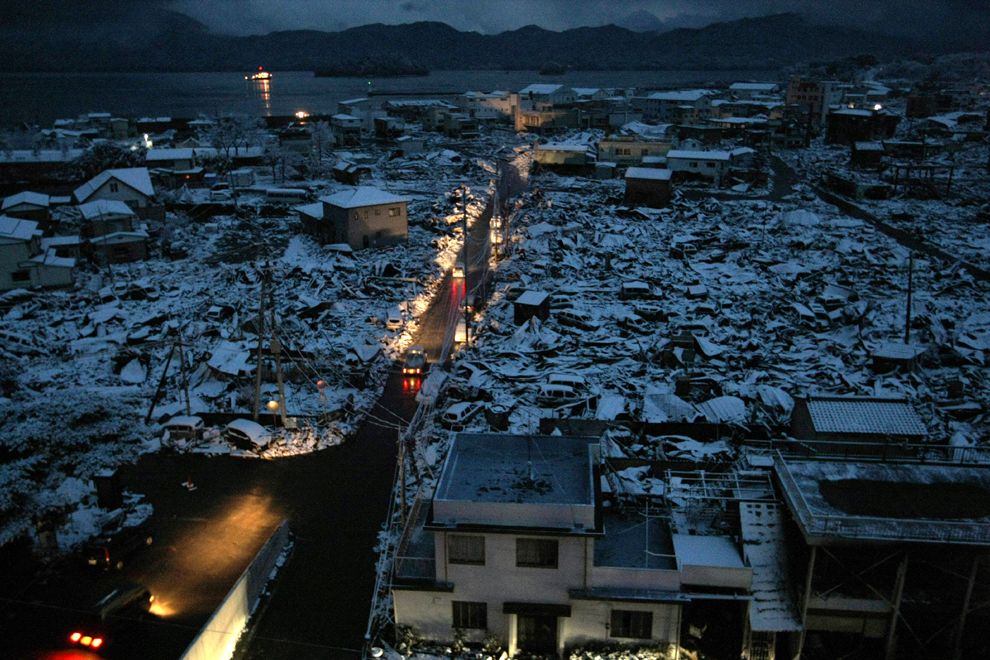
Vehicle headlamps illuminated a disaster area in Yamada town in Iwate prefecture on March 16. (STR/AFP/Getty Images) #

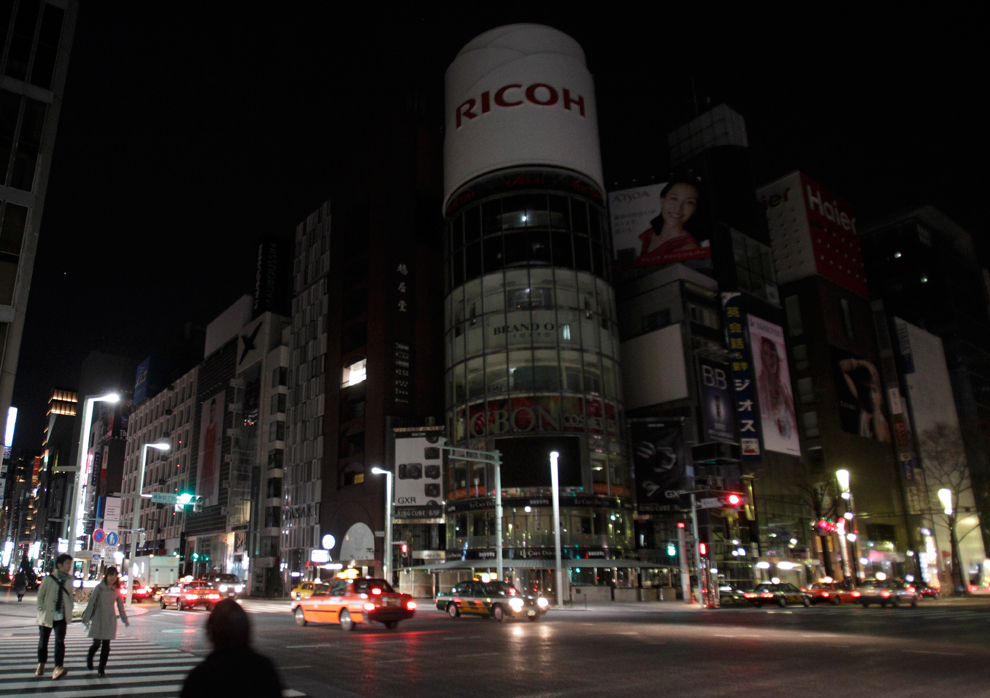
A couple cross a large intersection in front of blacked out light displays in Tokyo's Ginza district March 17. In the famous shopping mecca - and elsewhere in the nation's capital - public apprehension over a brewing nuclear disaster is draining the streets and stores of the crowds that normally define this dynamic, densely packed city. (Gregory Bull/AP) #

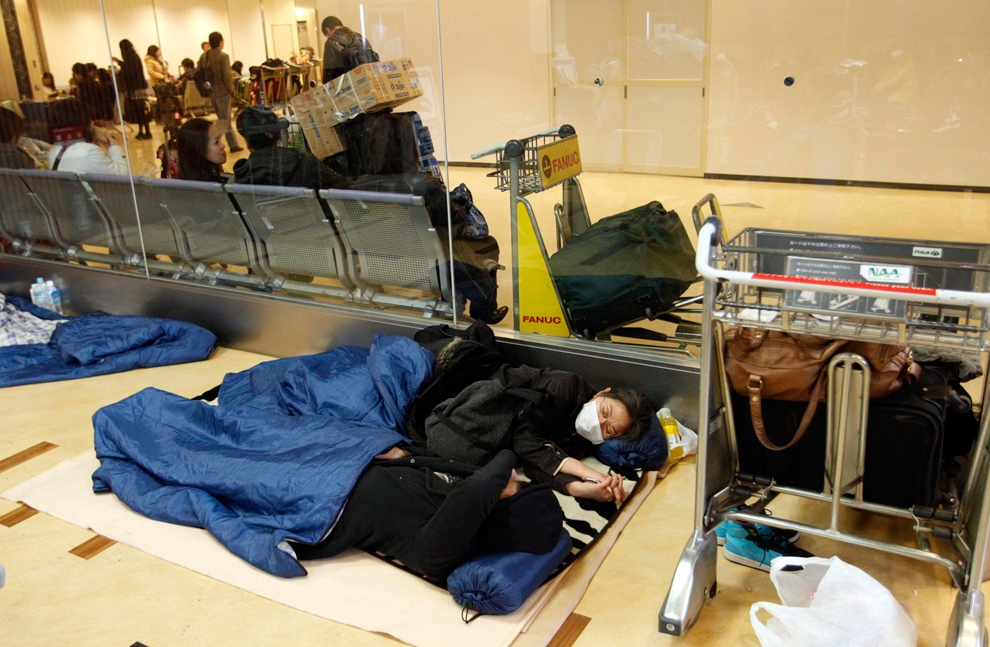
Passengers sleep on the floor as they wait for their flight at Narita airport, east of Tokyo March 17. Public trust in the Japanese government faces its biggest test since World War Two over the handling of the nation's nuclear crisis. (Issei Kato/Reuters) #

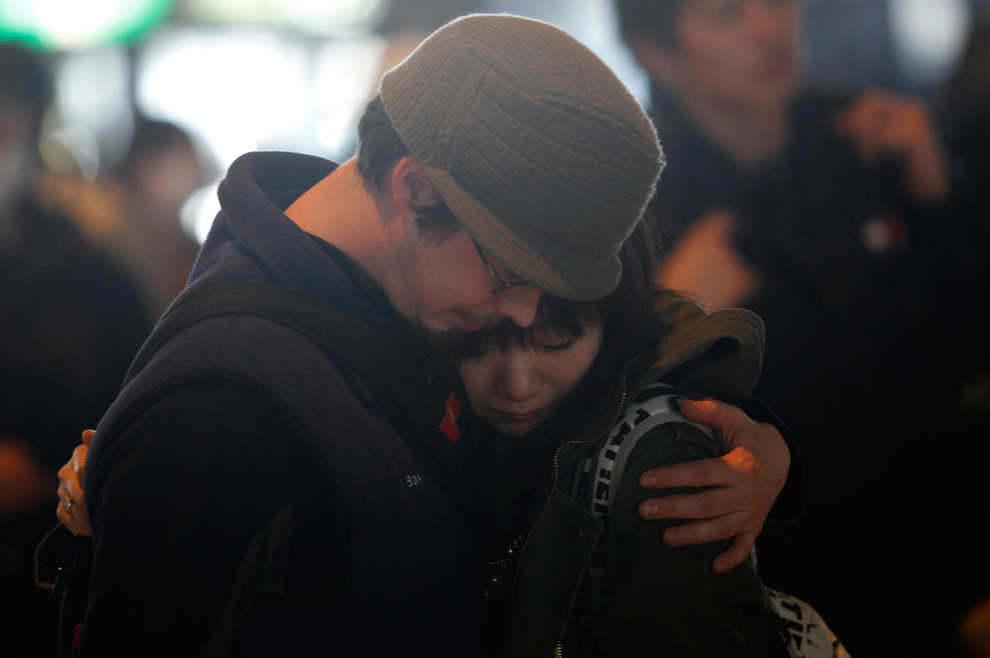
A couple hugs each other before one of the pair will board a flight at Narita international Airport in Narita, east of Tokyo March 17. (Issei Kato/Reuters) #

作者: davechen    时间: 2011-3-19 11:35

为逝去的无辜生命祈祷.................
作者: wangfusen407    时间: 2011-3-19 19:03

大爱无疆,悼念一切逝去的生灵!
作者: 七炮    时间: 2011-3-19 20:54

南无阿弥陀佛!
作者: leo_sc    时间: 2011-3-19 23:05

好图,感谢这么近的看了。
作者: 馬六甲    时间: 2011-3-20 01:53

Japan: One week later

A week after a 9.0 earthquake and resulting tsunami leveled large swaths of northeastern Japan, effects of the disaster are still rippling across the country and the world. Misery of the victims continues unabated, as shelter, food, water, and fuel have become dear. A nuclear facility crisis has both troops and workers scrambling to keep the situation from getting worse, while foreign governments are urging their citizens to evacuate. -- Lane Turner (25 photos total)

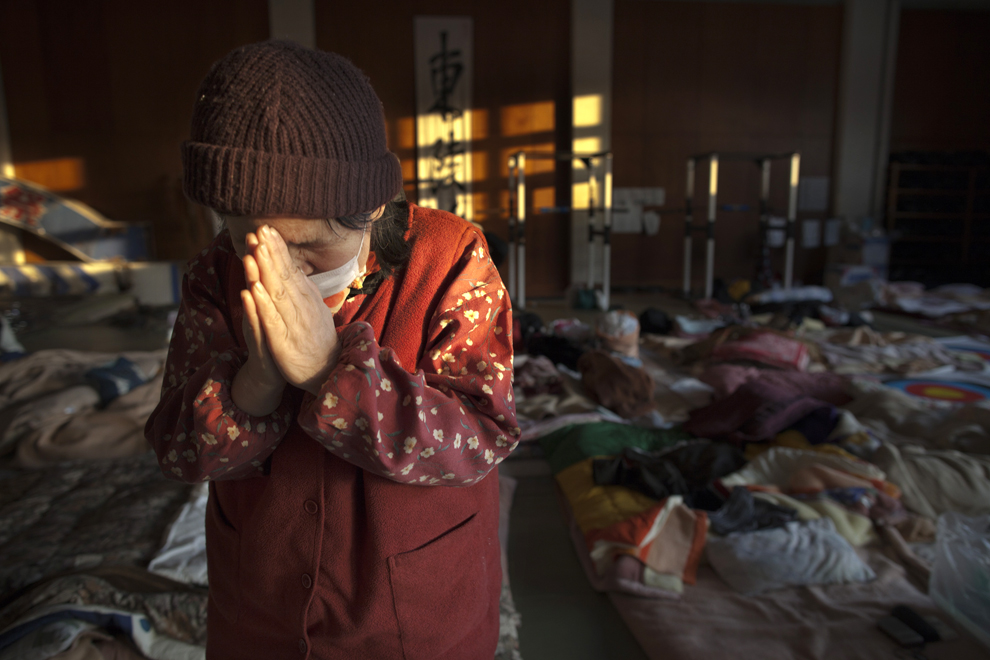
Momoko Onodera prays at an evacuation center as she talks about her husband who died in the tsunami on March 18 in Kesennuma, Japan. A potential humanitarian crisis looms as nearly half a million people who have been displaced by the disaster continue to suffer a shortage of food and fuel as freezing weather conditions set in. (Paula Bronstein/Getty Images)

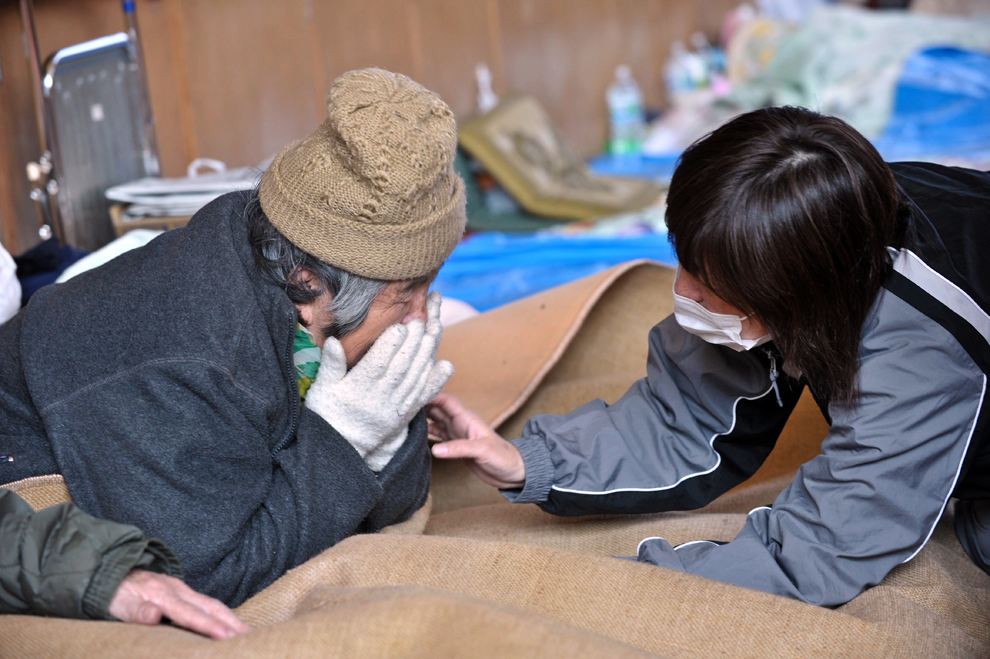
An elderly woman and a relative are reunited at a center for displaced persons in the devastated town of Otsuchi, Iwate prefecture on March 18 one week after a massive 9.0 magnitude earthquake and tsunami hit the northestern coast of Japan's main island of Honshu. (Nicholas Kamm/AFP/Getty Images) #

A two-month old baby evacuated along with his parents from the town of Okuma, Fubata district in Fukushima prefecture where the TEPCO Fukushima Daiichi nuclear power plant, is given a bath by a volunteer, Junko Sakamoto in Koriyama city in Fukushima prefecture on March 18. (Go Takayama/AFP/Getty Images) #

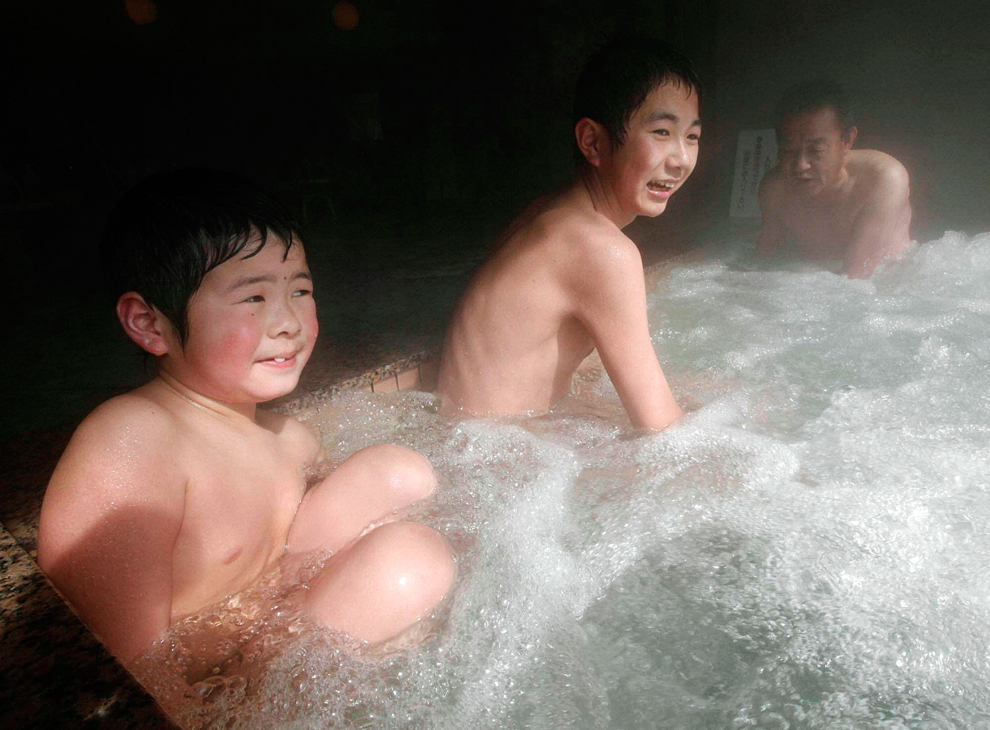
Victims from an evacuation center relax as they take their first bath since an earthquake and a tsunami hit the area in Ofunato City, Iwate Prefecture on March 18. The bath house was reopened, offering free baths to people. (Reuters/Kyodo) #

A man looks for a relative at a community center used as a shelter in the tsunami-damaged town of Otsuchi on March 18. (Nicholas Kamm/AFP/Getty Images) #

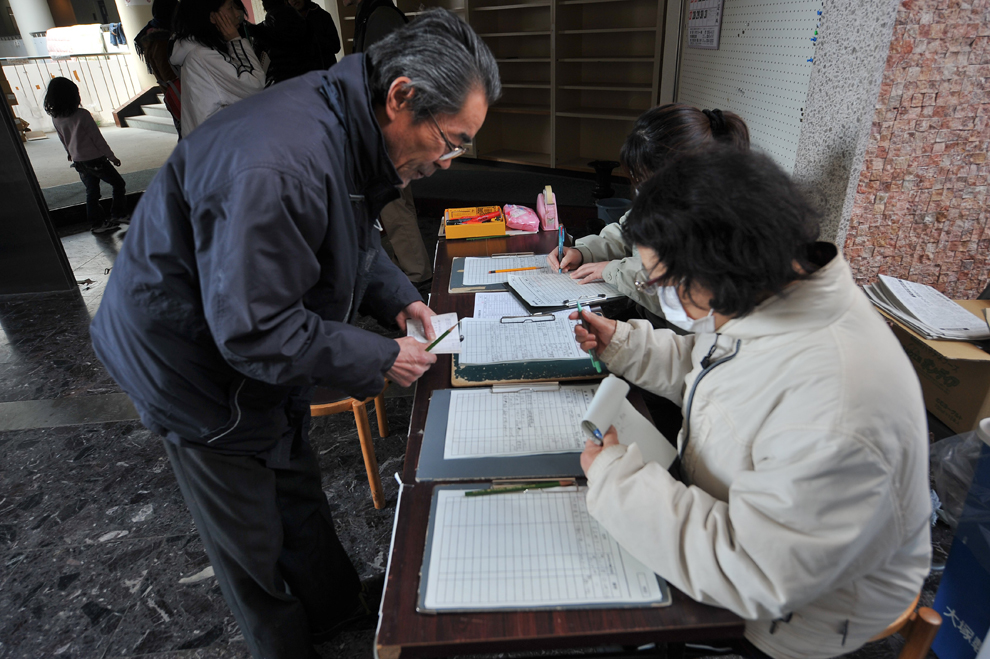
A man checks lists of evacuees at an evacuation center in Rikuzentakata March 18. (Kim Kyung-Hoon/Reuters) #

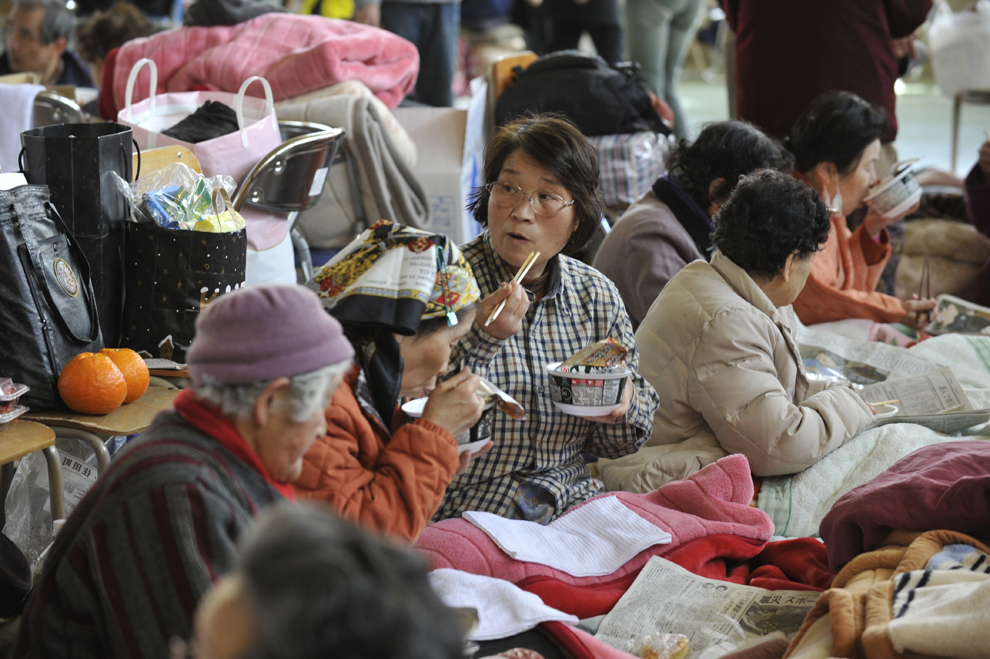
Evacuees eat instant noodles for lunch at a shelter in Rikuzentakata in Iwate prefecture on March 18. (Kazuhiro Nogi/AFP/Getty Images) #

Evacuees rest in a shelter, 60 km from the nuclear power plant in Fukushima prefecture, in Koriyama on March 18. (Ken Shimizu/AFP/Getty Images) #

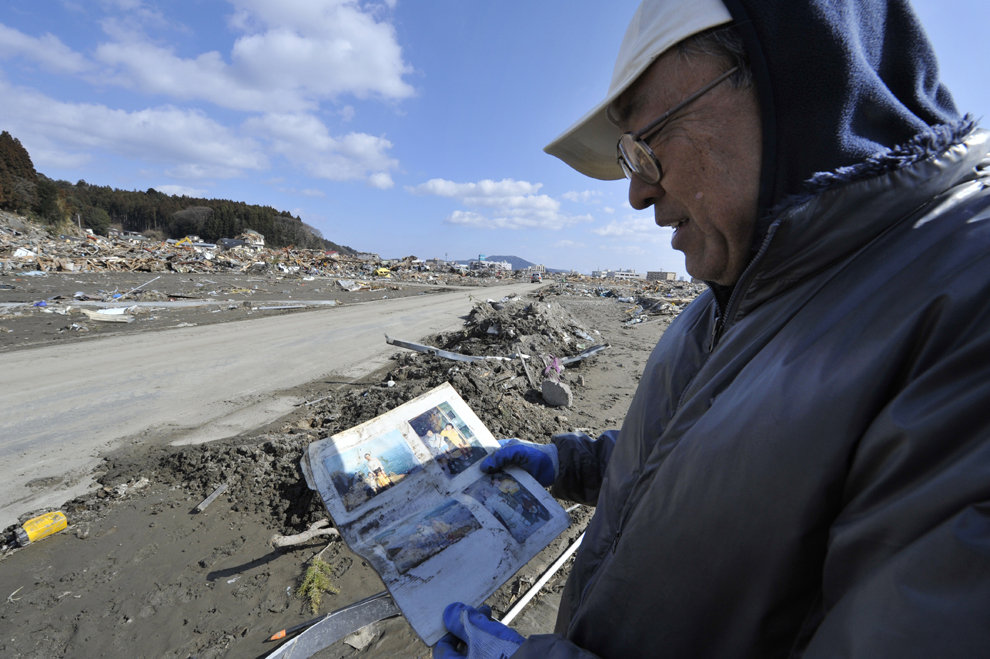
A man takes a look at pages from his own family photo album that he discovered in the wreckage a week after the disasters hit Rikuzentakata in Iwate prefecture on March 18. (Kazuhiro Nogi/AFP/Getty Images) #

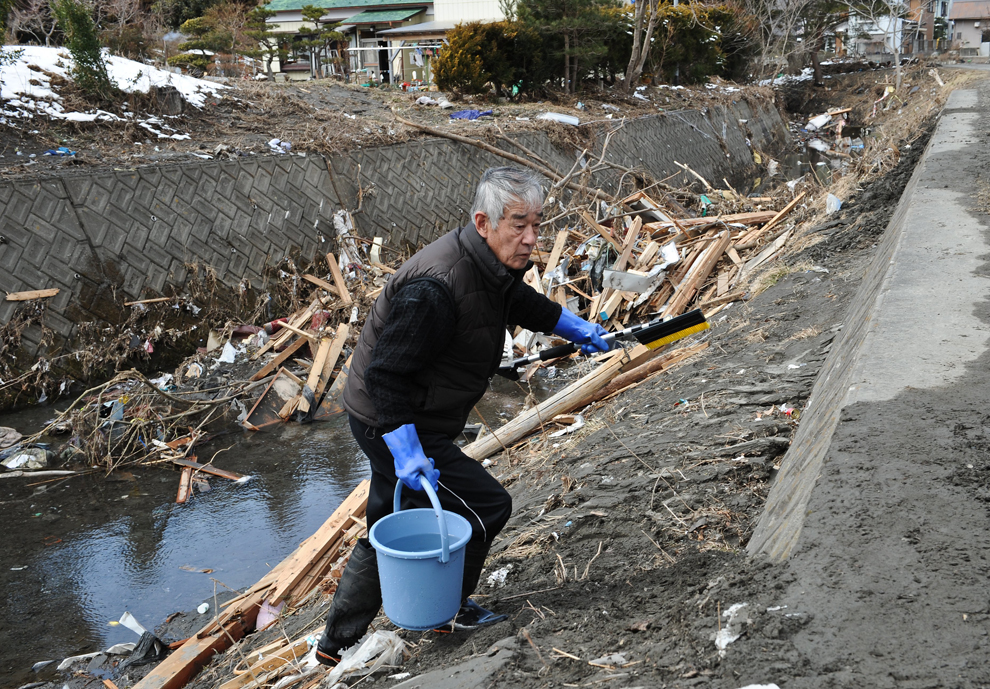
A man collects water from a canal in the tsunami-devastated town of Otsuchi on March 18. (Nicholas Kamm/AFP/Getty Images) #

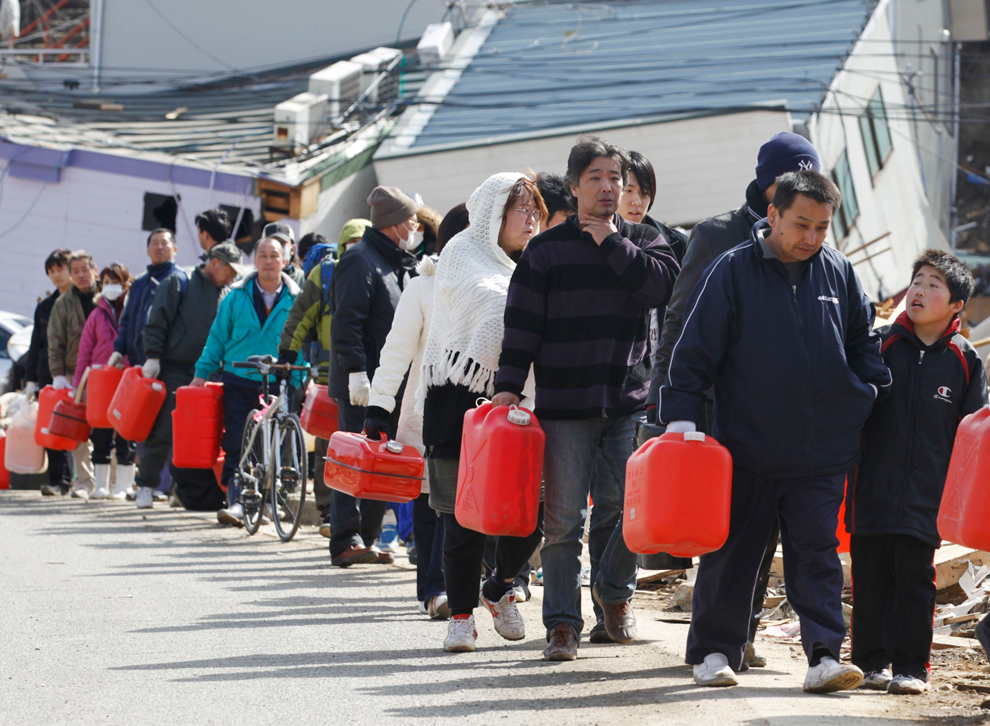
People queue to buy gasoline at a destroyed village in Ofunato, Iwate Prefecture March 18. The shutdown of a fifth of Japan's nuclear power capacity and nearly a third of its refining capacity following last week's killer quake and tsunami has resulted in a fuel shortage in the country. (Lee Jae-Won/Reuters) #

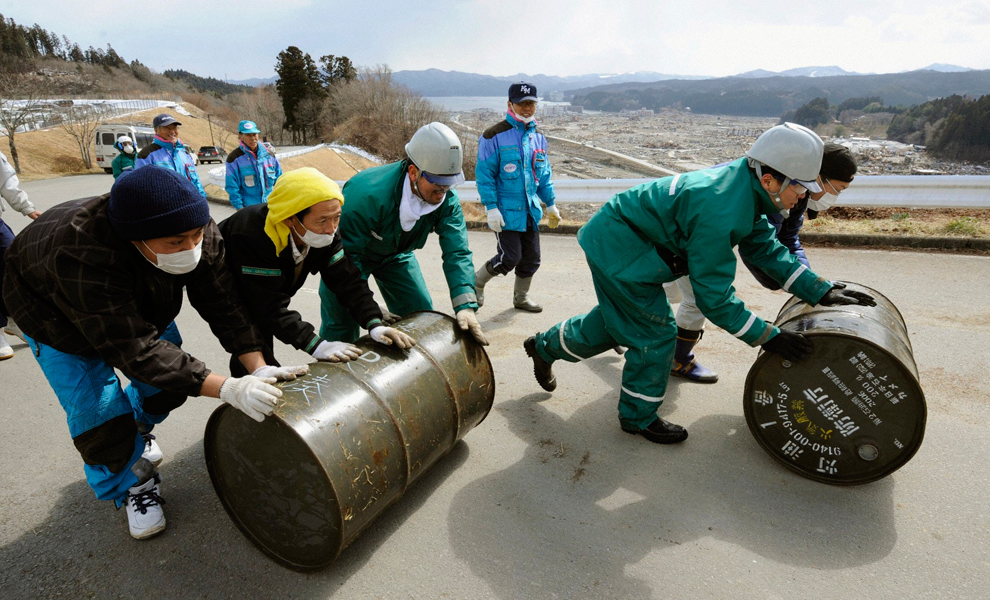
Japan Defense Forces officers and survivors roll drums of heating oil in Minamisanriku Town, Miyagi Prefecture, March 18. (Reuters/Kyodo) #

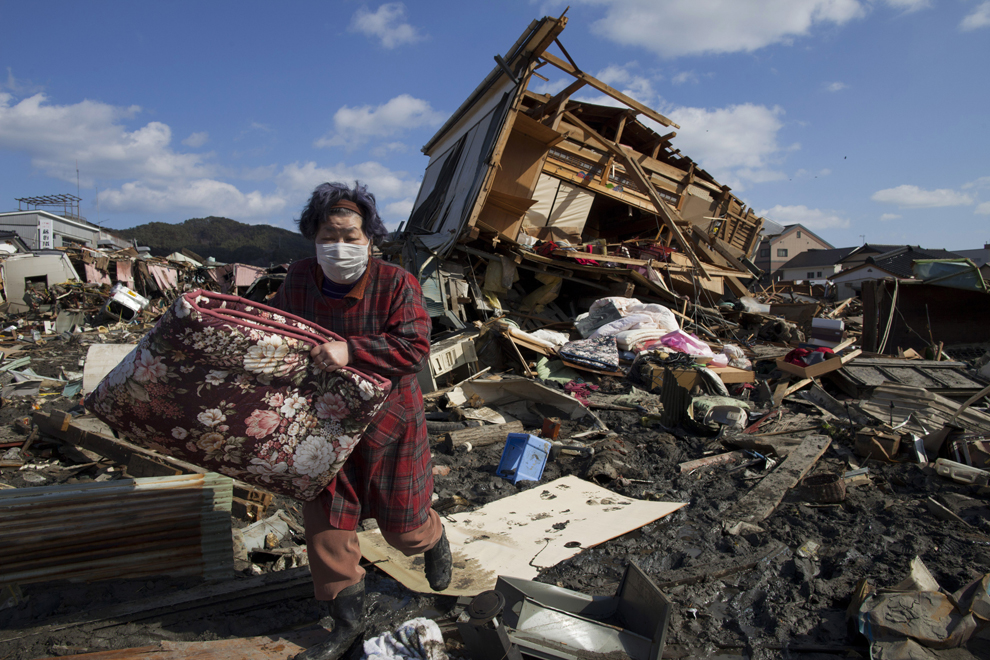
Aiko Musashi carries personal belongings from her destroyed home on March 18 in Kesennuma. (Paula Bronstein/Getty Images) #

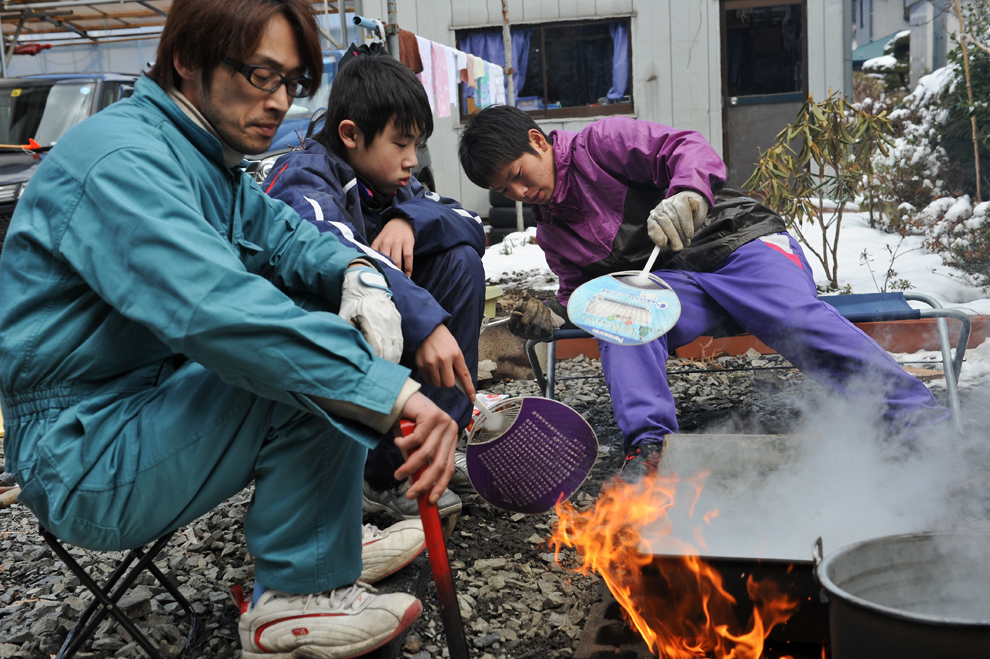
People cook outside their home in the tsunami-damaged town of Otsuchi on March 18. (Nicholas Kamm/AFP/Getty Images) #

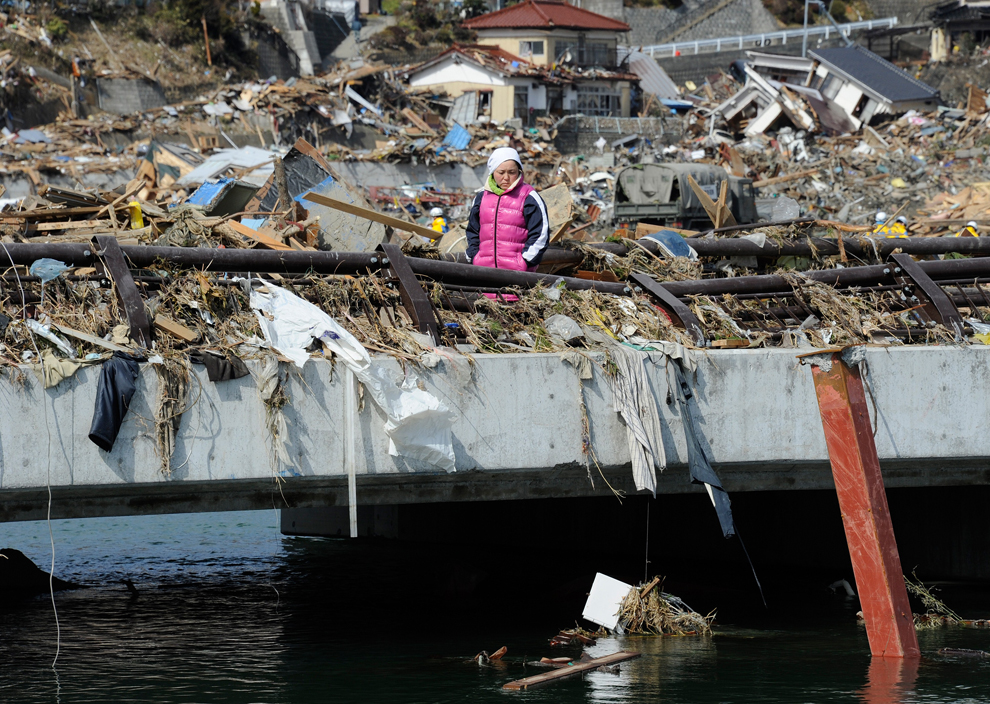
A woman walks across a bridge in Minamisanriku, Miyagi prefecture on March 18. (Toru Yamanaka/AFP/Getty Images) #

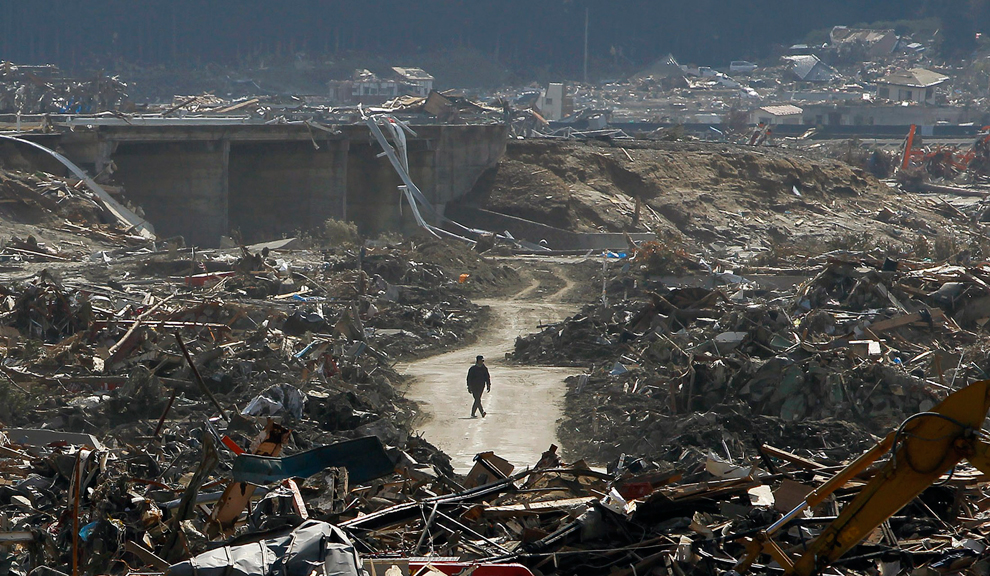
A survivor walks through debris in Rikuzentakata, Iwate prefecture March 18. (Aly Song/Reuters) #

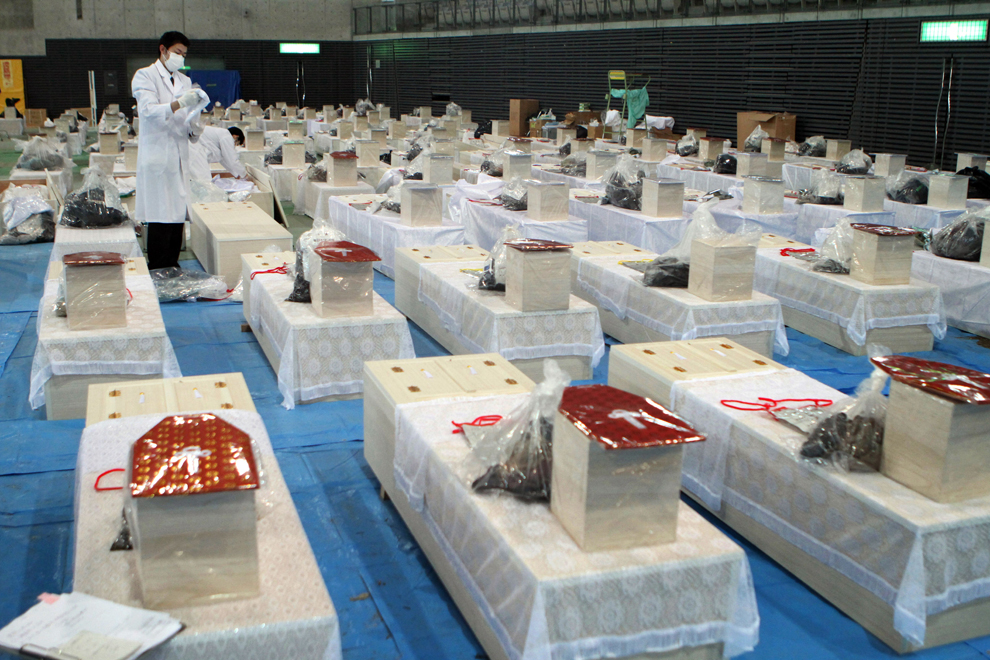
Dozens of coffins are pictured on the floor of a hall in the town of Rifu in Miyagi prefecture on March 18. The official number of dead and missing after the devastating earthquake and tsunami that flattened Japan's northeast coast a week ago has topped 16,600, with 6,405 confirmed dead. (JIJI PRESS/AFP/Getty Images) #

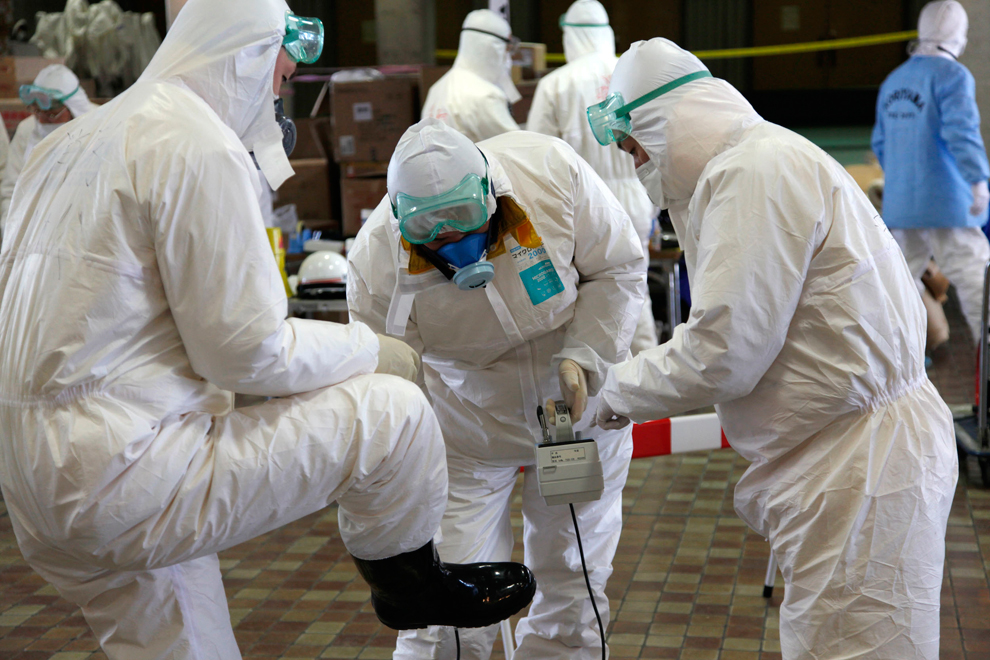
Radiation scanning crews check each other's levels as they change their work shift at a screening center in Koriyama in Fukushima prefecture, 60 km west of TEPCO's striken Fukushima No.1 nuclear power plant, on March 18. (Go Takayama/AFP/Getty Images) #

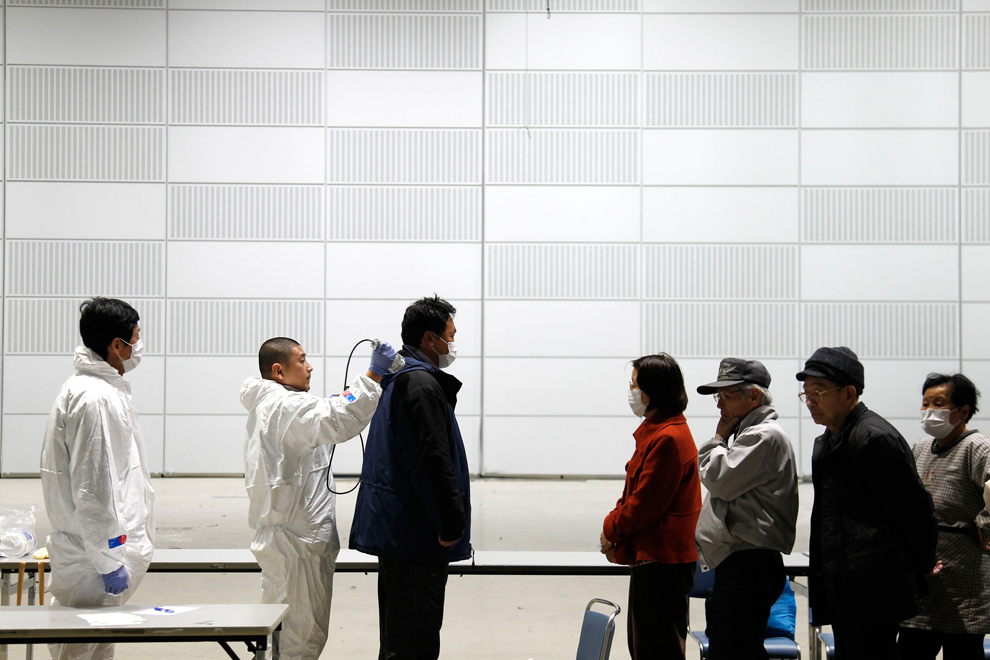
Officials scan people for radiation, 60 km west of the nuclear power plant in Fukushima prefecture, in Koriyama on March 18. (Ken Shimizu/AFP/Getty Images) #

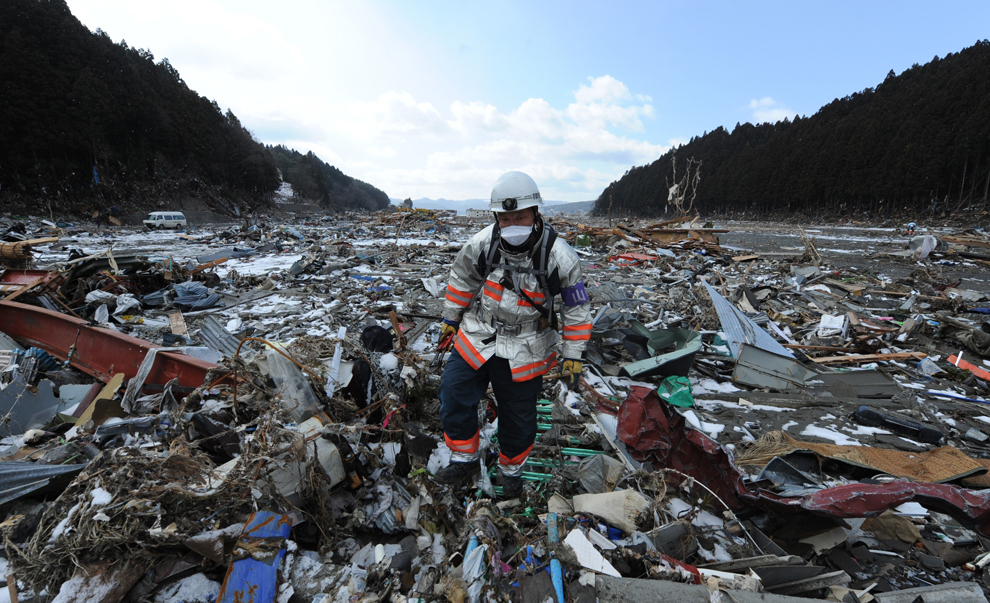
A rescue worker walks through rubble in Minamisanriku, Miyagi prefecture on March 18. (Mike Clarke/AFP/Getty Images) #

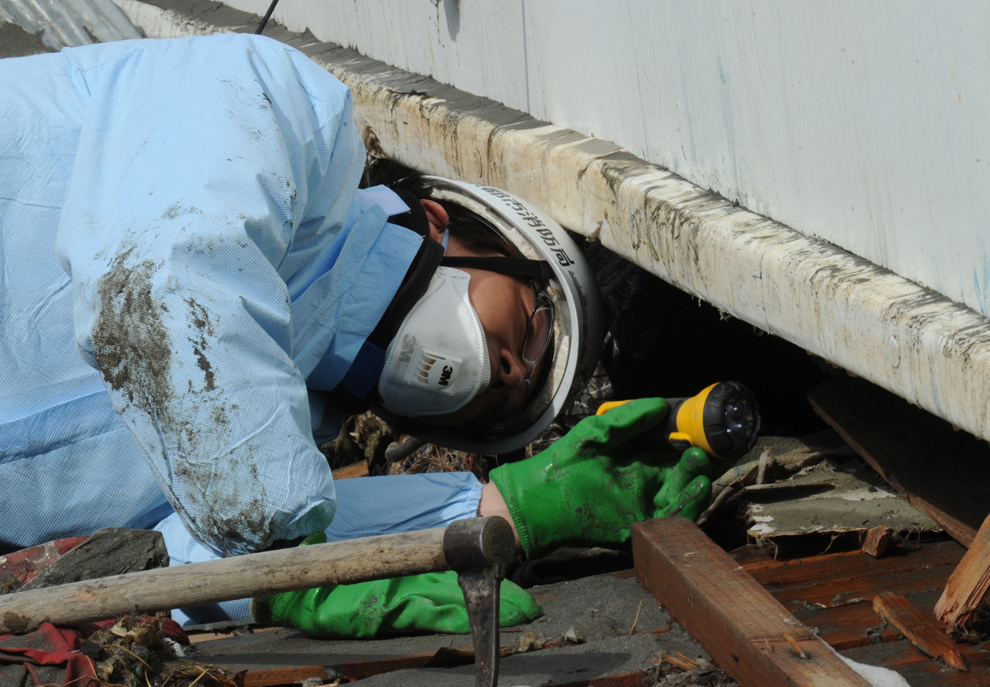
A rescue worker searches through debris in Minamisanriku, Miyagi prefecture on March 18. (Mike Clarke/AFP/Getty Images) #

An airline staff member attempts to calm people rushing to buy flight tickets at a ticket counter in Narita International Airport on March 18 in Narita. (Koki Nagahama/Getty Images) #

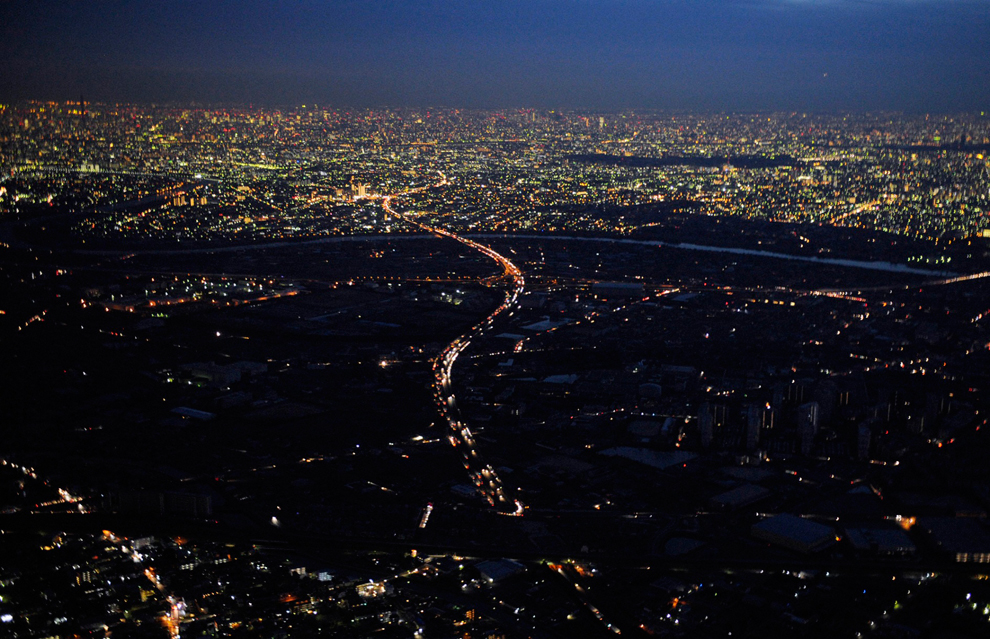
Lights are turned off during rolling blackouts in Misato City, Saitama Prefecture on March 18. Tokyo Electric Power Co has announced rolling blackouts after its power generation was cut due to damage to its Fukushima Daiichi power plant, where it is struggling to prevent reactor meltdowns. (Reuters/Kyodo) #

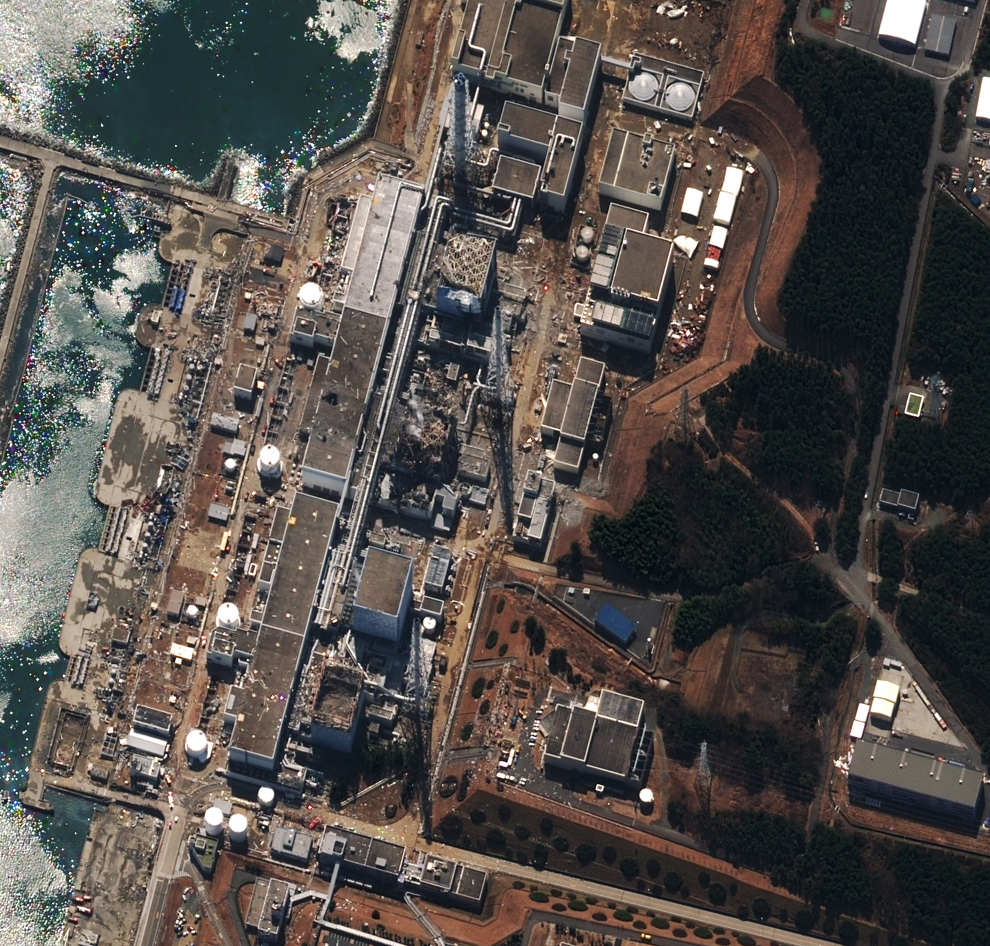
A satellite image shows damage to the reactors at the Fukushima Dai-Ichi nuclear power plant at the town of Okuma in Futaba district in Fukushima. Teams of Japanese workers and troops on March 18 battled to prevent meltdown at the quake-hit nuclear plant as alarm over the disaster grew with more foreign governments advising their citizens to flee. (DigitalGlobe/AFP/Getty Images) #

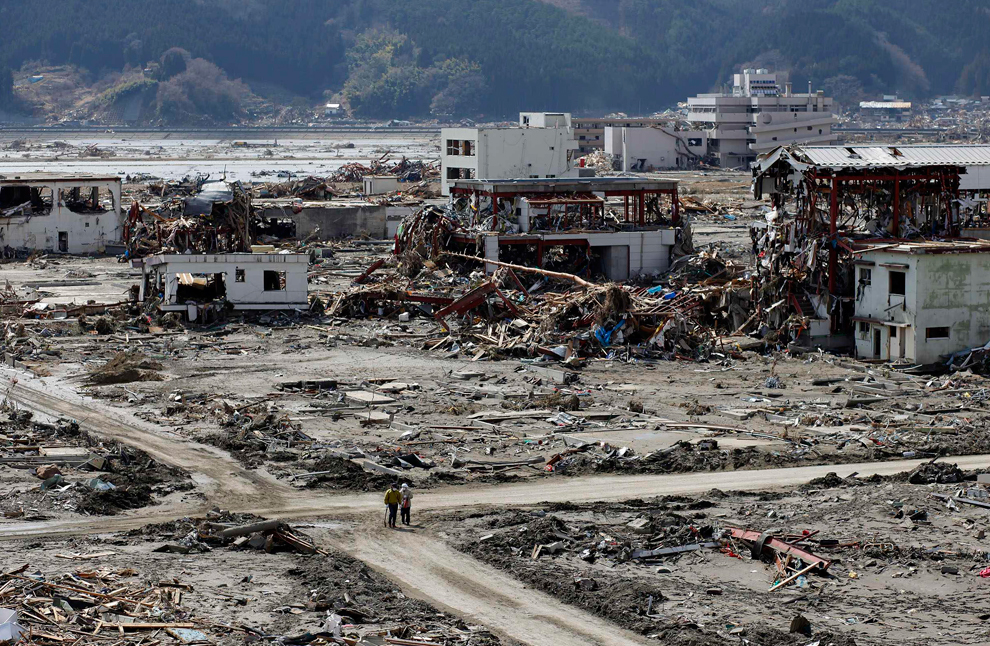
Residents walk on a road past debris in Rikuzentakata, Iwate prefecture, March 18. (Aly Song/Reuters) #


欢迎光临 ::电驴基地:: (https://54.244.168.166/) Powered by Discuz! 6.0.0